A perspective on life and loss

Recent political developments in the United States have caused quite a stir across the globe.  Social media is flooded with comments and rantings from both sides of the political spectrum. I myself have contributed to this “animated” discussion. But when someone (be it a friend or a family member) passes away in the middle of all the histrionics, everything screeches to a halt. It’s amazing how quickly we re-align our priorities…. because, at the end of the day, it’s family and friends that really count the most.

There will be other elections. Other presidents. What is done in one term can be undone in another. So, let’s chill out and focus on what really matters.

This post is dedicated to all of our loved ones who have gone too soon. And to the families and friends who are left behind to grieve their loss.

I love the poetry and writings of Kahlil Gibran and I always take the wisdom of his words to heart.

I hope you do, too.

On Death
by Kahlil Gibran

You would know the secret of death.
But how shall you find it unless you seek it in the heart of life?
The owl whose night-bound eyes are blind unto the day cannot unveil the mystery of light.
If you would indeed behold the spirit of death, open your heart wide unto the body of life.
For life and death are one, even as the river and the sea are one.

In the depth of your hopes and desires lies your silent knowledge of the beyond;
And like seeds dreaming beneath the snow your heart dreams of spring.
Trust the dreams, for in them is hidden the gate to eternity.
Your fear of death is but the trembling of the shepherd when he stands before the king whose hand is to be laid upon him in honour.
Is the shepherd not joyful beneath his trembling, that he shall wear the mark of the king?
Yet is he not more mindful of his trembling?

For what is it to die but to stand naked in the wind and to melt into the sun?
And what is it to cease breathing, but to free the breath from its restless tides, that it may rise and expand and seek God unencumbered?

Only when you drink from the river of silence shall you indeed sing.
And when you have reached the mountain top, then you shall begin to climb.
And when the earth shall claim your limbs, then shall you truly dance.

Marcus Aurelius, the Last of the Five Good Emperors

Some great quotes to live by…..

… so, I’m in a philosophical frame of mind these days and for the rest of 2016, my posts will highlight famous philosophical quotes and the philosophers who said them. This month (October), the focus will be on some of the greatest ancient Roman philosophers whose influence and thinking have transcended the passage of time.

MARCUS AURELIUS

443px-marcus_aurelius_equestrian_2d

Here are some famous quotes by Marcus Aurelius:

“I have often wondered how it is that every man loves himself more than all the rest of men, but yet sets less value on his own opinions of himself than on the opinions of others.”
“Everything we hear is an opinion, not a fact. Everything we see is a perspective, not the truth.”
“You have power over your mind – not outside events. Realize this, and you will find strength.
“The universe is change; our life is what our thoughts make it.”

Marcus Aurelius or Marcus Aurelius Antoninus Augustus (121 AD – 180 AD), was the Roman emperor from 161-180 AD. He is believed to be the last of the Five Good Emperors. He was also among the foremost Stoic philosophers of his time, as evidenced by his greatest work, Meditations, written entirely in Greek. He wrote this while he was conducting his military campaign. He took lessons in oration from two Greek tutors and one Latin tutor. The Roman aristocracy of the time still valued Greek as a language and used it prolifically. Marcus Aurelius epitomized the Golden Age of the Roman Empire.

HIS MOST FAMOUS WORK:

  • Meditations

Cicero, the embodiment of “humanitas”

Some great quotes to live by…..

… so, I’m in a philosophical frame of mind these days and for the rest of 2016, my posts will highlight famous philosophical quotes and the philosophers who said them. This month (October), the focus will be on some of the greatest ancient Roman philosophers whose influence and thinking have transcended the passage of time.

CICERO

220px-m-t-cicero

Here are some famous quotes by Cicero. (note how well they apply to our social and political condition today):

“Six mistakes mankind keeps making century after century:
Believing that personal gain is made by crushing others;
Worrying about things that cannot be changed or corrected;
Insisting that a thing is impossible because we cannot accomplish it;
Refusing to set aside trivial preferences;
Neglecting development and refinement of the mind;
Attempting to compel others to believe and live as we do.”

For all you book lovers:

“If you have a garden and a library, you have everything you need.”

Some tongue-in-cheek humor aimed at all you book writers out there (like me):

“Times are bad.  Children no longer obey their parents, and everyone is writing a book.”

And always remember:

“Where there’s life, there’s hope.”

Marcus Tullius Cicero (106 BC to 43 BC) – a Roman politician, lawyer, and orator who was born into a wealthy Roman equestrian family. He represented one of the few in a new generation of men in Rome – to be the first man in his family to become a senator, and gain the highest office of consul. Cicero was best known for preventing the Catiline Conspiracy, as well as his philosophical works and devotion to the Republic. Although he was invited to join the powerful political union formed by Caesar, Crassus, and Pompey, Cicero refused and instead became an opponent of Caesar. Years later, he met his death at the hands of a soldier named Herennius, who had been ordered by Mark Anthony to kill him during the proscriptions of the Second Triumvirate.

One of the greatest Roman orators and prose stylists of his time. Cicero was also a philosopher, politician, lawyer, political theorist and a constitutionalist. He was also famous for introducing neologisms such as: evidentia, humanitas, qualitas, quantitas, and essentia.

READ SOME OF HIS MOST FAMOUS WORKS:

The Teacher and the Student

Some great quotes to live by…..

… so, I’m in a philosophical frame of mind these days and for the rest of 2016, my posts will highlight famous philosophical quotes and the philosophers who said them. This month (September), the focus will be on some of the greatest ancient Greek philosophers whose influence and thinking have transcended the passage of time.

PLATO & ARISTOTLE

plato_and_aristotle_in_the_school_of_athens_by_italian_rafael

Plato (left) and Aristotle (right) – School of Athens

Some famous quotes by “The Teacher” — Plato:

“Be kind, for everyone you meet is fighting a harder battle.” 

“In politics we presume that everyone who knows how to get votes knows how to administer a city or a state. When we are ill… we do not ask for the handsomest physician, or the most eloquent one.” 

“Wise men speak because they have something to say; fools because they have to say something.” 

Plato  (427—347 BCE) was born in Athens,  of Athenian nobility. He was the devout and most brilliant student of Socrates, and they became close friends. After the death of Socrates, Plato turned his back on Athenian politics. His most productive works were written in the course of three voyages to Sicily. He began to write the dialogues (writing in the form of conversation) ad this became the foundation of his philosophical teachings. Upon returning to Athens, he founded the Academy – the first institution of higher learning in the Western world. Aristotle became one of his star pupils and closest associate.

Perhaps the most influential philosopher of all time, Plato is known for his usage of dialectic – a discussion of ideas and insights into the nature of reality. And his philosophy espoused cognitive optimism – a belief in the capacity of the human mind to seek and attain the truth, and to use this truth for the rational and virtuous management of  life and government. He believed that all the conflicting elements in society could (and should) be harmonized. Each of these elements will flourish when they coexist in harmony.  The existence of such a balanced society is impossible without virtue.

Plato’s Academy remained in existence for another thousand years. Centuries after his death, his philosophical system resurfaced as  Neoplatonism.

♦ ♦ ♦ ♦ ♦ ♦ ♦

Some famous quotes by “The Student” — Aristotle:

“Happiness is the meaning and the purpose of life, the whole aim and end of human existence.” 

“Excellence is never an accident. It is always the result of high intention, sincere effort, and intelligent execution; it represents the wise choice of many alternatives – choice, not chance, determines your destiny.” 

“He who has overcome his fears will truly be free.” 

Aristotle (384—322 BCE) was born in Stagira (northern Greece). He was the son of Nichomachus –court physician to the Macedonian royal family. Trained first in medicine, he then later went on to study philosophy with Plato (in Athens). Aristotle was a brilliant student, so much so that he questioned some of Plato’s teachings. After  Plato died, Aristotle was not appointed head of the Academy. and so he left Athens for the islands. In 338 B.C.E., he returned to Macedonia to tutor Alexander the Great. When Alexander conquered Athens, Aristotle went there to set up a school of his own, known as The Lyceum. After the death of Alexander the Great, Aristotle opposed Macedonian rule and his rebellion nearly cost him his death. He fled to the island of Euboea, where he later died.

It is believed that Aristotle’s body of written work included as many as 150 philosophical treatises – of which 30 survived. From biology and physics to morals, aesthetics and politics, he wrote prolifically. Although his teacher (Plato) believed ultimate reality was found in ideas or eternal forms, Aristotle saw ultimate reality in physical objects, through experience. But what really distinguished Aristotle from other ancient, medieval and modern philosophers was that, according to him, the universe never had a beginning or an end. It was eternal.  He also believed that change was cyclical. In the Middle Ages, Aristotle’s philosophy was adopted and fused into Christian doctrine, forming a philosophical system known as Scholasticism. Indeed, the Roman Catholic Church embraced Aristotelian thought as its official philosophy.

And the rest, as they say, is history.

READ SOME OF THEIR MOST FAMOUS WORKS:

The Trial and Death of Socrates, by Plato

The Republic, by Plato

Apology, by Plato

Politics, by Aristotle

The Neomachian Ethics, by Aristotle

Metaphysics, by Aristotle

A little Socratic wisdom

I’m in a philosophical frame of mind these days.  So for the rest of 2016, my posts will highlight famous philosophical quotes and the philosophers who said them. This month (September), the focus will be on some of the greatest ancient Greek philosophers whose influence and thinking have transcended the passage of time.

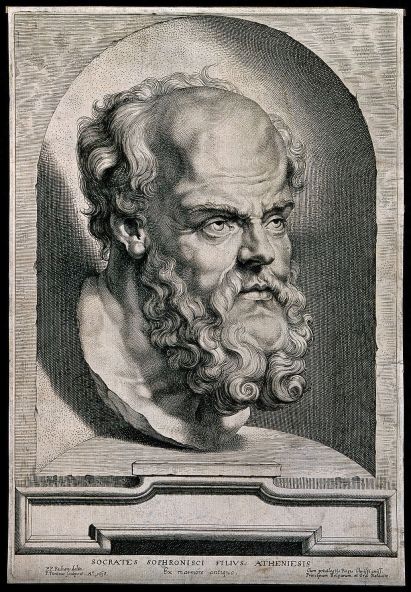
SOCRATES

socrates-_line_engraving_by_p-_pontius_1638_after_sir_p-_p_wellcome_v0005528

“The only true wisdom is in knowing you know nothing.”

– Socrates, (469—399 BCE),  classical Greek philosopher

Socrates was considered the father of Western logic and philosophy. He espoused an ethical system based on human reason, rather than theological doctrine. According to Socrates, the more we come to know ourselves, the greater will be our ability to reason and make choices that lead to true happiness. His quest for knowledge focused on one simple idea: how to live a good and virtuous life. We know him through the writings of the students he mentored, the most famous of whom was Plato. It was Plato who later taught Aristotle, who then went on to tutor Alexander the Great.

He taught his students by asking them questions, with the objective of getting them to think for themselves. This became known as “the Socratic Method” which, in today’s world, is a method of teaching most often used by law and medical professors in universities and colleges across the globe.

“I cannot teach anybody anything. I can only make them think”

– Socrates

Socrates refused to acknowledge class distinction or in other words, the “proper behavior” at the time. He spoke and mingled with women, servants and slaves just as easily as with nobility and scholars. This refusal to conform to social proprieties angered the so-called important men of the time. Socrates was subsequently arrested for impiety. His accusers (Meletus the poet, Lycon the orator, and Anytus the tanner) charged him with “denying the gods recognized by the state and introducing new divinities” and “corrupting the young.”  These accusations were considered (by those who favored Socrates) as being personally and politically motivated.

Socrates was sentenced to death by hemlock poisoning in 399 BCE. He died in his Athenian prison cell, surrounded by his friends. Socrates himself never wrote down any of his teachings. He focused on action, not words. His teachings and philosophy were later interpreted and written by his students, men like Plato who later went on to form their own philosophical schools.

“To find yourself, think for yourself.”

– Socrates

READ:

The Trial and Death of Socrates, by Plato

The Republic, by Plato


10 Great Books to Read this Summer

Cat

Summertime is that wonderful season when everything slows down just a tad. It’s when all the bookworms come out of the woodwork –– to grab that enticing novel, inspiring non-fiction or juicy biography that they finally have the time to read. Work attire is hurriedly replaced by t-shirts, shorts and flip-flops.  And with tall, ice-cold glasses of their favorite libation, they curl up comfortably and begin their summer reads.

These are my (heatherfromthegrove) top picks – all sitting on my bookshelf, waiting to be read. I just poured myself a glass of white wine and grabbed a book I’ve been dying to read: And the Weak Suffer What They Must? – by Yanis Varoufakis. Now, off to my comfy chair on the patio…

Enjoy!

– Heather

(PS – Hover your mouse over the book titles and authors’ names to get the link to the Amazon and Author’s Bio URLs)

FICTION
1birdssky300

 1. All the Birds in the Sky – by Charlie Jane Anders

“Patricia is a witch who can communicate with animals. Laurence is a mad scientist and inventor of the two-second time machine. As teenagers they gravitate towards one another, sharing in the horrors of growing up weird, but their lives take different paths…When they meet again as adults, Laurence is an engineering genius trying to save the world-and live up to his reputation-in near-future San Francisco. Meanwhile, Patricia is a graduate of Eltisley Maze, the hidden academy for the magically gifted, working hard to prove herself to her fellow magicians and secretly repair the earth’s ever growing ailments.As they attempt to save our future, Laurence and Patricia’s shared past pulls them back together. And though they come from different worlds, when they collide, the witch and the scientist will discover that maybe they understand each other better than anyone.”
ManNoShadowJCO_Proper-thumb-300x453-418703

 2. The Man Without a Shadow – by Joyce Carol Oates

“In 1965, neuroscientist Margot Sharpe meets the attractive, charismatic Elihu Hoopes—the “man without a shadow”—whose devastated memory, unable to store new experiences or to retrieve the old, will make him the most famous and most studied amnesiac in history. Over the course of the next thirty years, Margot herself becomes famous for her experiments with E. H.—and inadvertently falls in love with him, despite the ethical ambiguity of their affair, and though he remains forever elusive and mysterious to her, haunted by mysteries of the past….”

TheyMayNot

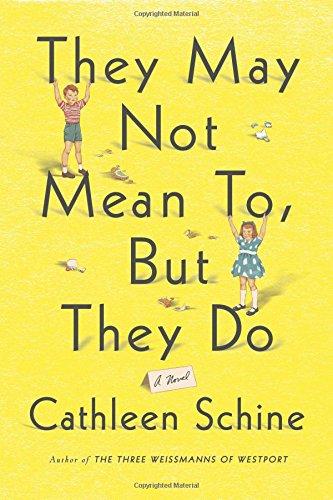
 3. They May Not Mean To, But They Do – by Cathleen Schine

A “hilarious new novel about aging, family, loneliness, and love.”

“The Bergman clan has always stuck together, growing as it incorporated in-laws, ex-in-laws, and same-sex spouses. But families don’t just grow, they grow old, and the clan’s matriarch, Joy, is not slipping into old age with the quiet grace her children, Molly and Daniel, would have wished. When Joy’s beloved husband dies, Molly and Daniel have no shortage of solutions for their mother’s loneliness and despair, but there is one challenge they did not count on: the reappearance of an ardent suitor from Joy’s college days. And they didn’t count on Joy herself, a mother suddenly as willful and rebellious as their own kids…”

UnspeakableThingsProper-thumb-300x481-421492

 4. Unspeakable Things – by Kathleen Spivack

“A wild, erotic novel—a daring debut—from the much-admired, award-winning poet, author of Flying Inland, A History of Yearning, and With Robert Lowell and His Circle: Sylvia Plath, Anne Sexton, Elizabeth Bishop, Stanley Kunitz, and Others. A strange, haunting novel about survival and love in all its forms; about sexual awakenings and dark secrets; about European refugee intellectuals who have fled Hitler’s armies with their dreams intact and who have come to an elusive new (American) “can do, will do” world they cannot seem to find. A novel steeped in surreal storytelling and beautiful music that transports its half-broken souls—and us—to another realm of the senses.”

Shelter

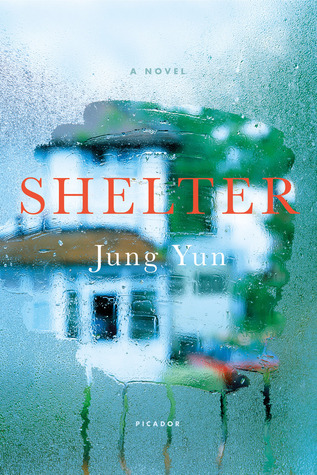
 5. Shelter – by Jung Yum

“You can never know what goes on behind closed doors.

Kyung Cho is a young father burdened by a house he can t afford. For years, he and his wife, Gillian, have lived beyond their means. Now their debts and bad decisions are catching up with them, and Kyung is anxious for his family s future….

… As “Shelter” veers swiftly toward its startling conclusion, Jung Yun leads us through dark and violent territory, where, unexpectedly, the Chos discover hope. “Shelter” is a masterfully crafted debut novel that asks what it means to provide for one’s family and, in answer, delivers a story as riveting as it is profound.”

NON-FICTION

414Q4ZNUNvL._SX333_BO1,204,203,200_

6. Evicted (Poverty and Profit in the American City) – by Matthew Desmond

“From Harvard sociologist and MacArthur “Genius” Matthew Desmond, a landmark work of scholarship and reportage that will forever change the way we look at poverty in America.”
 
“In this brilliant, heartbreaking book, Matthew Desmond takes us into the poorest neighborhoods of Milwaukee to tell the story of eight families on the edge. Arleen is a single mother trying to raise her two sons on the $20 a month she has left after paying for their rundown apartment. Scott is a gentle nurse consumed by a heroin addiction. Lamar, a man with no legs and a neighborhood full of boys to look after, tries to work his way out of debt. Vanetta participates in a botched stickup after her hours are cut. All are spending almost everything they have on rent, and all have fallen behind…”
TheBook 7. The Book – by Keith Houston

“We may love books, but do we know what lies behind them? In The Book, Keith Houston reveals that the paper, ink, thread, glue, and board from which a book is made tell as rich a story as the words on its pages―of civilizations, empires, human ingenuity, and madness. In an invitingly tactile history of this 2,000-year-old medium, Houston follows the development of writing, printing, the art of illustrations, and binding to show how we have moved from cuneiform tablets and papyrus scrolls to the hardcovers and paperbacks of today. Sure to delight book lovers of all stripes with its lush, full-color illustrations, The Book gives us the momentous and surprising history behind humanity’s most important―and universal―information technology.”

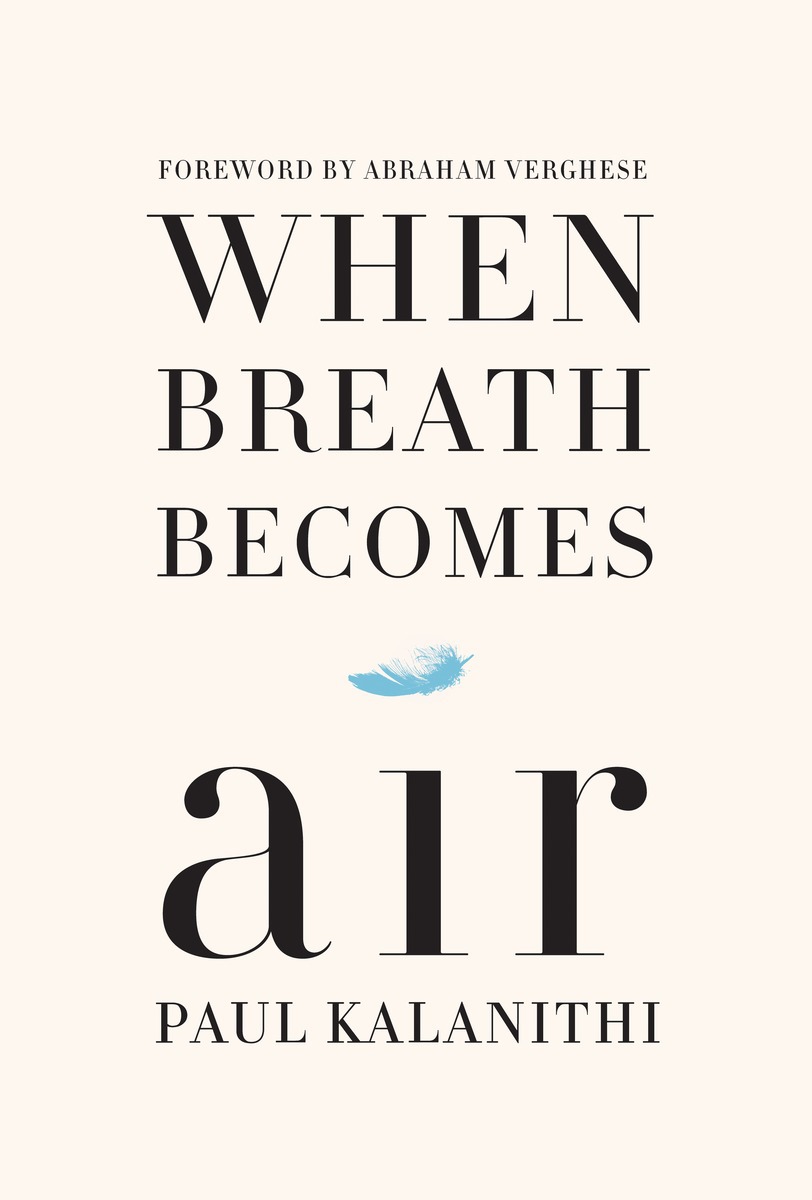
WhenBreath8. When Breath Becomes Air – by Paul Kalanithi

“At the age of thirty-six, on the verge of completing a decade’s worth of training as a neurosurgeon, Paul Kalanithi was diagnosed with stage IV lung cancer. One day he was a doctor treating the dying, and the next he was a patient struggling to live. And just like that, the future he and his wife had imagined evaporated. 

When Breath Becomes Air chronicles Kalanithi’s transformation from a naïve medical student “possessed,” as he wrote, “by the question of what, given that all organisms die, makes a virtuous and meaningful life” into a neurosurgeon at Stanford working in the brain, the most critical place for human identity, and finally into a patient and new father confronting his own mortality.”

“I guarantee that finishing this book and then forgetting about it is simply not an option. . . . Part of this book’s tremendous impact comes from the obvious fact that its author was such a brilliant polymath. And part comes from the way he conveys what happened to him—passionately working and striving, deferring gratification, waiting to live, learning to die—so well. None of it is maudlin. Nothing is exaggerated. As he wrote to a friend: ‘It’s just tragic enough and just imaginable enough.’ And just important enough to be unmissable.”— Janet MaslinThe New York Times

cityofthorns9. City of Thorns (Nine Lives in the World’s Largest Refugee Camp) – by Ben Rawlence

“To the charity workers, Dadaab refugee camp is a humanitarian crisis; to the Kenyan government, it is a ‘nursery for terrorists’; to the western media, it is a dangerous no-go area; but to its half a million residents, it is their last resort.”

“In City of Thorns, Rawlence interweaves the stories of nine individuals to show what life is like in the camp and to sketch the wider political forces that keep the refugees trapped there. Rawlence combines intimate storytelling with broad socio-political investigative journalism, doing for Dadaab what Katherinee Boo’s Behind the Beautiful Forevers did for the Mumbai slums. Lucid, vivid and illuminating, City of Thorns is an urgent human story with deep international repercussions, brought to life through the people who call Dadaab home.”
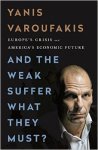
Varou10. And the Weak Suffer What They Must? (Europe’s Crisis and America’s Economic Future) – by Yanis Varoufakis

“A titanic battle is being waged for Europe’s integrity and soul, with the forces of reason and humanism losing out to growing irrationality, authoritarianism, and malice, promoting inequality and austerity. The whole world has a stake in a victory for rationality, liberty, democracy, and humanism.”

“Varoufakis delivers a fresh look at the history of Europe’s crisis and America’s central role in it. He presents the ultimate case against austerity, proposing concrete policies for Europe that are necessary to address its crisis and avert contagion to America, China, and the rest of the world. With passionate, informative, and at times humorous prose, he warns that the implosion of an admittedly crisis–ridden and deeply irrational European monetary union should, and can, be avoided at all cost.”

Happy reading! 

book-759873_960_720

Cat and Book photos via pixabay.com.

Peeking Through the Cobwebs

21059227843_82f020641b_o

“Some ideas are not born of logic and good sense. They are made of clouds and cobwebs. They sprout from nowhere and feed on excitement, sprinkled with adventure juice and the sweet flavor of the forbidden. The psyche moves from the realms of the ordinary and takes a delicate step towards the unknown. We know we shouldn’t and that is exactly why we do.”
― 
Brigid LowryGuitar Highway Rose

(Photo by Pratik Kadam via flickr.com)

Say “No” to Hate

rain-930262_960_720

Picture via pixabay.com

“Laugh when you can, apologize when you should, and let go of what you can’t change. Kiss slowly, forgive quickly, play hard, take chances, give everything, and have no regrets. Life is too short to be anything but happy!” – Unknown

Just the other day, I went online to research urological treatment options for cats and I came across a vet med site where other cat owners shared their advice and experiences. As I read down the endless list of back-and-forth comments,  I was appalled.  A subject as benign as “cats with bladder issues” unleashed a barrage of hateful commentary. Rather than giving constructive advice, empathy or encouragement, there were nasty comments like “You gave your cat that medication? You’re an idiot and an irresponsible cat owner!”  And that was one of the nicer comments. These people didn’t even know each other, but were quick to pass judgment – all behind the shield of anonymity, of course.

It never ceases to amaze me how many haters there are out there. Blogs and social media sites like Twitter, Facebook and LinkedIn seem to be a breeding ground for these angry people, emboldened by the name “Anonymous.”  Amazingly, I’ve only had one hater comment on this blog – since its inception in October 2011.  I never published the comment, because my policy is to never give a hater any public platform to spew their hate.  Criticism is fine. Venom is not. Sarcasm and dark humor is okay. Crass and ignorant commentary is not okay.

Apparently, hate is not relegated to social media.  Just look at the ridiculous nastiness and vulgarity displayed during the recent GOP presidential debates. Opportunistic presidential nominees are feeding off the anger of  a nation, as the world watches with amazement and disgust.

Now, there is nothing wrong with being angry.  But when anger becomes rage and gives birth to a population of serial haters, then we’ve got a problem, folks. Anger, when properly channeled, can bring about positive change.  Rage is a different animal altogether.  It just festers. It becomes malignant.

The fact of the matter is, Life is too short.

Who in their right mind would choose rage and hate over happiness and love?  Yes, I said “choose.”  It’s all about choice.

Say “No” to hate.  It simply takes up too much energy.  It gives you frown lines and makes you bitter.  It’s like a dark, murky cloud that follows you around everywhere.

I firmly believe that a positive attitude attracts good energy.  So, I say “Yes” to love.  And I’d rather have a face riddled with laugh lines, than frown lines – any day.

Cheers,

Heather  (not “Anonymous”)

Random Acts of Kindness

98393949_34e3a780e8_o

“Three things in human life are important. The first is to be kind. The second is to be kind. And the third is to be kind.”    – Henry James

Apparently today (February 17) is National Random Acts of Kindness Day… which begs the question “Do we really need a day to remind us to be kind to others? ”

Isn’t kindness an act of simple human decency – one that should come naturally … whenever, however, and to whomever?  It certainly should be.

I encourage you to read The Dalai Lama: A Policy of Kindness, by Sidney D. Piburn. It is a beautiful selection of vignettes written by and about His Holiness The Dalai Lama. You don’t have to be a Buddhist or even have any knowledge of Buddhism to read and appreciate this book.

Kindness begins at home and, as such,  our children’s treatment of others is – more often than not – a reflection of our own behavior.  There are some really good, age-appropriate books that teach children the importance of kindness. I’ve listed some of them below.

Ages 4 -6

  • A Sick Day for Amos McGee – by Philip Stead
  • Hey, Little Ant – by Philip and Hannah Hoose
  • How Do Dinosaurs Play with Their Friends? – by Jane Yolen
  • How Kind – by Mary Murphy
  • The Lion and the Mouse – by Jerry Pinkney
  • The Mine-O-Saur  –by Sudipta Bardhan-Quallen
  • Stone Soup – by Jon J. Muth
  • Stellaluna – by Janell Cannon
  • Toot & Puddle  – by Holly Hobbie

Ages 7-8

  • All Families Are Special – by Norma Simon
  • The Ant Bully – by John Nickle
  • Enemy Pie – by Derek Munson
  • Have You Filled a Bucket Today?  – by Carol McCloud
  • Horace and Morris But Mostly Dolores – by James Howe
  • The Giving Tree – by Shel Silverstein
  • The Golden Rule – by Ilene Cooper
  • Kindness Is Cooler, Mrs. Ruler – by Margery Cuyler
  • Ordinary Mary’s Extraordinary Deed – by Emily Pearson
  • When Sophie Gets Angry–Really, Really Angry – by Molly Bang
  • Somebody Loves You, Mr. Hatch – by Eileen Spinelli
  • The Story of Ruby Bridges – by Robert Coles

Ages 9 -11

  • Bluish – by Virginia Hamilton
  • Hanna’s Suitcase – by Karen Levine
  • Number the Stars – by Lois Lowry
  • Ryan and Jimmy and the Well in Africa That Brought Them Together – by Herb Shoveller

Ages 12 +

  • Dear Bully: 70 Authors Tell Their Stories – by Dawn Metcalf
  • Freak the Mighty – by Rodman Philbrick
  • Mockingbird – by Kathryn Erskine
  • To Kill a Mockingbird – by Harper Lee

And there are so many more – for children and adults alike. Think of the wonderful conversations you can have with your children, while reading these books together!

One would hope that kindness is innate.  However, sometimes we may need a reminder.  In addition to books about kindness, look to some of the iconic men and women whose lives serve as an inspiration to all of us… like Mother Teresa, Pope Francis, The Dalai Lama and so many more.  Their life stories will ignite the kindness spark that lives within each of us.

So, make every day your “Random Acts of Kindness Day.” And while you’re at it, remember to be kind to yourself.

“Love and kindness are never wasted. They always make a difference. They bless the one who receives them, and they bless you, the giver.” Barbara de Angelis


Photo via flickr.

heatherfromthegrove’s New Year’s Revelation No 7 of 7: Celebrate Life

4223395387_b25c9b26c1_o

“Life is full of beauty. Notice it. Notice the bumblebee, the small child, and the smiling faces. Smell the rain, and feel the wind. Live your life to the fullest potential, and fight for your dreams.”

Ashley Smith

As we reach the end of the first week of January, I wanted to finish off my 7 New Year’s Revelations on a jazzy note. Despite all of the ups and downs, dramas and drollery…. life is precious and meant to be celebrated.  Gain wisdom and strength from the difficult times and focus on the beauty of  everything – from the simple to the sublime.

Take the time to eat dinner by candlelight and talk with those you love – without glancing at your smartphone! In fact, put the damned smartphone on the charger and turn it off for rest of the night! Communicate with actual spoken words, rather than texts. Put your favorite music on … nice and loud…. and dance around the house! Kiss that special person in your life… long and slow.  Don’t rush through a meal… savour the taste of  good food and libation. Don’t guzzle a drink… sip it slowly.  You’re not going to turn into a pumpkin at the stroke of midnight… so take your time.

And, remember….. the best is yet to come.

“Live with intention. Walk to the edge. Listen hard. Practice wellness. Play with abandon. Laugh. Choose with no regret. Appreciate your friends. Continue to learn. Do what you love. Live as if this is all there is.”

Mary Ann Radmacher

Some Book Recommendations:

Rites of Passage: Celebrating Life’s Changes – by Kathleen Wall & Gary Ferguson

51C7HA0RCRL._SX313_BO1,204,203,200_

Life, Love, Laughter: Celebrating Your Existence  – by Osho

6533738

Loving Life After Sixty: Celebrating the Autumn of Your Life by Tom Paugh

bk


Photo via flickr.com