Getting lost inside a book

Young-couple-reading-a-bo-001

“I go back to the reading room, where I sink down in the sofa and into the world of The Arabian Nights. Slowly, like a movie fadeout, the real world evaporates. I’m alone, inside the world of the story. My favourite feeling in the world.” 
― Haruki MurakamiKafka on the Shore

The great outdoors is my “reading room” this summer.  Whether lying down on a carpet of grass, sitting cross-legged on a terry cloth towel by the beach, or curled up in my comfy patio armchair — nature provides the perfect ambience for reading.

Tomorrow marks the beginning of fiction week, here at heatherfromthegrove. Each day, from Monday through Saturday, I’ll be spotlighting one novel/author. Summertime is ideal for catching up on all the books you’ve been meaning to read.  I hope that you will find my recommendations helpful and I would love to hear back from you, with some of your own favorites!

Cheers,

Heather

Image via guardian.co.uk (photograph: Kevin Mackintosh/Getty Images)

heatherfromthegrove’s poetry spotlight for today: “Forgiveness” by John Greenleaf Whittier

a-music-from-heart1

♦ ♦

As we wrap up poetry week @ heatherfromthegrove, enjoy this last one.

♦ ♦ ♦

Forgiveness

by John Greenleaf Whittier

poemForgiveness

John Greenleaf Whittier born on December 17, 1807, in Haverhill, Massachusetts – dubbed as one of the “Fireside Poets“, this American Quaker was an ardent and vocal advocate for the abolition of slavery.  His first poem was published in 1826, in a publication called the Newburyport Free Press.  The paper’s editor was abolitionist William Lloyd Garrison and it was Garrison who encouraged Whittier to take up the abolitionist cause – which he did on a local, state and national level.  He was involved with the formation of the Republican party and was keenly engaged in politics.  Whittier edited papers in Boston and Hartford (Connecticut) and – from 1857 until his death on September 7, 1892 – he was associated with the magazine, Atlantic Monthly.

Forgiveness although famous for his lengthy poems, the most popular being Snow-Bound: A Winter Idyll, this poem is one of his shortest and is often quoted because of its quiet but clear message of “forgive those who trespass against us.”  Only when we forgive, can we truly heal.  Forgiveness is freeing. And, to quote a line from the Prayer of  St. Francis, “It is in pardoning that we are pardoned.”  

Poem via poemhunter.com.

Image via pimminag.com.

heatherfromthegrove’s poetry spotlight for today: “The Fury of Abandonment” by Anne Sexton

HelpingHand

♦ ♦

POETRY 

@ heatherfromthegrove!

Enjoy!

♦ ♦ ♦

The Fury of Abandonment

by Anne Sexton

poemTheFuryOfAbandonment

Anne Sexton born on November 9,1928, in Newton, Massachusetts – a deeply troubled and brilliant American poet known for her extremely personal, emotional and conversational verse. She battled mental illness for most of her life.  Her first manic episode occurred in 1954, followed by a complete nervous breakdown a year later. Encouraged by her therapist to write poetry, as a means of cathartic therapy, Sexton discovered what was to be her true calling in life. Her poetry covered themes that reflected her own psychological challenges: depression, manic tendencies and suicide and nothing in her personal life was off-limits. She wrote about it all – becoming one of the most honored American poets and earning herself a Pulitzer Prize for Poetry. Sadly, her illness (today, she would have been diagnosed as suffering from bipolar disorder) began to escalate and, on October 4, 1974, she committed suicide by carbon monoxide poisoning. She was forty-six years old.

The Fury of Abandonment “Raw emotion” is what best describes this disturbing poem. One of 15 poems from the “Fury” sequence, later published in a collection titled, “The Death Notebooks.”  Published just after her divorce from her husband, it was the last collection of her poetry to be published before her suicide in the autumn of 1974. The advancement of her mental decline is felt with every unapologetically tortured word. It is as riveting as it is disturbing.

Poem via poemhunters.com.

Image via lydiamagazine.gr.

heatherfromthegrove’s poetry spotlight for today: “Love One Another” by Khalil Gibran

adorable-awesome-couple-hug-Favim.com-336964

♦ ♦

POETRY 

@ heatherfromthegrove!

Enjoy!

♦ ♦ ♦

Love One Another

by Khalil Gibran

poemLoveOneAnother

Khalil Gibran born on January 6, 1883 in Lebanon – renowned Lebanese-American poet, philosopher and artist who emigrated to America with his family in 1895, settling in Boston’s culturally diverse South End.  Although he became popularly known in North America for his compilation of inspirational philosophical essays (written in poetic prose) , The Prophet, he was also a very accomplished artist, schooled (in Paris) in drawing and watercolors.  Favoring symbolism and romanticism over realism, Gibran showcased his work at his first exhibition in 1905 (Boston), where he met Mary Elizabeth Haskell, a respected headmistress.  He and Haskell formed an intimate, lifelong friendship and she played a pivotal role in his life, becoming his editor and confidante. Khalil Gibran, who never became a naturalized American citizen (in deference to his Lebanese roots), died in New York City, on April 10,1931 — at the age of forty-eight.  The cause of his death was a combination of cirrhosis of the liver and tuberculosis.  His request to be buried in his homeland of Lebanon was respected and fulfilled by his devoted friend, Mary Elizabeth.

Love One Another is an extract from his magnum opus, The Prophet. Beginning with the simple commandment of “Love One Another”, he writes philosophically about the sanctity of marital love while also acknowledging the importance of maintaining one’s individual spirit.  He writes poetically about the necessity to let love grow and evolve, just as we do.  If love is rigid and unchanging, the bonds of love will break down. In very eloquent and poetic language, he drives home the point that two people should complement each other, yet maintain and respect their separate identities.

Poem via poemhunter.com.

Image via write-brained.com

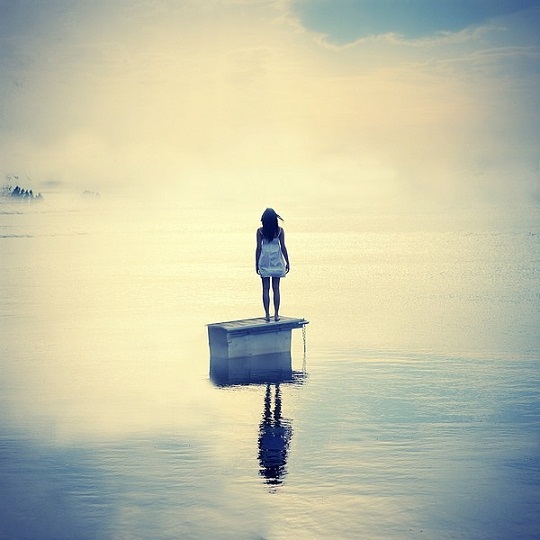
heatherfromthegrove’s poetry spotlight for today: “Desertion” by Rupert Brooke

left_alone

♦ ♦

POETRY 

@ heatherfromthegrove!

Enjoy!

♦ ♦ ♦

Desertion 

by Rupert Brooke

poemDesertion

Rupert Brooke  born on August 3, 1887 in England –  extremely handsome English poet famous for his neo-Romantic poems, most notably his war sonnets (the most famous one was “The Soldier”) written during World War One.  The idealistic nature of his poetry was likely a function of his youth. The well-traveled Cambridge graduate, commissioned into the Royal Naval Division, set sail for the Dardanelles in February 1915 – where he contracted septicaemia from a mosquito bite and died a month later (April 23), aboard a hospital ship off the Greek Island of Skyros. He lays buried beneath an olive grove on the Aegean island. He was only twenty-seven when he died.

Desertion I could not find any learned analysis of this poem.  The graceful lyricism of this poem, along with the theme of desertion, betrayal and fractured friendship/relationship, drew me in. The treachery of a friend or loved one who succumbs to gossip, rather than staying faithful to the friendship/relationship – written in such a beautifully, melodic manner  – resonated deeply with me, so much so that I chose to share this poem with you.

Poem via poemhunter.com.

Image via stylelemon.com, Photo credit: Julie de Waroquier.

heatherfromthegrove’s poetry spotlight for today: “The Road Not Taken” by Robert Frost

forest-trail

POETRY

@  heatherfromthegrove!

Enjoy!

The Road Not Taken

by Robert Frost

frost

Robert Frost born on March 26, 1874 in San Francisco, California – was one of the most popular and critically acclaimed American poets of the twentieth century. During his lifetime, he received a plethora of honors, most notably four Pulitzer Prizes for Poetry, numerous honorary degrees, and, in 1960, a Congressional Gold Medal. Robert Frost’s poetry was most often written with early twentieth century, rural New England as a backdrop, from which he explored intricate philosophical and social questions of human existence. His grasp and usage of down-to-earth, American  colloquial language (mirroring ordinary, everyday speech) resonated with his readership and he became an American literary icon.  His wife and inspiration for much of his poetry, Elinor Miriam White, married him in 1895.  She died from breast cancer in 1938. On January 29, 1963, at the age of eight-eight, Robert Frost died in Boston Massachusetts, of complications from pancreatic surgery.

The Road Not Taken one of Robert Frost’s most popular and yet most misunderstood poems. When he writes about the two roads, he says “Though as for that the passing there/Had worn them really about the same/And that morning equally lay/in leaves no step had trodden back”  – meaning that neither of the two roads are less traveled and therefore one is faced with the dilemma of choice: which of the two identical forks in the road do I take? Our route is determined by the fusion of both choice and chance (or fate). There is no right path, just the chosen path and the other one that was not chosen. The poem is about the moment of decision, not the actual decision itself. By making a choice, the traveler is aware that only sometime in the future, will he realize whether or not he took the road less traveled by. The poem encapsulates the agony of decision, stemming from  the very human (and common) fear of remorse/regret.

Poem via poemhhunter.com.

Image via spiritualdrift.com.

heatherfromthegrove’s poetry spotlight for today: “Alone” by Edgar Allan Poe

j0255382

POETRY

heatherfromthegrove!

Enjoy!

Alone

by Edgar Allan Poe

7-6-2013 12-37-18 PM

Edgar Allan Poe – born on January 19, 1809 in Boston, Massachusetts – was an American short-story writer, poet, critic, and editor.  Renowned for his tales of mystery and horror, he was dubbed  as “Father of the Detective Story.”  He married his cousin, Virginia, in 1836. She became his literary muse.  Her death in 1847 caused the grief-stricken Poe to begin a downward spiral into financial ruin and poor health. He died on October 7, 1849, in a Baltimore (Maryland) hospital. The exact cause of his death remains a mystery. Although a very troubled and haunted man, Poe’s brilliant imagination has left a compelling legacy in the literary world.  His poems and tales still have the power to shock and to move his readers.   

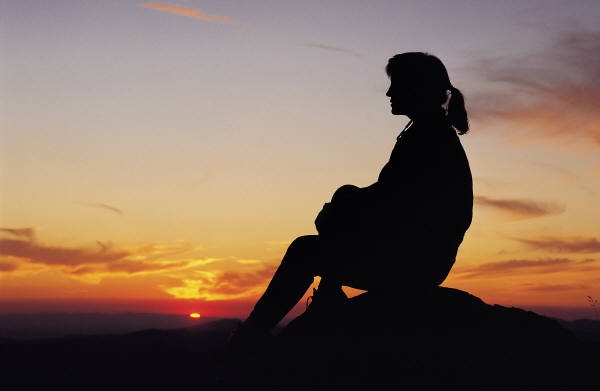
Alone originally written in 1829, when the author was only 20 years old, the 22-line poem was only published and titled posthumously.  Written at the time of his foster mother’s (Frances Allan) death, the poem reflects the haunting sense of isolation that he felt throughout his childhood.  

Poem via poemhunter.com

Image via faithfulhomeschool.com.

Think first, write later

5385287084_2702462500

 “Poirot,” I said. “I have been thinking.”
“An admirable exercise my friend. Continue it.”
 
― Agatha ChristiePeril at End House

Have you ever responded to an offensive or distressing email without thinking first?  “WHAT?!” you say to yourself, as your fingers agitatedly skim over the keys and, without a second thought…Send. Moments later, you could kick yourself for having been so impulsive.

This has surely happened to all of us, at one time or another.

Or perhaps, as a student, you were seated for your mid-term essay exam and you skimmed the questions quickly, then proceeded to write feverishly because the clock was ticking and you wanted to make sure that you had enough time to answer all the questions. It was only after you handed in the test, that you realized you missed the second part of the question because you didn’t take the time read carefully and organize your thoughts.

Mea culpa, mea culpa.

In the writing world, however, the process varies from writer to writer.  Not everyone likes to adhere to the “think first, write later” principle. Many writers just sit down at the computer (or, if they’re traditionalists, with pen and paper), and write. Then they edit. Stream of consciousness writing works for many and these are the writers who, when at home, probably don’t write shopping lists or who prefer not to structure their time rigidly. They are the free thinkers.  Write first, think while writing, and then edit later.

However, there are just as many writers (myself included) who prefer to organize their thoughts, prior to writing them down.  They do this by notes, index cards, outlines and also by just thinking (or daydreaming) it out in their minds. 

I am a great proponent of outlines.  My book writing process always commences with quiet contemplation… to think carefully about what I want to say and why, who will my readership be and how will I engage their attention. From there, I craft an initial Table of Contents which serves as my starting point and basic outline.  I then begin the initial research process (when research is required for the book) and the results of my initial research prompts me to write a more detailed outline which helps dictate the overall flow of the book. At that point. I move to a more advanced stage of research, finetune the outline further and then I am ready to sit down and write. I prefer to think first, write later. I carry a small  Moleskine reporter’s notebook with me wherever I go, to jot down thoughts. The challenge is being able to read my own messy handwriting later!

There really is no right or wrong process. Ultimately, the objective is to write.  How you get to that point is subject to whatever works for you.

So, think on the fly or  think in advance, but just make sure to carefully review your writing first before pressing that “Send” button!


Image via everydaygyaan.com.

Confessions of a Daydreamer

daydreaming-girl

“As I quietly stare off into space, eyes glazed over and brow thoughtfully taut, know that I am going about my business.  I am a storyteller.  Daydreaming is the best part of my job.”
― Richelle E. Goodrich

Couldn’t have said it better myself.

And now for the confession.

I have been daydreaming all of my life: characters, scenes and dialogue – all created in my mind. I am not crazy (although that subject is a matter of jovial debate in my family).  My mother totally understood the eccentricities of her youngest child.  After years of adjustment, my husband now knows that when he walks by the study and sees me in a trance-like state, tears streaming down my face, he needn’t worry.  Nor does he say a word because there is nothing more annoying to a consummate daydreamer than jarring interruptions. He just walks away, shaking his head and wondering to himself whether or not he lives in a madhouse.

So, I just like to conjure up storylines in my mind. The downside is that there are quite a few unfinished scripts in my filing drawer. Too many ideas, too little time. The upside is that I am never, ever bored.

One loop away from being totally loopy.

Now that the proverbial cat is out of the bag, I’d like to focus a little wrath on the naysayers who give daydreaming a bad name. In a world where everyone seems to be rushing around like the rabbit in Alice in Wonderland, daydreaming is often considered frivolous, lazy, a waste of valuable time and downright “flakey.” 

Not so, say many mental health experts. Daydreaming is not only beneficial to our state of mind, but it also contributes to our productivity.

“How on earth can this be true?”  say the anti-daydreamers.

Well, ye of little faith, psych specialists compare daydreaming to meditation.  Both help us to relax, relieve stress, take a mental “time out.”  After a daydreaming session, we are refreshed, energetic and ready to tackle the rest of the day.

In the Smithsonian article, The Benefits of Daydreaming,” Joseph Stromberg writes about a recent research study (published in Psychological Science) which indicates “that a wandering mind correlates with higher degrees of what is referred to as working memory. Cognitive scientists define this type of memory as the brain’s ability to retain and recall information in the face of distractions.

Therefore, despite the daydreamer’s propensity to let the mind wander, she (or he) possesses a heightened working memory which allows her (or him) to snap out of La-la Land when required to do so.

Moving the discussion of science back to the arts, most creative people would concur that daydreaming sparks the imagination. It helps to motivate and stimulate ideas.

Walk into a room filled with writers, authors, poets and novelists, and ask “Who among you daydreams regularly? Please raise your hand.”  With few exceptions, every hand will be raised.

Storytellers daydream. It’s what we do.

La-la land is a great place to visit.  The key is to know when it’s time to leave and come back home.


Image via mommasmoneymatters.com.