10 Great Books to Read this Summer

Cat

Summertime is that wonderful season when everything slows down just a tad. It’s when all the bookworms come out of the woodwork –– to grab that enticing novel, inspiring non-fiction or juicy biography that they finally have the time to read. Work attire is hurriedly replaced by t-shirts, shorts and flip-flops.  And with tall, ice-cold glasses of their favorite libation, they curl up comfortably and begin their summer reads.

These are my (heatherfromthegrove) top picks – all sitting on my bookshelf, waiting to be read. I just poured myself a glass of white wine and grabbed a book I’ve been dying to read: And the Weak Suffer What They Must? – by Yanis Varoufakis. Now, off to my comfy chair on the patio…

Enjoy!

– Heather

(PS – Hover your mouse over the book titles and authors’ names to get the link to the Amazon and Author’s Bio URLs)

FICTION

1birdssky300

 1. All the Birds in the Sky – by Charlie Jane Anders

“Patricia is a witch who can communicate with animals. Laurence is a mad scientist and inventor of the two-second time machine. As teenagers they gravitate towards one another, sharing in the horrors of growing up weird, but their lives take different paths…When they meet again as adults, Laurence is an engineering genius trying to save the world-and live up to his reputation-in near-future San Francisco. Meanwhile, Patricia is a graduate of Eltisley Maze, the hidden academy for the magically gifted, working hard to prove herself to her fellow magicians and secretly repair the earth’s ever growing ailments.As they attempt to save our future, Laurence and Patricia’s shared past pulls them back together. And though they come from different worlds, when they collide, the witch and the scientist will discover that maybe they understand each other better than anyone.”

ManNoShadowJCO_Proper-thumb-300x453-418703

 2. The Man Without a Shadow – by Joyce Carol Oates

“In 1965, neuroscientist Margot Sharpe meets the attractive, charismatic Elihu Hoopes—the “man without a shadow”—whose devastated memory, unable to store new experiences or to retrieve the old, will make him the most famous and most studied amnesiac in history. Over the course of the next thirty years, Margot herself becomes famous for her experiments with E. H.—and inadvertently falls in love with him, despite the ethical ambiguity of their affair, and though he remains forever elusive and mysterious to her, haunted by mysteries of the past….”
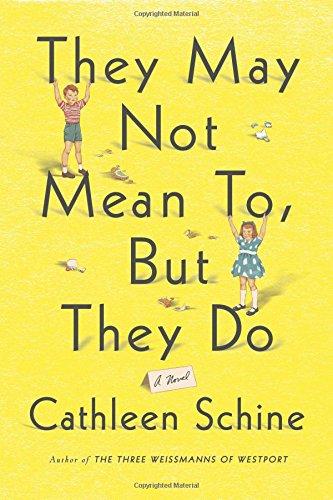
TheyMayNot

 3. They May Not Mean To, But They Do – by Cathleen Schine

A “hilarious new novel about aging, family, loneliness, and love.”

“The Bergman clan has always stuck together, growing as it incorporated in-laws, ex-in-laws, and same-sex spouses. But families don’t just grow, they grow old, and the clan’s matriarch, Joy, is not slipping into old age with the quiet grace her children, Molly and Daniel, would have wished. When Joy’s beloved husband dies, Molly and Daniel have no shortage of solutions for their mother’s loneliness and despair, but there is one challenge they did not count on: the reappearance of an ardent suitor from Joy’s college days. And they didn’t count on Joy herself, a mother suddenly as willful and rebellious as their own kids…”

UnspeakableThingsProper-thumb-300x481-421492

 4. Unspeakable Things – by Kathleen Spivack

“A wild, erotic novel—a daring debut—from the much-admired, award-winning poet, author of Flying Inland, A History of Yearning, and With Robert Lowell and His Circle: Sylvia Plath, Anne Sexton, Elizabeth Bishop, Stanley Kunitz, and Others. A strange, haunting novel about survival and love in all its forms; about sexual awakenings and dark secrets; about European refugee intellectuals who have fled Hitler’s armies with their dreams intact and who have come to an elusive new (American) “can do, will do” world they cannot seem to find. A novel steeped in surreal storytelling and beautiful music that transports its half-broken souls—and us—to another realm of the senses.”
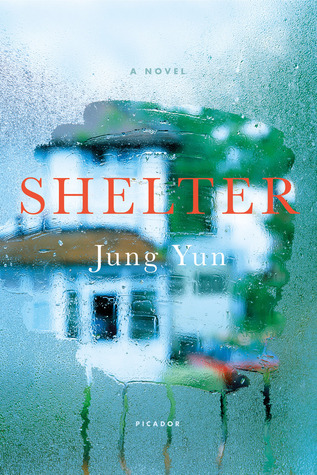
Shelter

 5. Shelter – by Jung Yum

“You can never know what goes on behind closed doors.

Kyung Cho is a young father burdened by a house he can t afford. For years, he and his wife, Gillian, have lived beyond their means. Now their debts and bad decisions are catching up with them, and Kyung is anxious for his family s future….

… As “Shelter” veers swiftly toward its startling conclusion, Jung Yun leads us through dark and violent territory, where, unexpectedly, the Chos discover hope. “Shelter” is a masterfully crafted debut novel that asks what it means to provide for one’s family and, in answer, delivers a story as riveting as it is profound.”

NON-FICTION

414Q4ZNUNvL._SX333_BO1,204,203,200_

6. Evicted (Poverty and Profit in the American City) – by Matthew Desmond

“From Harvard sociologist and MacArthur “Genius” Matthew Desmond, a landmark work of scholarship and reportage that will forever change the way we look at poverty in America.”
 
“In this brilliant, heartbreaking book, Matthew Desmond takes us into the poorest neighborhoods of Milwaukee to tell the story of eight families on the edge. Arleen is a single mother trying to raise her two sons on the $20 a month she has left after paying for their rundown apartment. Scott is a gentle nurse consumed by a heroin addiction. Lamar, a man with no legs and a neighborhood full of boys to look after, tries to work his way out of debt. Vanetta participates in a botched stickup after her hours are cut. All are spending almost everything they have on rent, and all have fallen behind…”

TheBook 7. The Book – by Keith Houston

“We may love books, but do we know what lies behind them? In The Book, Keith Houston reveals that the paper, ink, thread, glue, and board from which a book is made tell as rich a story as the words on its pages―of civilizations, empires, human ingenuity, and madness. In an invitingly tactile history of this 2,000-year-old medium, Houston follows the development of writing, printing, the art of illustrations, and binding to show how we have moved from cuneiform tablets and papyrus scrolls to the hardcovers and paperbacks of today. Sure to delight book lovers of all stripes with its lush, full-color illustrations, The Book gives us the momentous and surprising history behind humanity’s most important―and universal―information technology.”
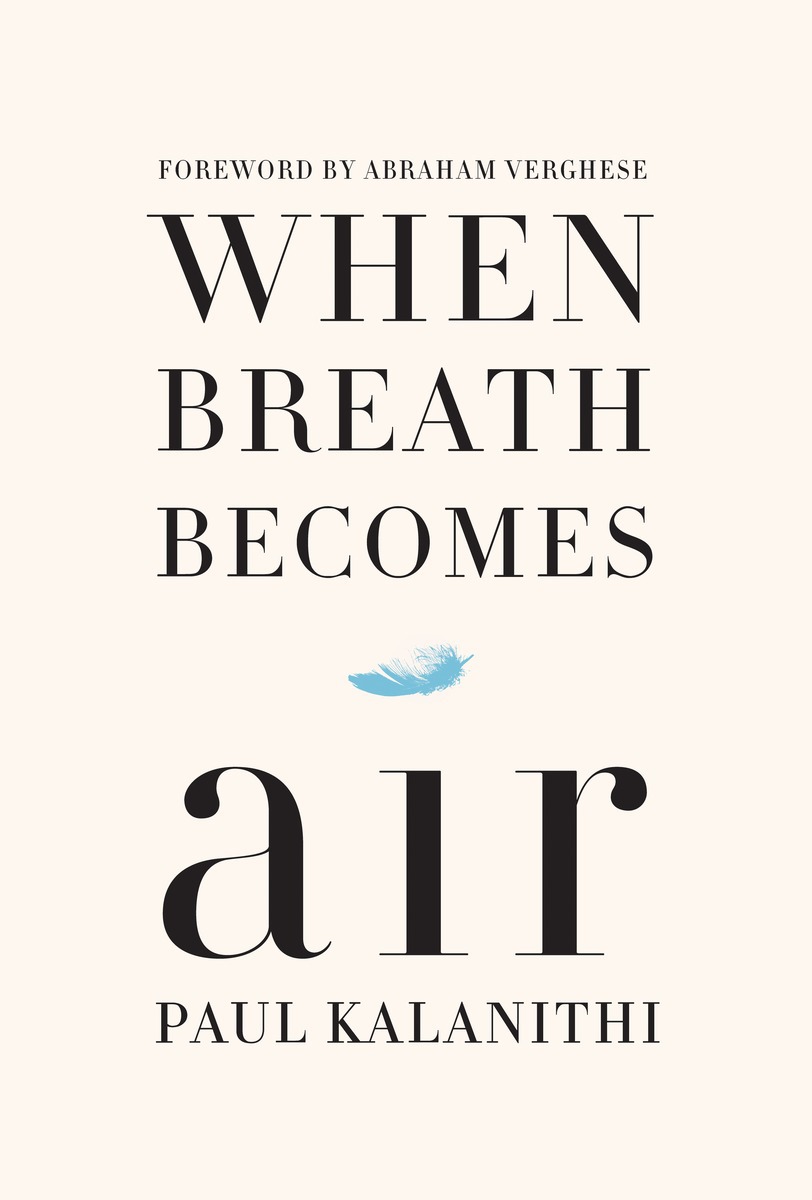
WhenBreath8. When Breath Becomes Air – by Paul Kalanithi

“At the age of thirty-six, on the verge of completing a decade’s worth of training as a neurosurgeon, Paul Kalanithi was diagnosed with stage IV lung cancer. One day he was a doctor treating the dying, and the next he was a patient struggling to live. And just like that, the future he and his wife had imagined evaporated. 

When Breath Becomes Air chronicles Kalanithi’s transformation from a naïve medical student “possessed,” as he wrote, “by the question of what, given that all organisms die, makes a virtuous and meaningful life” into a neurosurgeon at Stanford working in the brain, the most critical place for human identity, and finally into a patient and new father confronting his own mortality.”

“I guarantee that finishing this book and then forgetting about it is simply not an option. . . . Part of this book’s tremendous impact comes from the obvious fact that its author was such a brilliant polymath. And part comes from the way he conveys what happened to him—passionately working and striving, deferring gratification, waiting to live, learning to die—so well. None of it is maudlin. Nothing is exaggerated. As he wrote to a friend: ‘It’s just tragic enough and just imaginable enough.’ And just important enough to be unmissable.”— Janet MaslinThe New York Times

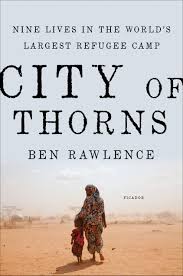
cityofthorns9. City of Thorns (Nine Lives in the World’s Largest Refugee Camp) – by Ben Rawlence

“To the charity workers, Dadaab refugee camp is a humanitarian crisis; to the Kenyan government, it is a ‘nursery for terrorists’; to the western media, it is a dangerous no-go area; but to its half a million residents, it is their last resort.”

“In City of Thorns, Rawlence interweaves the stories of nine individuals to show what life is like in the camp and to sketch the wider political forces that keep the refugees trapped there. Rawlence combines intimate storytelling with broad socio-political investigative journalism, doing for Dadaab what Katherinee Boo’s Behind the Beautiful Forevers did for the Mumbai slums. Lucid, vivid and illuminating, City of Thorns is an urgent human story with deep international repercussions, brought to life through the people who call Dadaab home.”

Varou10. And the Weak Suffer What They Must? (Europe’s Crisis and America’s Economic Future) – by Yanis Varoufakis

“A titanic battle is being waged for Europe’s integrity and soul, with the forces of reason and humanism losing out to growing irrationality, authoritarianism, and malice, promoting inequality and austerity. The whole world has a stake in a victory for rationality, liberty, democracy, and humanism.”

“Varoufakis delivers a fresh look at the history of Europe’s crisis and America’s central role in it. He presents the ultimate case against austerity, proposing concrete policies for Europe that are necessary to address its crisis and avert contagion to America, China, and the rest of the world. With passionate, informative, and at times humorous prose, he warns that the implosion of an admittedly crisis–ridden and deeply irrational European monetary union should, and can, be avoided at all cost.”

Happy reading! 

book-759873_960_720

Cat and Book photos via pixabay.com.

Say “No” to Hate

rain-930262_960_720

Picture via pixabay.com

“Laugh when you can, apologize when you should, and let go of what you can’t change. Kiss slowly, forgive quickly, play hard, take chances, give everything, and have no regrets. Life is too short to be anything but happy!” – Unknown

Just the other day, I went online to research urological treatment options for cats and I came across a vet med site where other cat owners shared their advice and experiences. As I read down the endless list of back-and-forth comments,  I was appalled.  A subject as benign as “cats with bladder issues” unleashed a barrage of hateful commentary. Rather than giving constructive advice, empathy or encouragement, there were nasty comments like “You gave your cat that medication? You’re an idiot and an irresponsible cat owner!”  And that was one of the nicer comments. These people didn’t even know each other, but were quick to pass judgment – all behind the shield of anonymity, of course.

It never ceases to amaze me how many haters there are out there. Blogs and social media sites like Twitter, Facebook and LinkedIn seem to be a breeding ground for these angry people, emboldened by the name “Anonymous.”  Amazingly, I’ve only had one hater comment on this blog – since its inception in October 2011.  I never published the comment, because my policy is to never give a hater any public platform to spew their hate.  Criticism is fine. Venom is not. Sarcasm and dark humor is okay. Crass and ignorant commentary is not okay.

Apparently, hate is not relegated to social media.  Just look at the ridiculous nastiness and vulgarity displayed during the recent GOP presidential debates. Opportunistic presidential nominees are feeding off the anger of  a nation, as the world watches with amazement and disgust.

Now, there is nothing wrong with being angry.  But when anger becomes rage and gives birth to a population of serial haters, then we’ve got a problem, folks. Anger, when properly channeled, can bring about positive change.  Rage is a different animal altogether.  It just festers. It becomes malignant.

The fact of the matter is, Life is too short.

Who in their right mind would choose rage and hate over happiness and love?  Yes, I said “choose.”  It’s all about choice.

Say “No” to hate.  It simply takes up too much energy.  It gives you frown lines and makes you bitter.  It’s like a dark, murky cloud that follows you around everywhere.

I firmly believe that a positive attitude attracts good energy.  So, I say “Yes” to love.  And I’d rather have a face riddled with laugh lines, than frown lines – any day.

Cheers,

Heather  (not “Anonymous”)

Random Acts of Kindness

98393949_34e3a780e8_o

“Three things in human life are important. The first is to be kind. The second is to be kind. And the third is to be kind.”    – Henry James

Apparently today (February 17) is National Random Acts of Kindness Day… which begs the question “Do we really need a day to remind us to be kind to others? ”

Isn’t kindness an act of simple human decency – one that should come naturally … whenever, however, and to whomever?  It certainly should be.

I encourage you to read The Dalai Lama: A Policy of Kindness, by Sidney D. Piburn. It is a beautiful selection of vignettes written by and about His Holiness The Dalai Lama. You don’t have to be a Buddhist or even have any knowledge of Buddhism to read and appreciate this book.

Kindness begins at home and, as such,  our children’s treatment of others is – more often than not – a reflection of our own behavior.  There are some really good, age-appropriate books that teach children the importance of kindness. I’ve listed some of them below.

Ages 4 -6

  • A Sick Day for Amos McGee – by Philip Stead
  • Hey, Little Ant – by Philip and Hannah Hoose
  • How Do Dinosaurs Play with Their Friends? – by Jane Yolen
  • How Kind – by Mary Murphy
  • The Lion and the Mouse – by Jerry Pinkney
  • The Mine-O-Saur  –by Sudipta Bardhan-Quallen
  • Stone Soup – by Jon J. Muth
  • Stellaluna – by Janell Cannon
  • Toot & Puddle  – by Holly Hobbie

Ages 7-8

  • All Families Are Special – by Norma Simon
  • The Ant Bully – by John Nickle
  • Enemy Pie – by Derek Munson
  • Have You Filled a Bucket Today?  – by Carol McCloud
  • Horace and Morris But Mostly Dolores – by James Howe
  • The Giving Tree – by Shel Silverstein
  • The Golden Rule – by Ilene Cooper
  • Kindness Is Cooler, Mrs. Ruler – by Margery Cuyler
  • Ordinary Mary’s Extraordinary Deed – by Emily Pearson
  • When Sophie Gets Angry–Really, Really Angry – by Molly Bang
  • Somebody Loves You, Mr. Hatch – by Eileen Spinelli
  • The Story of Ruby Bridges – by Robert Coles

Ages 9 -11

  • Bluish – by Virginia Hamilton
  • Hanna’s Suitcase – by Karen Levine
  • Number the Stars – by Lois Lowry
  • Ryan and Jimmy and the Well in Africa That Brought Them Together – by Herb Shoveller

Ages 12 +

  • Dear Bully: 70 Authors Tell Their Stories – by Dawn Metcalf
  • Freak the Mighty – by Rodman Philbrick
  • Mockingbird – by Kathryn Erskine
  • To Kill a Mockingbird – by Harper Lee

And there are so many more – for children and adults alike. Think of the wonderful conversations you can have with your children, while reading these books together!

One would hope that kindness is innate.  However, sometimes we may need a reminder.  In addition to books about kindness, look to some of the iconic men and women whose lives serve as an inspiration to all of us… like Mother Teresa, Pope Francis, The Dalai Lama and so many more.  Their life stories will ignite the kindness spark that lives within each of us.

So, make every day your “Random Acts of Kindness Day.” And while you’re at it, remember to be kind to yourself.

“Love and kindness are never wasted. They always make a difference. They bless the one who receives them, and they bless you, the giver.” Barbara de Angelis


Photo via flickr.

heatherfromthegrove’s New Year’s Revelation No 7 of 7: Celebrate Life

4223395387_b25c9b26c1_o

“Life is full of beauty. Notice it. Notice the bumblebee, the small child, and the smiling faces. Smell the rain, and feel the wind. Live your life to the fullest potential, and fight for your dreams.”

Ashley Smith

As we reach the end of the first week of January, I wanted to finish off my 7 New Year’s Revelations on a jazzy note. Despite all of the ups and downs, dramas and drollery…. life is precious and meant to be celebrated.  Gain wisdom and strength from the difficult times and focus on the beauty of  everything – from the simple to the sublime.

Take the time to eat dinner by candlelight and talk with those you love – without glancing at your smartphone! In fact, put the damned smartphone on the charger and turn it off for rest of the night! Communicate with actual spoken words, rather than texts. Put your favorite music on … nice and loud…. and dance around the house! Kiss that special person in your life… long and slow.  Don’t rush through a meal… savour the taste of  good food and libation. Don’t guzzle a drink… sip it slowly.  You’re not going to turn into a pumpkin at the stroke of midnight… so take your time.

And, remember….. the best is yet to come.

“Live with intention. Walk to the edge. Listen hard. Practice wellness. Play with abandon. Laugh. Choose with no regret. Appreciate your friends. Continue to learn. Do what you love. Live as if this is all there is.”

Mary Ann Radmacher

Some Book Recommendations:

Rites of Passage: Celebrating Life’s Changes – by Kathleen Wall & Gary Ferguson

51C7HA0RCRL._SX313_BO1,204,203,200_

Life, Love, Laughter: Celebrating Your Existence  – by Osho

6533738

Loving Life After Sixty: Celebrating the Autumn of Your Life by Tom Paugh

bk


Photo via flickr.com


heatherfromthegrove’s New Year’s Revelation No 6 of 7: The power of Forgiveness

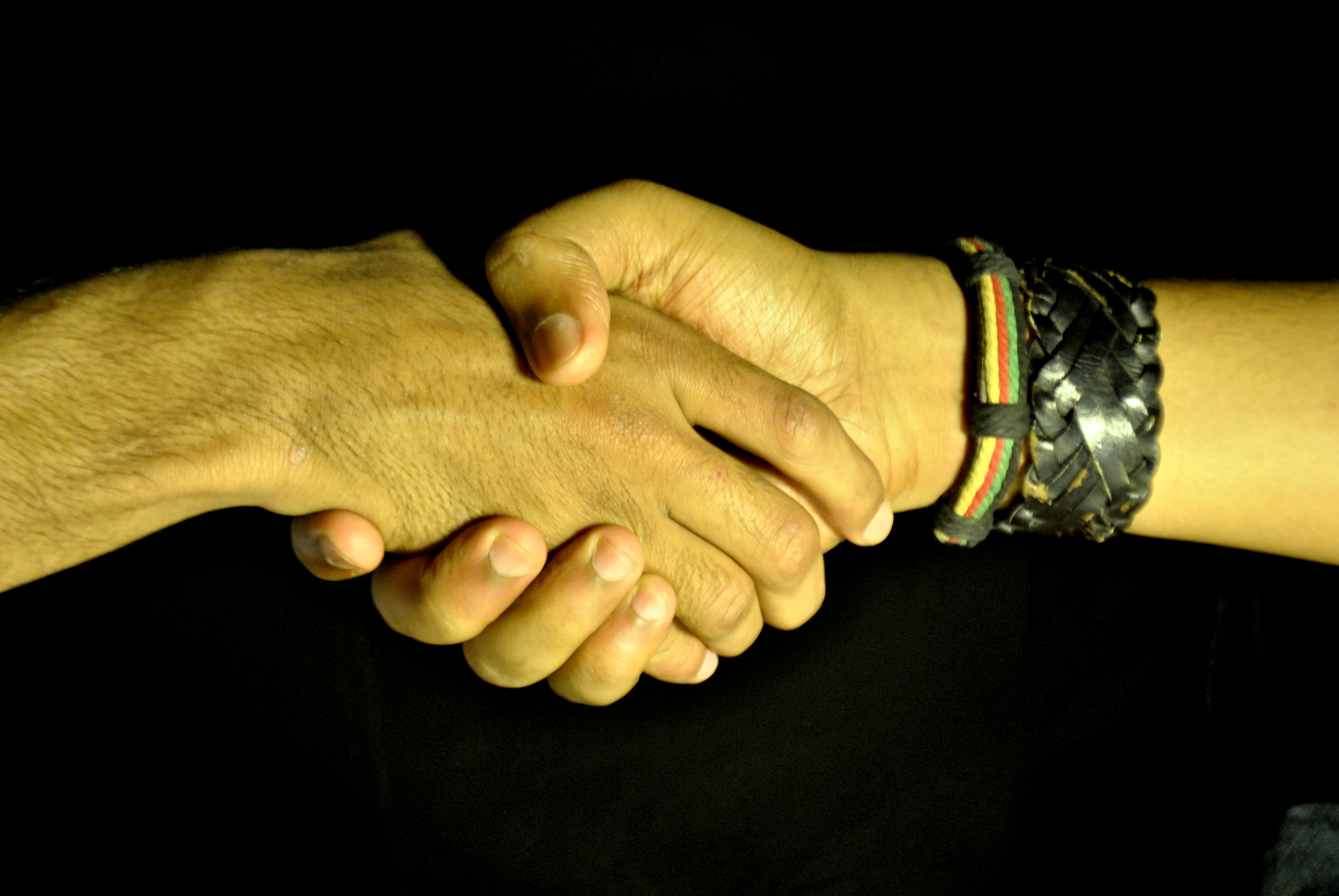
4242-shake-hands

“Forgiving does not erase the bitter past. A healed memory is not a deleted memory. Instead, forgiving what we cannot forget creates a new way to remember. We change the memory of our past into a hope for our future.”

Louis B. Smedes

One would think that three of the most difficult (and uncomfortable) words to utter would be: “I am sorry.”

Not so. It’s the responding declaration of “I forgive you” (and meaning it) that poses the real herculean challenge.

When English poet Alexander Pope wrote “To err is human, to forgive, Divine,” he was echoing what many of our religious faiths teach us.  As a Roman Catholic, I’ve recited the Our Father a million times, solemnly whispering: “God forgive us our trespasses as we forgive those who trespass against us.”

Easier said than done…. which is probably why we’re required to repeat the prayer at every Mass before Communion and also after Confession… lest we forget our promise.

Sometimes it’s harder to forgive yourself than to forgive another person.

Sometimes it’s hard and even impossible to forgive. Period.

“As long as you don’t forgive, who and whatever it is will occupy a rent-free space in your mind.”

Isabelle Holland

Over the span of my lifetime to the present day, I can truthfully say that I have forgiven almost every person who has “trespassed against me.” Almost.

If a person – be it family or friend – says or does something hurtful towards me and they do it out of fear, misinformation, ignorance or haste (we’ve all said things that we’ve wished, in the next instant, that we could take back)…. then I forgive them. Depending on the severity of the hurt, I may not forget.  But I forgive. And the lightness of being that comes with forgiveness is wonderful and freeing.

However, there are a very select few people for whom forgiveness is simply not in the cards… as hard though I try.

If a person – be it family or friend – commits a hateful act with the malicious intent to harm me and/or those I hold dear…. then I cannot forgive them.  And that darkness is always lurking in the shadows.

Maybe someday. One can only hope.

Not for their sake, but for mine.

Some Book Recommendations:

Forgiveness is a Choice: A Step-by-Step Process for Resolving Anger and Restoring Hopeby Robert D. Enright

51Gge+EJ40L._AA160_

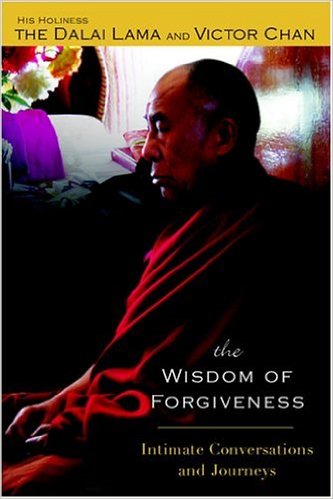
The Wisdom of Forgiveness by the Dalai Lama and Victor Chan

51SYVF4QQ1L._SX331_BO1,204,203,200_

For Children: The Forgiveness Garden by Lauren Thompson

51oNZQD6D2L._SX430_BO1,204,203,200_


Photo via pdpics.com

heatherfromthegrove’s New Year’s Revelation No 5 of 7: Beyond the olive branch

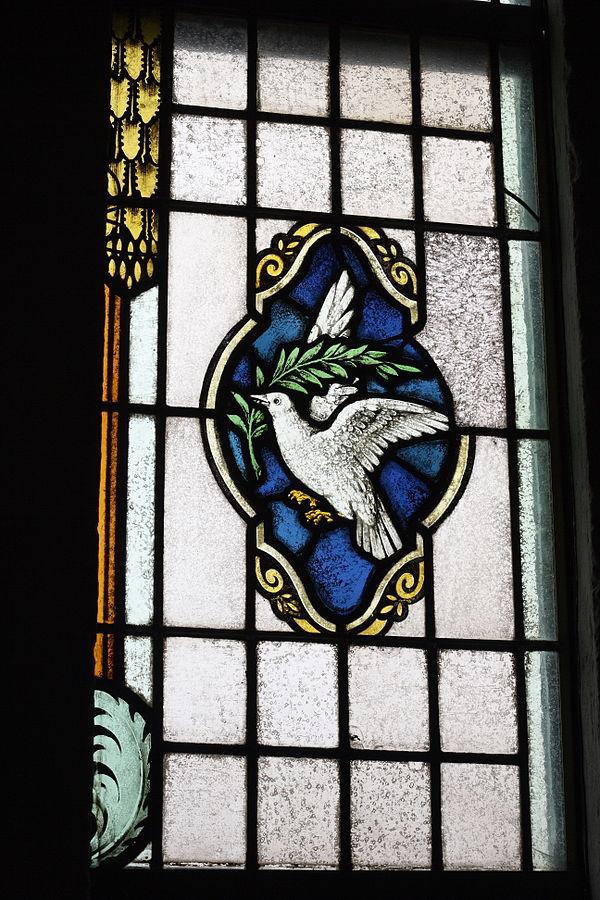
Kruft_St._Dionysius_und_Sebastian_2212

“Family quarrels are bitter things. They don’t go according to any rules. They’re not like aches or wounds, they’re more like splits in the skin that won’t heal because there’s not enough material.”    

F. Scott Fitzgerald

Why can’t we all just get along?

People have been warring since the beginning of time. Tribes. Religious sects. Nations.

And, yes, families.

As I said a few days back, “It all begins and ends with Family.” How can we expect nations to coexist in peace and harmony when many of us can’t even manage to keep our families intact?

There are so many stressors that lead to family conflict: financial problems, joblessness, addiction, illness, death, inheritance and even something as basic as incompatible and/or strong personalities. It is healthy and normal to argue, debate and occasionally fight.  It is unhealthy and hateful to harm others – physically, emotionally, in their business and their reputation within society.

Problems rarely, if ever, solve themselves. Resolution (to problems) usually requires compromise, which inevitably results in loss (i.e. giving something up, to keep the peace).  If  there is love, respect and a willingness to work through the conflict – because of a deep-seated desire to keep the family together – then there is hope.  Sometimes an outside mediator, such as a therapist, counsellor or spiritual guide (i.e. priest/minister/rabbi/imam) may be needed to assist with the process of resolution and reconciliation.  Hopefully, the conflict gets resolved… without too much collateral damage.

“Problems are like washing machines. They twist us, spin us and knock us around but in the end we come out cleaner, brighter and better than before.”    

– Unknown

But what if we can’t all just get along? Not now. Not ever. It happens all the time.  Parents divorce. Children leave home for good, pledging never to return. Siblings each go their own way, losing all communication with each other. Family members become estranged. It’s sad, even tragic, when that happens.

I don’t have any answers. What I do know for sure is that family is fundamental to our well-being.  That said, for family to coexist as a united and loving unit… each and every family member must want it to be so.  Some people need time, space and distance to gain perspective and eventually reunite.

Alas, there are some families so fractured that they are beyond the olive branch.

And everyone moves on – each going his/her separate way.

Sometimes it’s for the better.

“Sometimes problems don’t require a solution to solve them; instead they require maturity to outgrow them.”    

Steve Maraboli

Some Book Recommendations:

Peace Catalysts: Resolving Conflict in Our Families, Organizations and Communitiesby Rick Love

41h-ESc1zoL._SX331_BO1,204,203,200_

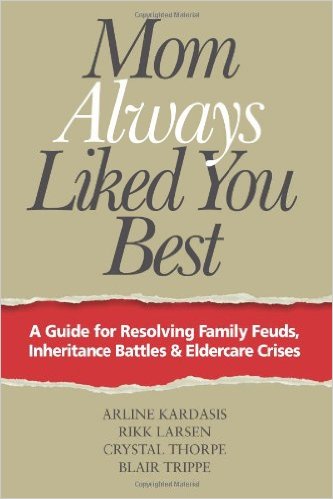
Mom Always Liked You Best: A Guide for Resolving Family Feuds, Inheritance Battles & Eldercare Crises Arline Kardasis and Rikk Larsen

41bPiIkRtQL._SX331_BO1,204,203,200_


*Note: The title of today’s Blog – “Beyond the olive branch” – is the title of Volume 4 in my Baby Boomer Series™ of books (in progress

Photo via Wikimedia Commons


heatherfromthegrove’s New Year’s Revelation No 4 of 7: Surviving that undertow called Grief

4534960280_3f29d54641_o

“The deep pain that is felt at the death of every friendly soul arises from the feeling that there is in every individual something which is inexpressible, peculiar to him alone, and is, therefore, absolutely and irretrievably lost.”

Arthur Schopenhauer

Grief. It is an intense emotion and a very personal experience. We all grieve differently. Russian writer Leo Tolstoy, one of the greatest authors of all time (remember War and Peace?), once wrote that “Only people who are capable of loving strongly can also suffer great sorrow.”  I know a very few people – family and friends alike – who manage to wade through their grief quickly and in a matter of fact manner.  Many others, like myself, grieve deeply and over a long period of time.  There is no right or wrong way to grieve… although some people do experience a level of grief that spirals them into a deep depression that lasts years, decades and, in some extreme cases, a lifetime.

“There is a sacredness in tears. They are not the mark of weakness, but of power. They speak more eloquently than ten thousand tongues. They are the messengers of overwhelming grief, of deep contrition, and of unspeakable love.”

Washington Irving

In my life, Grief has been a frequent visitor. We have a familiar routine, Grief and I. Grief sweeps into my spirit, like a Category 4 Hurricane.  I allow myself to remain in the eye of the storm – daring it to make me collapse.  Somehow, I always manage to survive – still standing, although somewhat bruised and battered.  As American author Anne Lamott writes: “It’s like having a broken leg that never heals perfectly—that still hurts when the weather gets cold, but you learn to dance with the limp.”

It never goes away. It is always with me, to some degree.  A memory, a smell, a song…  can evoke joy and sorrow and then joy again – in one full sweep.  This is why I refer to Grief as an “undertow” –  a flow or current of water beneath the ocean waves near the shore that is powerful enough to suddenly lift you and immerse you in the next incoming wave.

“Grief, when it comes, is nothing like we expect it to be. … Grief has no distance. Grief comes in waves, paroxysms, sudden apprehensions that weaken the knees and blind the eyes and obliterate the dailiness of life.”

Joan Didion, The Year of Magical Thinking

I prefer to deal with grief privately – hugs from well-meaning people are not encouraged as I don’t like to be touched when I’m in the throes of grief.  For me, it’s a solitary experience.

According to psychologists and grief counselors, there are five stages of Grief: Denial/numbness/shock, Bargaining, Depression/sorrow, Anger and Acceptance.  However, as much as we want to give everything a label and a chronological order… the fact  of the matter is that one goes back and forth (a number of times) between these stages.  I’ve spent a lot of time visiting and revisiting the stages of bargaining (i.e. what could have been done to prevent the loss), sorrow and anger. And  as for the final stage, Acceptance, well … it is sometimes a bitter pill to swallow, but once you do, it does bring some sense of peace. Not closure. Just peace. And that’s what you need to survive the undertow.

Some Book Recommendations:

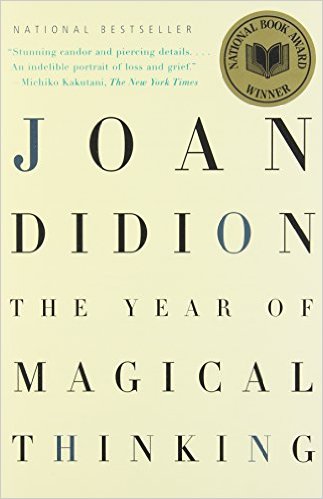
The Year of Magical Thinking by Joan Didion

41fAdMQS9eL._SX321_BO1,204,203,200_

Tear Soup: A Recipe for Healing After Lossby Pat Schwiebert

51TOTmQ+diL._SX388_BO1,204,203,200_


*Note:  The title of this Blog, “Surviving that undertow called Grief” is the title of Volume 3 in my Baby Boomer Series™ of books (in progress)

Photo via flickr.com


heatherfromthegrove’s New Year’s Revelation No 3 of 7: Animals are Divine creatures… be kind to them

3517945550_5999d793fc_o

“For the animal shall not be measured by man. In a world older and more complete than ours, they move finished and complete, gifted with extensions of the senses we have lost or never attained, living by voices we shall never hear. They are not brethren; they are not underlings; they are other nations, caught with ourselves in the net of life and time, fellow prisoners of the splendour and travail of the Earth”

Henry Beston

I have often said that if I had to choose to be in the company of humans or in the company of animals, I’d choose the latter.

Animals are pure, beautiful and Divine creatures. Wild animals fill me with awe. Domestic animals, like (for example) dogs and cats, are trusting, loyal and love unconditionally. When humans betray their trust… by mistreating or ignoring them, this – in my view – is a heinous crime.

I condemn the act of hunting and killing animals for sport. It is, quite simply, repugnant.

In my most bleak and darkest moments, my dog and cats have raised my spirits and given me solace. It is an honour and a privilege to be their caretaker.

Over the years, my husband and I have saved and provided a haven for frogs, lizards, birds, quails, squirrels, possums, cats and dogs. We have eight indoor cats (four were born in our home and we hand-raised one that was abandoned by her mother at only five hours old). We also feed all the stray and feral cats in our immediate neighborhood – seven of them (at last count). Our beloved 14½-year-old Black Lab (“Bacchus“) died four months ago and we are still grieving. Even our cats are mourning his loss.

Animals… ALL animals… need our protection and respect.

If you are an animal lover/activist, then I am preaching to the converted.

However, if you are unaccustomed to or uncomfortable with animals, then I urge you to befriend a dog or cat. I am certain that you will be smitten after the first encounter.  But, if you’re not, simply remember to extend kindness to any animal that may cross your path.

They are the innocents. They have no voices but their eyes speak volumes.

They cannot advocate for themselves. So, it is up to us to do that for them.

After all, the very best of humanity is the practice of human kindness and compassion. It should, it MUST be extended to our animal brethren.

“Not to hurt our humble brethren (the animals) is our first duty to them, but to stop there is not enough. We have a higher mission–to be of service to them whenever they require it… If you have men who will exclude any of God’s creatures from the shelter of compassion and pity, you will have men who will deal likewise with their fellow men.”

Saint Francis of Assisi

Movie Recommendation:

Cry of the Innocent: The Voices That Can’t Speak” (written, directed and produced by Katherine Lowson)

Some Book Recommendations:

For the Prevention of Cruelty: The History and Legacy of Animal Rights Activism in the United States – by Diane L. Beers

51hFtuJ8UvL._SX331_BO1,204,203,200_

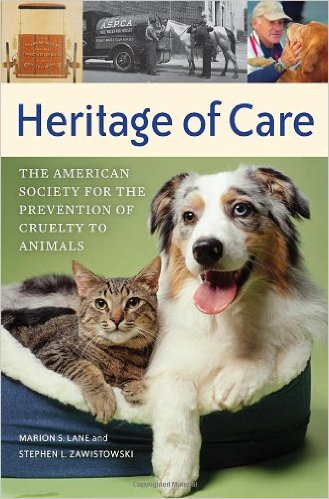
Heritage of Care: The American Society for the Prevention of Cruelty to Animals – by Marion S Lane and Stephen L. Zawistowski Ph.D

512goZwcyUL._SX327_BO1,204,203,200_


Photo via flickr.com

heatherfromthegrove’s New Year’s Revelation No 2 of 7: Keep it simple

1345190119_5596087366_o

“As you simplify your life, the laws of the universe will be simpler; solitude will not be solitude, poverty will not be poverty, nor weakness weakness.”

Henry David Thoreau

swirly2This year, the inspiration for my New Year’s “Revelations” stem from some of the experiences, life events and lessons learned in the past year.

For me, it was – as Charles Dickens wrote (in Tale of Two Cities) – “the best of times, it was the worst of times…. it was the season of Light, it was the season of Darkness, it was the spring of hope, it was the winter of despair…”

And with each year comes more wisdom.

I hope that some or all of these revelations resonate with you.

swirly2

We live in a complex world and we , more often than not, tend to overcomplicate our lives.

Over the years, I’ve learned – both by choice and by necessity – to shed the layers of excess…. from the superficial to the significant.

By superficial, I mean (for example)… how many pairs of shoes does a woman really need?

By significant, I mean (for example)… do you need to surround yourself with a large group of so-called family, friends and acquaintances who may or may not be well-meaning and authentic versus maintaining ties with the people who have a shared history and/or heritage and who like/love you… no matter what?

Maybe it’s a function of age and acquired wisdom, but I can say that I have significantly simplified my life and I feel lighter (in the spiritual sense) as a result.

We reach a point in our lives when we have to face some harsh truths – about ourselves, about what motivates us and why, and about how we want to live/conduct the rest of our lives.

When we shed the unnecessary “onion layers” of our lives, we’re left with the essentials.

It makes life cleaner, neater, and more focused.

Personally, I feel much more at peace and happy with myself now than at any other point in my life. Simplicity, in my view, equals Freedom.

So, as this New Year commences, I urge you to try to simplify every aspect of your life… as much as you can. Think of it as a spiritual diet.  Just make sure you stick with it.  You’ll be happy you did.

“Beauty of style and harmony and grace and good rhythm depend on simplicity.”

Plato

Some Book Recommendations:

Freedom of Simplicity: Finding Harmony in a Complex Worldby Richard J. Foster

41oCGSUbtwL._SX329_BO1,204,203,200_

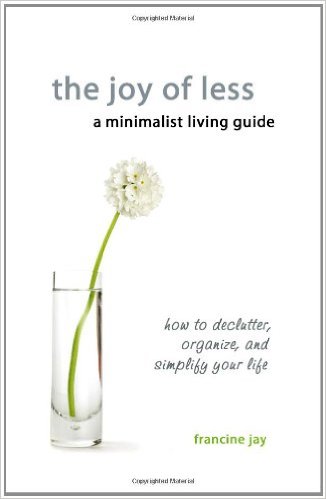
The Joy of Less, A Minimalist Living Guide: How to Declutter, Organize, and Simplify Your Life by Francine Jay

41dSMjvTbUL._SX324_BO1,204,203,200_


Photo via flickr.com


heatherfromthegrove’s New Year’s Revelation No 1 of 7: It all begins and ends with Family

6962-friends-family-sea-front

“The family is the nucleus of civilization.”

Will Durant

swirly2

Happy New Year everyone!

This year, the inspiration for my New Year’s “Revelations” stem from some of the experiences, life events and lessons learned in the past year.

For me, it was – as Charles Dickens wrote (in A Tale of Two Cities) – “the best of times, it was the worst of times…. it was the season of Light, it was the season of Darkness, it was the spring of hope, it was the winter of despair…”

And with each year comes more wisdom.

I hope that some or all of these revelations resonate with you.

swirly2

It all begins and ends with Family. It forms the core of our belief system and is the springboard from which we go on to conduct the rest of our lives.  Family supersedes nationalistic ideals, political aspirations and even religious dogma.  Family. Is. Everything. Well, at least it should be.

In a Utopian world, the family should be a “safe harbor” where we are loved, cherished, encouraged, and understood. It is an entity that should be devoid of judgment, jealousy, gossip, or hatred and replete with loyalty, familiarity – a strong sense of shared history and kinship. It is a clanship which fosters collaboration over divisiveness. In a Utopian world.

There are some who are blessed with an idyllic family.

There are others whose families do not withstand the passage of time and who crack or even fall apart when tested by hardship or tragedy.

Sadly, there are still more who are born into dysfunctional, damaged, and abusive families.

And then there are those who are left adrift – with no family at all.

“There is no such thing as a “broken family.” Family is family, and is not determined by marriage certificates, divorce papers, and adoption documents. Families are made in the heart. The only time family becomes null is when those ties in the heart are cut. If you cut those ties, those people are not your family. If you make those ties, those people are your family. And if you hate those ties, those people will still be your family because whatever you hate will always be with you.”

– C. JoyBell C.

My husband and I have built, for over three decades, that safe harbor we call our intimate family. It’s just the two of us… and all the beloved four-legged creatures who inhabit our house. This “safe harbor” has withstood the passage of time, despite many storms and even some typhoons. We are weather-beaten but happy sailors in this journey that is our life. Unfortunately, we have witnessed a few wreckages along the way.

“There is no greater blessing than a family hand that lifts you from a fall; but there is not lower curse than a family hand that strikes you when you’re down.”    

– Wes Fessler

And, as we all know, blood does not necessarily form a family bond. Families can be born from the heart… by choice. However the connection is formed, the important thing is to understand and maintain the true notion of Family.

We may not live in a Utopian world… but we can (and should) certainly strive to get there.

“In every conceivable manner, the family is link to our past, bridge to our future.”

Alex Haley

Some Book Recommendations:

Family Values: The Ethics of Parent-Child Relationshipsby Harry Brighouse & Adam Swift

51qgm9mPpJL._SX329_BO1,204,203,200_
Why Can’t We Get Along: Healing Adult Sibling Relationshipsby Peter Goldenthal

41prHeMHHYL._SX331_BO1,204,203,200_

Photo via pdpics.com