heatherfromthegrove’s poetry spotlight for today: “Desertion” by Rupert Brooke

left_alone

♦ ♦

POETRY 

@ heatherfromthegrove!

Enjoy!

♦ ♦ ♦

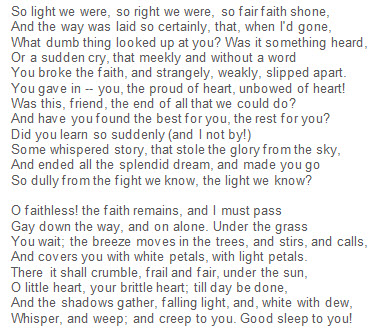
Desertion 

by Rupert Brooke

poemDesertion

Rupert Brooke  born on August 3, 1887 in England –  extremely handsome English poet famous for his neo-Romantic poems, most notably his war sonnets (the most famous one was “The Soldier”) written during World War One.  The idealistic nature of his poetry was likely a function of his youth. The well-traveled Cambridge graduate, commissioned into the Royal Naval Division, set sail for the Dardanelles in February 1915 – where he contracted septicaemia from a mosquito bite and died a month later (April 23), aboard a hospital ship off the Greek Island of Skyros. He lays buried beneath an olive grove on the Aegean island. He was only twenty-seven when he died.

Desertion I could not find any learned analysis of this poem.  The graceful lyricism of this poem, along with the theme of desertion, betrayal and fractured friendship/relationship, drew me in. The treachery of a friend or loved one who succumbs to gossip, rather than staying faithful to the friendship/relationship – written in such a beautifully, melodic manner  – resonated deeply with me, so much so that I chose to share this poem with you.

Poem via poemhunter.com.

Image via stylelemon.com, Photo credit: Julie de Waroquier.

heatherfromthegrove’s poetry spotlight for today: “The Road Not Taken” by Robert Frost

forest-trail

POETRY

@  heatherfromthegrove!

Enjoy!

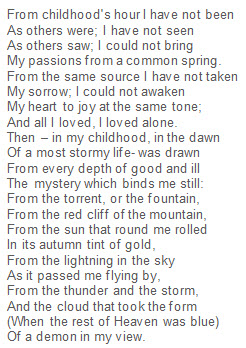
The Road Not Taken

by Robert Frost

frost

Robert Frost born on March 26, 1874 in San Francisco, California – was one of the most popular and critically acclaimed American poets of the twentieth century. During his lifetime, he received a plethora of honors, most notably four Pulitzer Prizes for Poetry, numerous honorary degrees, and, in 1960, a Congressional Gold Medal. Robert Frost’s poetry was most often written with early twentieth century, rural New England as a backdrop, from which he explored intricate philosophical and social questions of human existence. His grasp and usage of down-to-earth, American  colloquial language (mirroring ordinary, everyday speech) resonated with his readership and he became an American literary icon.  His wife and inspiration for much of his poetry, Elinor Miriam White, married him in 1895.  She died from breast cancer in 1938. On January 29, 1963, at the age of eight-eight, Robert Frost died in Boston Massachusetts, of complications from pancreatic surgery.

The Road Not Taken one of Robert Frost’s most popular and yet most misunderstood poems. When he writes about the two roads, he says “Though as for that the passing there/Had worn them really about the same/And that morning equally lay/in leaves no step had trodden back”  – meaning that neither of the two roads are less traveled and therefore one is faced with the dilemma of choice: which of the two identical forks in the road do I take? Our route is determined by the fusion of both choice and chance (or fate). There is no right path, just the chosen path and the other one that was not chosen. The poem is about the moment of decision, not the actual decision itself. By making a choice, the traveler is aware that only sometime in the future, will he realize whether or not he took the road less traveled by. The poem encapsulates the agony of decision, stemming from  the very human (and common) fear of remorse/regret.

Poem via poemhhunter.com.

Image via spiritualdrift.com.

heatherfromthegrove’s poetry spotlight for today: “Alone” by Edgar Allan Poe

j0255382

POETRY

heatherfromthegrove!

Enjoy!

Alone

by Edgar Allan Poe

7-6-2013 12-37-18 PM

Edgar Allan Poe – born on January 19, 1809 in Boston, Massachusetts – was an American short-story writer, poet, critic, and editor.  Renowned for his tales of mystery and horror, he was dubbed  as “Father of the Detective Story.”  He married his cousin, Virginia, in 1836. She became his literary muse.  Her death in 1847 caused the grief-stricken Poe to begin a downward spiral into financial ruin and poor health. He died on October 7, 1849, in a Baltimore (Maryland) hospital. The exact cause of his death remains a mystery. Although a very troubled and haunted man, Poe’s brilliant imagination has left a compelling legacy in the literary world.  His poems and tales still have the power to shock and to move his readers.   

Alone originally written in 1829, when the author was only 20 years old, the 22-line poem was only published and titled posthumously.  Written at the time of his foster mother’s (Frances Allan) death, the poem reflects the haunting sense of isolation that he felt throughout his childhood.  

Poem via poemhunter.com

Image via faithfulhomeschool.com.

A Good Summer Read

Book-Reading-on-Beach

“One benefit of Summer was that each day we had more light to read by.”
― Jeannette WallsThe Glass Castle

Whether you’re en route to some exotic travel destination for the summer or simply sitting in your back yard, sipping a refreshing glass of your favorite libation… you’ll probably want to enjoy some good summer reading.  Here’s a list of ten books (novels, non-fiction and debut releases by new authors) that you may want to try out.

Happy reading!

Not in any particular order:

Fiction:

  1. The Secret Life of Bees by Sue Monk Kidd
  2. Lolita by Vladimir Nabokov
  3. South of Broad by Pat Conroy
  4. A Hundred Summers by Beatriz Williams
  5. Rockaway by Tara Ison

Non-fiction:

  1. Thinking In Numbers: On Life, Love, Meaning, and Math by Daniel Tammet
  2. Quiet: The Power of Introverts in a World That Can’t Stop Talking by Susan Cain

First Releases (Fiction) by New Authors:

  1. No One Could Have Guessed the Weather by Anne-Marie Casey

First Releases (Non-fiction) by New Authors:

  1. Along the Shore: Rediscovering Toronto’s Waterfront Heritage by M. Jane Fairburn
  2. Casualties of the (Recession) Depression by Heather Joan Marinos

“Come with me,’ Mom says.
To the library.
Books and summertime
go together.”
 

― Lisa SchroederI Heart You, You Haunt Me

Photo via holidayrentals.com.

Let No Child Go Hungry This Summer

child_eating_apple

When that last school bell rings in June, droves of children come blasting out of the doors, eager to begin their summer. No more multiplication tables to memorize or spelling bees to prepare for – just fun in the sun, with no worries.

However, for the children who live in “food insecure”  households (the politically correct term coined by the USDA, which essentially means “hungry” or “without food.”), summertime means losing the luxury of daily breakfasts and lunches, provided by the schools.

For these children, food is a luxury.

This doesn’t just affect a few children here and there.  

Millions

Millions of children across the United States live in homes where food is scarce. Imagine, for a moment, what it must feel like, not knowing where your next meal is coming from – or when you will be able to have a next meal. 

Thankfully, national and community-wide summer food programs have been established, to provide free meals for these children  (aged 18 and under).

Non-profit organizations like Feeding America  and Feed The Children make it their mission to ensure that no child goes hungry.

Federal initiatives, such as the USDA’s (United States Department of Agriculture) Summer Food Service Program (SFSP), have approved sites located in areas (nationwide) where there is a higher concentration of children from low-income households.  These SFSP sites  provide free meals (which meet federal nutrition guidelines) to these children.

In communities across the country, local volunteers and organizations are banding together to provide food for children who are in need of assistance.  In New Haven, Connecticut, for example, the New Haven Public School Board – in collaboration with United Way, have rolled out a new Summer Food Truck.  This mobile “meals on wheels” drives around town, offering free, nutritious meals to kids and teens.

foodtruck

A lot of good things happen when communities rally together.

These organizations all need volunteers, and of course, they welcome donations.  If you  wish to volunteer your time (and/or money) to the summertime food programs in your neighborhood, check out the list of sites below. I am also listing a site that provides a  Food Bank Locator, in the event that you may want to volunteer at a food bank in your town.

If you are a business owner, you may want to consider sponsoring an SFSP food site in your area.

One last word.   If your children have friends or classmates who may be hungry, why not invite them over for lunch or dinner?  Not only will you be doing a kind deed, you will be teaching your own children the value of community and compassion.

And that is a good thing.

♥ ♥ ♥

Images via cacbelmont.org (boy with apple), npr.org (truck photo credit by Timothy Cipriano/New Haven Public Schools), and   fns.usda.gov (SFSP flyer).

♥ ♥ ♥

Feeding America:  http://feedingamerica.org/how-we-fight-hunger/programs-and-services/child-hunger/summer-food-program.aspx

Feed The Children: http://www.feedthechildren.org/site/PageServer?pagename=dotorg_homepage

USDA’s Summer Food Service Program: http://www.fns.usda.gov/summer-food-service-program-sfsp

SFSP Sponsorship:  http://www.fns.usda.gov/cnd/Summer/Sponsor.htm

Food Bank Locator: http://feedingamerica.org/foodbank-results.aspx

National Hunger Hotline: 1-866-3-HUNGRY or 1-877-8-HAMBRE for Spanish

6-14-2013 4-59-43 PM

In Search of Utopia

4-1024x640

Imagine there’s no heaven
It’s easy if you try
No hell below us
Above us only sky
Imagine all the people living for today

Imagine there’s no countries
It isn’t hard to do
Nothing to kill or die for
And no religion too
Imagine all the people living life in peace

You, you may say 
I’m a dreamer, but I’m not the only one
I hope some day you’ll join us
And the world will be as one

Imagine no possessions
I wonder if you can
No need for greed or hunger
A brotherhood of man
Imagine all the people sharing all the world

You, you may say 
I’m a dreamer, but I’m not the only one
I hope some day you’ll join us
And the world will live as one

 — John Lennon, Imagine

Unfortunately, we do not live in a utopian world. That being said, one has to presume that the majority of people throughout the  world would prefer to live in peace, rather than in a state of war.  Vision of Humanity, a global peace initiative (of the Institute for Economics and Peace – IEP), has recently published its 2013 GPI (Global Peace Index) Report, identifying Iceland, Denmark and New Zealand as the top three most peaceful countries in the world.  At the bottom of the list are the conflict-rife countries of Afghanistan, Somalia and Syria.

Canada made the top ten peaceful countries list, ranking number 8 (of  the 162 countries studied) and, disturbingly, the United States ranked on the less peaceful side of the scale – at number 100.

Here are the top and bottom ten lists:

Ten Most Peaceful Countries (from 162):

No. 1  – Iceland

No. 2  – Denmark

No. 3  – New Zealand

No. 4  – Austria

No. 5  – Switzerland

No. 6  – Japan

No. 7  – Finland

No. 8  – Canada

No. 9  – Sweden

No.10 – Belgium

Ten Least Peaceful Countries (from 162):

No. 153  – Central African Republic

No. 154  – North Korea

No. 155  – Russia

No. 156  – Democratic Republic of the Congo

No. 157  – Pakistan

No. 158  – Sudan

No. 159  – Iraq

No. 160  – Syria

No. 161  – Somalia

No. 162 – Afghanistan

For further information, please visit  www.visionofhumanity.org.  I urge you to check out this site ― it is an excellent source of information and kudos go to this organization for the work that they do, in the ongoing effort to raise awareness and advocate for peace.

I’ll leave you with the sage words of Mahatma Gandhi:

“An eye for an eye will only make the whole world blind.” 

Image via ipeacemeal.com.

Freedom and Individualism Revisted

download (2)

I am reposting this blog because it seems to have struck a chord with people from across the globe − with thousands of views.

In the first sentence (below), I mentioned that three uniquely brilliant people came into my life in the mid-1970s.  What I did not say then was how they came into my life.  Many of us have someone in our lives who we look up to and who holds an extra special place in our hearts.  A mentor,  a teacher, or  a family member. In my case, it was all three rolled into one — my brother.  Six years my senior, he took me under his wing many, many times.  He introduced me to jazz music, specifically Thelonious Monk and I still have the tapes he gave me (back in the day when we listened to tape cassettes!) well over three decades ago.  Then he gave me two book recommendations for my “must read” list:  The Prophet, by Khalil Gibran and Atlas Shrugged, by Ayn Rand.  I read them and I was not disappointed.

So, that’s how these visionaries were introduced to me. 

And now, here’s the blog once again:

Freedom and Individualism, as expressed by three creative geniuses:

Thelonious Monk, Khalil Gibran and Ayn Rand.

(originally posted by heatherfromthegrove on October 21st, 2011)

In the mid-1970’s, three uniquely brilliant people came into my life. 

The first was American jazz pianist and composer, Thelonious Monk (b.1917 – d.1982).  His improvisational style set him apart from the traditional jazz musicians of the time.  In the 1940’s, the music genre known as jazz was experiencing a cultural revolution of sorts, with Thelonious Monk as its revolutionary leader. A new style of jazz  — be-bop —  was born. Considered jazz for intellectuals, the be-bop sound was all about intricate melodies, complex harmonies – and fast tempos. Thelonious Monk once said: “If you really understand the meaning of be-bop, you understand the meaning of freedom.” 
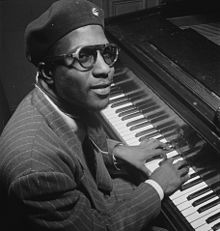
220px-Thelonious_Monk,_Minton's_Playhouse,_New_York,_N.Y.,_ca._Sept._1947_(William_P._Gottlieb_06191)Freedom – in my opinion – is the most beautiful word in the dictionary.  The meaning and experience of freedom is unique to each and every one of us.  What tastes like freedom to me may be radically different than anyone else. Some savour it as a private, spiritual experience, while others view freedom on a global scale. There is no right or wrong answer.  It is in the eye of the beholder.

I love to listen to the discordant sounds of Thelonious Monk. I never met the man. Nevertheless, I owe him a debt of gratitude because when I listen to improvisational jazz, I feel  free – and vibrantly alive.
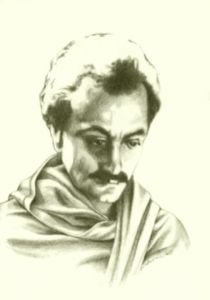
gibran2The second visionary genius was the Lebanese-American poet, philosopher, and artist  – Khalil Gibran (b.1883 – d.1931).  His works (The Prophet became an iconic favorite) were notably influential in American popular culture during the tumultuous 1960’s. On the subject of Freedom, Khalil Gibran’s eloquent poetry always strikes a chord with me –regardless of the number of times I read and reread his words:

“…Verily all things move within your being in constant half embrace, the desired and the dreaded, the repugnant and the cherished, the pursued and that which you would escape.

These things move within you as lights and shadows in pairs that cling. And when the shadow fades and is no more, the light that lingers becomes a shadow to another light. And thus your freedom when it loses its fetters becomes itself the fetter of a greater freedom.”

Finally, there is my muse.  Her name, Ayn Rand.  Ayn is pronounced “Ein” (which means “one” in German).  In my study, there are at least three long bookshelves devoted to Ayn Rand  (her novels, essays, philosophical treatises, biographies, and virtually everything I could find that has been written about her).  If I ever choose to go back to do my PhD in Philosophy, the subject of my dissertation would most definitely be Ayn Rand.
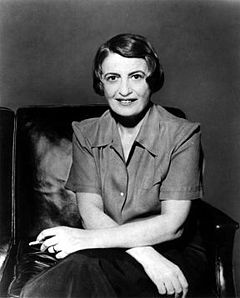
240px-Ayn_Rand1Born in St. Petersburg, Russia in 1905, Ayn witnessed the Bolshevik Revolution firsthand and despised the collectivism that was so entrenched in Russian culture at the time.  Her family lost everything in Communist Russia and this intelligent student of philosophy and history decided that the American model of freedom was the path she wanted to pursue. In 1926, she went to visit relatives in Chicago, then traveled to Hollywood … and never looked back.  Her first novel, We the Living (1936), was inspired by her earlier exposure to Russian tyranny.  In her novels, Ayn understood that in order to create the wonderfully heroic fictional characters, she would have to articulate the philosophical principles which – in her view – made these characters truly heroic.  As such, her novels were interwoven with politics, philosophy, economics, metaphysics, ethics and epistemology. And sex.  In 1957, her last work of fiction – Atlas Shrugged – was considered her greatest achievement. 

However, my personal favorite of hers is The Fountainhead (1943). It was the masterpiece that solidified Ayn Rand as the champion of Individualism.  And this is why I am so inspired by this brilliant intellectual who, incidentally, died in 1982.

For me, individualism is freedom. It’s at the core of everything I believe in.  Individual thought, choice, and actions.  Our journey into this world is a singular experience. As is our journey out of this world.  And our lives are made up of a series of individual choices, reactions and experiences that we (and no one else) are accountable for. For every action, there is a reaction.  For every choice we make, there is a consequence. Good and bad.  (preferably more good , than bad!).

I know, these are pretty heavy thoughts on a Friday evening.  So, I’ll leave you with some words that resonate deeply with me.  In The Fountainhead, the hero – architect Howard Roark – passionately explains the essence of individualism:

“… Man cannot survive except through his mind. He comes on earth unarmed. His brain is his only weapon. Animals obtain food by force. Man has no claws, no fangs, no horns, no great strength of muscle. He must plant his food or hunt it. To plant, he needs a process of thought. To hunt, he needs weapons, and to make weapons—a process of thought. From this simplest necessity to the highest religious abstraction, from the wheel to the skyscraper, everything we are and everything we have comes from a single attribute of man—the function of his reasoning mind.

But the mind is an attribute of the individual. There is no such thing as a collective brain. There is no such thing as a collective thought. An agreement reached by a group of men is only a compromise or an average drawn upon many individual thoughts. It is a secondary consequence. The primary act—the process of reason—must be performed by each man alone. We can divide a meal among many men. We cannot digest it in a collective stomach. No man can use his lungs to breathe for another man. No man can use his brain to think for another. All the functions of body and spirit are private. They cannot be shared or transferred…” 

I’ve given you just a snippet of this courtroom speech. It is riveting and worth reading in its entirety.

Here’s to Freedom!

Cheers,

hftg

Images via care2.com, karabess.wordpress.com, wikipedia.org, and civilclothing.com.

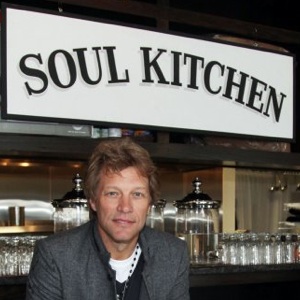
The Soul Kitchen: Bon Jovi Serves Up Some Hope

soul-kitchen

The Soul Kitchen (Red Bank, New Jersey)

Jon Bon Jovi serves up a heaping plate of soul food and philanthropy, topped up with a whole lot of Hope.

4-25-2013 9-11-07 AM

Livin’ On A Prayer

Once upon a time
Not so long ago

Tommy used to work on the docks
Unions been on strike
He’s down on his luck… it’s tough, so tough
Gina works the diner all day
Working for her man, she brings home her pay
For love – for love

She says we’ve got to hold on to what we’ve got
Cause it doesn’t make a difference
If we make it or not
We’ve got each other and that’s a lot
For love – well give it a shot

Chorus:
Whooah, we’re half way there
Livin’ on a prayer
Take my hand and we’ll make it – I swear
Livin’ on a prayer

Tommy’s got his six string in hock
Now he’s holding in what he used
To make it talk – so tough, it’s tough
Gina dreams of running away
When she cries in the night
Tommy whispers baby it’s okay, someday

We’ve got to hold on to what we’ve got
‘Cause it doesn’t make a difference
If we make it or not
We’ve got each other and that’s a lot
For love – well give it a shot

Chorus:
Whooah, we’re half way there
Livin’ on a prayer
Take my hand and we’ll make it – I swear
Livin’ on a prayer

We’ve got to hold on ready or not
You live for the fight when it’s all that you’ve got

Chorus:
Whooah, we’re half way there
Livin’ on a prayer
Take my hand and we’ll make it – I swear
Livin’ on a prayer

[Songwriters: BON JOVI, JON / CHILD, DESMOND / SAMBORA, RICHARD]

4-25-2013 9-11-07 AM

The concept of “Paying it forward” is something that Jon Bon Jovi knows well.   Singer, musician, actor, businessman and philanthropist ― Bon Jovi  is a New Jersey native who never forgot where he came from.   In 2006, he formed the Jon Bon Jovi Soul Foundation, a non-profit organization whose mission is to help people (one soul at a time) who are experiencing economic hardship. 

Kindness is infectious.  And so, as part of this foundation,  several  JBJ Soul projects have come to fruition:

†♥ JBJ Soul Homes (a joint venture with Project H.O.M.E., in Philadelphia)  ― a four-story, mixed-use development building, scheduled for completion in November 2013.  With retail, offices and 55 apartments to house previously homeless and low-income adults and children, the  residents will have access to basic medical care, employment assistance, education and fitness facilities.

†♥ Rebuilding Together (a joint venture with Lowe’s Charitable and Educational Foundation and Rebuilding Together Philadelphia) ― to rehabilitate nearly 30 homes in the Overbrook neighborhood.

†♥ Northern Children’s Services Merrick Hall (a joint venture with Northern Children’s Services) ― to provide permanent housing for homeless teenage mothers and their babies.

and, a community restaurant that does not have any prices on the menu:

† JBJ Soul Kitchen ― where customers volunteer their services at the restaurant, in lieu of payment.  Soul Kitchen accepts donations from those who can pay.  In the words of Bon Jovi, “At a time when 1 in 5 households are living at or below the poverty level, and at a time when 1 out of 6 Americans are food insecure, this is a restaurant whose time has come. This is a place based on and built on community – by and for the community.” 

And yes, Mr. Bon Jovi, Hope is Delicious.  Your dedication, passion and sense of community is truly inspiring.

For more information, please go to:  http://www.jbjsoulkitchen.org/.


Image via nhne-pulse.org.

Bookworms of the World, Unite!

read-books

“The more you read, the more things you will know. The more that you learn, the more places you’ll go.”

― Dr. Seuss, “I Can Read With My Eyes Shut!”

Books, glorious books!  They are scattered around my house and I carry one in my bag, wherever I go.  When I’m not reading a book, I’m writing one.

Today, the day that both Miguel de Cervantes  and William Shakespeare died (two of several literary giants who died on April 23rd, 1616), is World Book and Copyright Day — created by UNESCO (United Nations Educational, Scientific and Cultural Organization) to pay worldwide tribute to books and to the authors who write them.

Introducing the world of books to someone — a child, or even an adult — is like opening a locked door, behind which lies the path to knowledge and empowerment.

“I have often reflected upon the new vistas that reading opened to me.  I knew right there in prison that reading had changed forever the course of my life.  As I see it today, the ability to read awoke in me some long dormant craving to be mentally alive.”    

Malcolm X

Today, in this second decade of the new Millennium, our busy lives often preclude us from taking time out to read a book.  Make the time… please.  I cannot emphasize enough the importance of  reading.  It exercises the mind, stretches the imagination, opens up new worlds and is far more enthralling and entertaining than a television sitcom (in my opinion). 

If you can’t spare the time, carry a book in your bag – just in case. Rather than complain about the long wait time in the dentist’s office or at the airport, just open up a book and read.  Before you know it, the plane will be boarding or the dental hygienist will be beckoning you to come on in.

As for me, I concur with the late President Thomas Jefferson, who said (simply and succinctly):

“I cannot live without books.”

Image via worksmartlivesmart.com.

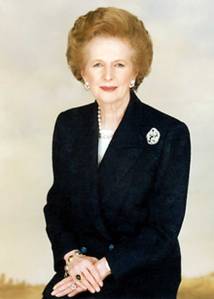
Fare thee well, fair Iron Lady

“If you just set out to be liked, you would be prepared to compromise on anything at any time, and you would achieve nothing.

―  Margaret Thatcher 

Today, we pay tribute to a brilliant woman who ― from 1979-1990 ― led her country with an iron fist, and was the first female to hold the position of Prime Minister of the United Kingdom.  Her conservative politics, known as Thatcherism,  received mixed reaction  – domestically and abroad.  She was revered by many, yet also reviled ― but  never did she inspire indifference.  

Today, with deep respect, we mourn her passing at the age of 87.

In Memoriam

Baroness Margaret Thatcher

1462880506Margaret_ThatcherOctober 13, 1925 – April 8, 2013

R.I.P.


Image via commons.wikimedia.org.