heatherfromthegrove’s poetry spotlight for today: “The Road Not Taken” by Robert Frost

forest-trail

POETRY

@  heatherfromthegrove!

Enjoy!

The Road Not Taken

by Robert Frost

frost

Robert Frost born on March 26, 1874 in San Francisco, California – was one of the most popular and critically acclaimed American poets of the twentieth century. During his lifetime, he received a plethora of honors, most notably four Pulitzer Prizes for Poetry, numerous honorary degrees, and, in 1960, a Congressional Gold Medal. Robert Frost’s poetry was most often written with early twentieth century, rural New England as a backdrop, from which he explored intricate philosophical and social questions of human existence. His grasp and usage of down-to-earth, American  colloquial language (mirroring ordinary, everyday speech) resonated with his readership and he became an American literary icon.  His wife and inspiration for much of his poetry, Elinor Miriam White, married him in 1895.  She died from breast cancer in 1938. On January 29, 1963, at the age of eight-eight, Robert Frost died in Boston Massachusetts, of complications from pancreatic surgery.

The Road Not Taken one of Robert Frost’s most popular and yet most misunderstood poems. When he writes about the two roads, he says “Though as for that the passing there/Had worn them really about the same/And that morning equally lay/in leaves no step had trodden back”  – meaning that neither of the two roads are less traveled and therefore one is faced with the dilemma of choice: which of the two identical forks in the road do I take? Our route is determined by the fusion of both choice and chance (or fate). There is no right path, just the chosen path and the other one that was not chosen. The poem is about the moment of decision, not the actual decision itself. By making a choice, the traveler is aware that only sometime in the future, will he realize whether or not he took the road less traveled by. The poem encapsulates the agony of decision, stemming from  the very human (and common) fear of remorse/regret.

Poem via poemhhunter.com.

Image via spiritualdrift.com.

Confessions of a Daydreamer

daydreaming-girl

“As I quietly stare off into space, eyes glazed over and brow thoughtfully taut, know that I am going about my business.  I am a storyteller.  Daydreaming is the best part of my job.”
― Richelle E. Goodrich

Couldn’t have said it better myself.

And now for the confession.

I have been daydreaming all of my life: characters, scenes and dialogue – all created in my mind. I am not crazy (although that subject is a matter of jovial debate in my family).  My mother totally understood the eccentricities of her youngest child.  After years of adjustment, my husband now knows that when he walks by the study and sees me in a trance-like state, tears streaming down my face, he needn’t worry.  Nor does he say a word because there is nothing more annoying to a consummate daydreamer than jarring interruptions. He just walks away, shaking his head and wondering to himself whether or not he lives in a madhouse.

So, I just like to conjure up storylines in my mind. The downside is that there are quite a few unfinished scripts in my filing drawer. Too many ideas, too little time. The upside is that I am never, ever bored.

One loop away from being totally loopy.

Now that the proverbial cat is out of the bag, I’d like to focus a little wrath on the naysayers who give daydreaming a bad name. In a world where everyone seems to be rushing around like the rabbit in Alice in Wonderland, daydreaming is often considered frivolous, lazy, a waste of valuable time and downright “flakey.” 

Not so, say many mental health experts. Daydreaming is not only beneficial to our state of mind, but it also contributes to our productivity.

“How on earth can this be true?”  say the anti-daydreamers.

Well, ye of little faith, psych specialists compare daydreaming to meditation.  Both help us to relax, relieve stress, take a mental “time out.”  After a daydreaming session, we are refreshed, energetic and ready to tackle the rest of the day.

In the Smithsonian article, The Benefits of Daydreaming,” Joseph Stromberg writes about a recent research study (published in Psychological Science) which indicates “that a wandering mind correlates with higher degrees of what is referred to as working memory. Cognitive scientists define this type of memory as the brain’s ability to retain and recall information in the face of distractions.

Therefore, despite the daydreamer’s propensity to let the mind wander, she (or he) possesses a heightened working memory which allows her (or him) to snap out of La-la Land when required to do so.

Moving the discussion of science back to the arts, most creative people would concur that daydreaming sparks the imagination. It helps to motivate and stimulate ideas.

Walk into a room filled with writers, authors, poets and novelists, and ask “Who among you daydreams regularly? Please raise your hand.”  With few exceptions, every hand will be raised.

Storytellers daydream. It’s what we do.

La-la land is a great place to visit.  The key is to know when it’s time to leave and come back home.


Image via mommasmoneymatters.com.

Life is a Bowl of Cherries

img_1957

“Summer afternoon—summer afternoon; to me those have always been the two most beautiful words in the English language.” 
― Henry James

A South Florida summer can be very, very hot and humid. Stepping out of an air conditioned home, a wave of heat will hit you like a ton of bricks and, if you wear eyeglasses, you’re momentarily blinded as the steam fogs up your lenses. But, if you’re lucky enough to have a yard full of trees, you can actually enjoy a summer afternoon outside, despite the humidity.

What a difference a tree makes!

Sitting under my grove of bamboo trees, I close my eyes to feel the warm, gentle breeze as it makes contact with my skin. Hanging on a nearby tree branch, the Woodstock chimes harmonize with the rustle of leaves ― the only music I need to hear.  I breathe in the smell of freshly cut grass. The lawn feels soft against my bare feet. The wispy, yet majestic, royal ponciana trees form a canopy over the entire house, dropping vibrant red flowers over the garden. I begin to crave something, but what? Cherries. That’s it. Cherries always remind me of summertime. I bought some from the market just the other day. As if reading my mind, my husband  (who has been watching me from the kitchen window, enjoying the sight of my serenity) brings out a bowl of cherries for me to taste. He sits in the chair beside me and together we savor the ripe fruit and silently enjoy the sound of quiet.

And here, in the northern hemisphere, summer has just begun.

“Then followed that beautiful season… Summer….
Filled was the air with a dreamy and magical light; and the landscape
lay as if new created in all the freshness of childhood.”

Henry Wadsworth Longfellow

??????????

Our royal ponciana trees (with the red flowers)

Top photo (cherries) via dacha.com.

Bottom photo (royal ponciana tree) by Heather Joan Marinos © 2013 – All Rights Reserved.

That Gut Feeling

develop-your-personal-intuition

“The truth about life and lie about life is not measured by others, but by your intuition, which never lies.”

Santosh Kalwar

Following from my May 16th post, Maximize Your Five Senses, today is the last of a series of blogs on each of the five senses (plus one).  In each post, I shared some of the wisdom that my mother imparted to me – which, to those who were wondering, is why she is mentioned in every one of the blogs.  This series was written in memory of her.

Today, I will talk a bit about the sixth senseintuition, or what I call gut feeling.  This is not a sense that one should readily dismiss.  It is very real and we all have it, to some degree.  All too often, we choose to ignore it, usually to our detriment. 

Now, I want to be clear.  When I use the word “intuition,”  I am not referring to psychic ability.  That is another thing altogether – a more advanced level of intuition.

My mother was most definitely not a psychic, but she was very, very intuitive (as was her mother before her, and as am I).  She called it both a blessing and a curse.  A blessing, because when she listened to her sixth sense, she was able to circumvent potential problems or challenges, as they cropped up.  A curse, because she intuitively guessed what people were thinking or how they were going to act (again, not in an ESP-type of way), and sometimes she would have preferred to be wrong.  The following real-life scenarios illustrate her point.

Blessing

The year was 1966. One morning, my mother was getting us all ready for school (I was in Grade 2; my brother and sister were in high school) but as she was moving about the kitchen, she seemed very out of sorts.  A sensitive little girl, I asked her what was wrong and she looked at me strangely and said “I really don’t know.”  I offered to stay home from school (not because it would have been a good excuse to miss class, but because I was truly alarmed by her demeanor), but she insisted that we all had to go so that we wouldn’t miss our respective school buses.  Mid-afternoon, my father received a call at his office.  It was my mother. She told him that he needed to come home right away, because she was dying (her exact words were “Come home now. I’m dying.”).  Now, although the women in my family have always had a flair for the dramatic, my father instantly realized this was not one of those moments.  He immediately called an ambulance, and rushed home (his office, thankfully, was nearby).  Her blood pressure was almost fatally low, due to internal hemorrhaging. She received an emergency blood transfusion. The doctor said that had my mother waited five minutes longer to make that phone call, she would indeed have been dead.  

When she woke up that morning, she knew that something was very wrong but could not pinpoint what it was.  She felt no pain…  just very uneasy.  This had never happened to her before, so she did not have a frame of reference.   She listened to her gut instinct and, as a result, she lived on for another forty-two years.  A blessing – for her, and for our entire family.

Curse

If you ever wanted a character assessment of a friend, lover, fiancé (fiancée), or husband (wife) – my mother was the go-to gal.  The problem was that her “gut feelings” were not always what one wanted to hear.  She was always right – no exception.  She instinctively knew whether someone was a betrayer, an opportunist or just simply bad news.  Family, friends and friends of friends would all flock to my mother for her “opinion” and she would inevitably warn them with “You may not like what I have to say.”   She was more than willing to dispense her wisdom, because she fervently believed that it was “better to be safe, than sorry.”

One day (circa 1970), a young woman (friend of a friend) bumped into my mother at the shopping center.  They chatted for awhile and the woman, “Pat” (not her real name), went on and on about this new man she was seeing.  She said he was perfect.  He was nine years older than her (she was twenty) and treated her like a princess (he took her to nice places, and bought her jewelry).  In her eyes, he was Mr. Right.  Then, Pat’s brow furrowed.  She told my mother that she was confused about one thing.  He was very reserved about his family life.  He preferred to keep conversations light and easy, at all times.  At this point, my mother tilted her head and looked at Pat carefully, then asked her How serious are you (about the man)?”  “I want to marry him,” was the response, and then I would like your opinion of him.”  My mother said, “Let’s arrange a random meeting here at the shopping center. Bring him with you.  I’d like to meet him.”

The next day, they “accidentally” ran into each other.   After the standard pleasantries, my 4’11” mother looked up at the 6’1″ man.   “John” (not his real name) was indeed very handsome and he spoke smoothly.  My mother always looked a person in the eye.  This man’s eyes kept shifting away from her gaze, as they spoke.  She ended their chat and they said their goodbyes.  That evening, Pat phoned my mother – to hear what she had to say.  My mother said only two words:  “He’s married.”   Pat shrieked NO, HE IS NOT!”  and hung up the phone.  She called back a second later and said, in a subdued voice, “How can I know for sure, without asking him directly?”  The answer she received was Well, if you ask him directly, he’ll probably lie to your face.  You could always hire a private detective or… you could tell him that you love him and that you want to marry him.  Then, see how he reacts.”  Of course, my mother knew exactly how he would react. 

A week later, my mother received a call from Pat, who said she felt that her world had come crashing down on her.  When Pat told John that she loved him and wanted them to get married, he recoiled and then told her that he was married and had two small children.  She never heard from him again.   Pat said that she wished she had never asked my mother to meet the man.  My mother informed her that she knew what he was, before she even met him. She also told Pat that she was a naïve, young woman who needed to do some growing up and that, one day, she’ll find the right man. 

Years later, “Pat” married a lovely fellow and they live happily with their three kids and two dogs. 

Odds are, however, that “John” is no longer married.

My mother did not enjoy being the bearer of bad news, the curse of her strong intuition.  Yet sometimes, even curses can transform into blessings.

It’s all a matter of perspective, I suppose.

In the past, whenever I’ve ignored my gut instinct, I’ve lived to regret it.  And, since I strive to have as few regrets has possible, I always listen to my inner voice.  It never lets me down.

My mother was right.

Image via omtimes.com.

Anatomy of Taste

chocolate

“Everyone eats and drinks, but few appreciate taste.”
Confucius (551-479 BC)

The sense of taste is one of the most pleasurable of the five senses.  Taste (the scientific term is gustatory perception) is the sensation that occurs when the mouth reacts chemically with the receptors located in our taste buds.  We have approximately 10,000 taste buds ― on the tongue, on the sides and the roof of the mouth.  Traditionally, our taste buds recognize four basic tastes: sweet, salty, bitter and sour.  According to the conventional (now, much disputed) “tongue map,” different regions of the tongue are sensitive to each of these tastes.  The sour taste buds line the sides of the tongue and the bitter taste buds can be found at the back of the tongue. The salty/sweet taste buds are located at the front of the tongue (sweet at the tip and salty on each side of the tip).  I call them the Yin and Yang tastes because so often we crave both, one after the other ― like the overwhelming desire to have a scoop of ice cream right after eating a meal of seasoned burgers and fries.

As a child, I was a chocoholic.  I had to have a chocolate fix each day and my mother indulged me, with the caveat that one day, I would probably not eat as much of the stuff. I remember looking at her incredulously, because it was beyond the scope of my childish comprehension that there would ever be a life without chocolate. If that same little girl could have looked through a crystal ball and see herself as the grown woman she is today, that little girl would be shocked, disbelieving and horrified. I rarely eat chocolate any more. I still enjoy it, but I don’t crave it as much.  So, a nibble − every so often − is enough to satisfy me. 

My mother was right.

I now prefer savory foods. 

In the beginning of the twentieth century, Japanese scientist Kikunae Ikeda determined that there was a fifth taste, Umami (Japanese for a delicious, savory taste).  According to Professor Ikeda, savory taste was very distinct from salty taste.

Umami reigns supreme in my gustatory system, which is why I love savory Mediterranean, Middle-eastern and Indian foods. They are spicy, savory and quite simply a gustatory delight.

9c2fafc4-cb24-423c-acfc-50c42623584d_chicken_souvlaki

My favorite Greek food − Chicken Souvlaki with rice, potatoes, and horiatiki salad

Our sense of taste evolves as we grow older. What often repelled us as children, delight us as adults. Take wine, for example. As a little girl, I sniffed my mother’s glass of wine and recoiled in disgust.  I declared that there was no way that I would ever – ever – drink that horrible libation.  My mother just threw her head back and laughed. Her sisters (my aunts), who were visiting at the time, also laughed – tears streaming down their faces.  My mother said, “My little darling, you will love wine one day. All the women in our family do, and have done so …  for generations. It’s simply in our genes.”  At the time, I  was unconvinced.

My mother was right.

I am now somewhat of an oenologist, a serious wine aficionado. I suppose I couldn’t escape my fate.  It’s in my genes. And I am happy that I have many memories of my mother and I (as an adult) spending many evenings together, sipping wine and sharing stories.

I raise a glass of crisp Chablis (her favorite), in memory of my mother.  She was quite a dame.

KONICA MINOLTA DIGITAL CAMERA

Images via livescience.com, phenu.com and yourwineiq.com.

The Sound of Quiet

dawning

“That innate love of melody, which she had inherited from her ballad-singing mother, gave the simplest music a power which could well-nigh drag her heart out of her bosom at times.” 
― Thomas HardyTess of the d’Urbervilles

A wise woman once told me that sometimes people have selective hearing – they hear only what they want to hear, perhaps because they  don’t want or don’t care to know.  This same woman told me that it was important that I learn not only to hear, but also to listen – because when we focus, our sense is heightened, enabling us to notice all the subtleties and nuances that we would have missed, had we not made the effort.   Her frame of reference was music.  As she spoke, her voice was quiet, soft and melodic.  She whistled as good as any nightingale.  She only whistled when she was sad.  It lifted her spirits up.  She sang when she was happy.  When she sang, she would close her eyes, her lids fluttering slightly. Her singing was perfectly tuned and simply lovely.  I have never forgotten her voice, nor the sound of her whistling. 

She gave me one more piece of sage advice, almost as an afterthought – but now, I realize that it was what she most wanted me to remember. 

“Each day, you must take the time to listen to the sound of quiet.  Just do it.  You will understand why, when you do.”

So, if I were asked to narrow down my most favorite sounds to five, they would be:

5.  The haunting rumbling of a distant train. (it appeals to my sense of wanderlust)

4.  The discordant sounds that an orchestra makes, in the minutes before the  concert hall is silent – before the performance commences.  (it fills me with anticipation, excitement and joy)

3.  The steady, low roar of ocean waves, as the tide rolls in – especially at dawn and dusk. (I am awed and humbled by its sheer magnificence)

2.  The gentle rustling of bamboo leaves, as the trees sway in the wind. (this, for me, is the sound of peace)

1.  The sound of quiet.  (when everything is silent, I am in complete harmony with myself,  and with God)


Image via businesssuccesshub.com.

The Power of Touch

Young and Elderly hands

“This is what it means to be loved… when someone wants to touch you, to be tender…” 
― Banana YoshimotoThe Lake

I was living 2,864  miles away from the place that I was born and raised, when I received a call that my mother was in the hospital and that her condition was serious.  Immediately, I flew to Montréal and went straight to her bedside.  Despite her illness, she lit up like a Christmas tree when she saw me.  I gathered her in my arms and held her tight.  The words that she uttered not only made me weep, but also gave me great pause.  She said  “Ahhhh, I had forgotten how wonderful it feels to be embraced, to be touched, to be held!”  She closed her eyes, as if to capture the moment and store it in memory. 

She passed away eight years ago today.

The sense of touch is often considered the least important of the five senses.

I would argue to the contrary.


Image via ameri-care.net.

Scent and Memory, an Inseparable Duo

344abef46632eef2264bbd70c76dc5ec

“Nothing revives the past so completely as a smell that was once associated with it.” 
― Vladimir Nabokov

In a very interesting article written by Natalie Angier (of the New York Times), The Nose, An Emotional Time Machine,”  Ms. Angier cites some research findings  (presented at the International Symposium on Olfaction and Taste) which explain how and why our sense of smell has the power to immediately take us back to a place, a person and a moment in time – making the memory as vivid and poignant as if it occurred in the present day.  For example, whenever I smell carnations, I am instantly brought back to the family celebration held after my First Communion (I was seven years old), when my favorite aunt gave me my first bouquet of flowers ― a bunch of pink and white carnations. For me, carnations will always remind me of that sacred (and sweet) rite of passage.

In his novel,  À la recherche du temps perdu (In search of lost time), French writer Marcel Proust describes a character vividly recalling long-forgotten memories from his childhood, after smelling a tea-soaked madeleine biscuit.  Henceforth, the theory of the inseparable relationship between smell and involuntary memory has been dubbed the “Proustian phenomenon.”  

The scientific explanation is pretty straightforward:  the olfactory bulb (located just above the nasal cavities, it is a structure of the vertebrate forebrain involved in olfaction, the perception of odors) is part of the of the brain’s limbic system. The limbic system, sometimes referred to as the “emotional brain,” is the area that is closely associated with memory and feeling.  The olfactory bulb accesses the amygdala (which processes emotion) and the hippocampus (responsible for associative learning).  Despite all these biological components, it is our conditioned responses which actually cause smells to trigger memories in our minds.  When we smell something for the very first time, we automatically link it to a moment in time, a person, a thing, an event (sometimes all four).  So, when smells trigger a memory from childhood, it is most likely because we experience some of our first smells when we are children.

Whenever I smell a good pipe tobacco or a fine cigar, I think of bookshelves bending with the weight of books.  I am brought back to a time when I was just a little tyke, sitting on my father’s lap while he puffed on his pipe and read to me snippets (whether I wanted to listen or not) from a current issue of the Foreign Affairs journal.  He was trying to teach me, to open my mind to the world around me.  Many decades later, I have a cigar lounge in my home – filled with bookshelves bending from the weight of books. Whenever I am in that room, I remember those serene days of my childhood.

Another vibrant memory is evoked by the smell of spaghetti Bolognese.  My favorite childhood meal.  Sadly, I have never been able to recreate my mother’s special sauce.  A few years back, I walked by a neighbor’s home and stopped in my tracks.  From her open kitchen window, I heard the sound of onions sautéing and the smell of onions and tomatoes wafted towards me.  It almost brought me to my knees.  Suddenly, I was a little girl again and my mother was lovingly stirring the sauce, smiling at my exaggerated, comical facial expressions (I was trying to convey to her how much I loved the smell and how impatient I was to eat my spaghetti). 

I stood on the sidewalk for a while longer, just so that I could enjoy the whiff of sauce and the memories that it evoked.  The next day, I knocked on my neighbor’s door and asked her for the recipe.  She quite happily gave it to me.  Strangely enough, I still can’t recreate it – quite exactly.  

Then again, my mother was one of a kind. 


Image via top7news.gr.

Keep That Lens Focused

Following from my May 16th blog, Maximize Your Five Senses, I will be writing (all week) about each of the five senses (and the sixth sense) and sharing with you some of the wisdom that my mother imparted to me.

This series of blogs is dedicated to her.

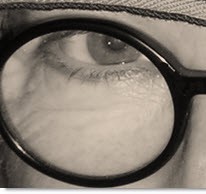
Hlens (3)

“The greatest thing a human soul ever does in this world is to see something, and tell what it saw in a plain way.  Hundreds of people can talk for one who can think, but thousands can think for one who can see.  To see clearly is poetry, prophecy, and religion – all in one.”
―  John Ruskin,  Modern Painters

My mother always spoke to me with her eyes.  She was most definitely not mute, but she nevertheless  preferred to communicate via her eyes.  Oh, the conversations we used to have!  Just a glance ― grey-green eyes meeting grey-green eyes ― message sent and received.  I knew exactly what she was thinking.

She taught me how to be quiet, stay still and watch.  Observe.  Focus. Notice every detail.  See beyond the obvious. 

She taught me that a person’s eyes tell a story.  In a flash, she could tell when someone was lying or when someone was trying to hide some emotional scar.  She was able to see beneath the surface. Her eyes missed nothing. 

She taught me well.

What I know now, that I didn’t know then, is that my mother was training me to be a writer. 

With this heightened sense of sight  (a great feat for me, since I’ve been wearing  very thick eyeglasses,  since the age of two!), I observe everything keenly and then, I write.

Our sense of sight is one of the most  – if not the most – precious of the five senses.  It is so important to take care of it.  I nearly caused some serious damage to my eyes when I went through a phase where I would sleep with my contact lenses in, for days on end.   Foolish vanity.  I now wear  my eyeglasses 99% of the time.  And my lenses are perfectly focused.

When my mother was in hospice care, she – along with many of the other patients – would be wheeled into  a lounging area.  She was often confused as to where she was (and why).  Her confusion, however, did not extend to me.  She knew exactly who I was. One of my last memories of her was when I was walking down the corridor towards the lounge and, from about a hundred feet away, she spotted me instantly. Her eyes danced, as she clapped her hands with joy.  Her eyes followed me as I came closer – grey-green eyes locked onto  grey-green eyes.   We embraced and I held her small, frail body as tightly as I could, without hurting her.

That was eight years ago this week.  Not a day goes by without me remembering her expressive, mischievous eyes.  And when I look into the mirror, there they are.

Her Eyes

by VALARIE M. SHEA

Gone are the eyes that watched me grow
The eyes that were able to see into my soul
Together we climbed mountains and made it through the pain
Only to find out that someday it would be forever changed

As you’ve gotten weaker, I’ve gotten stronger
Able to take care of myself even though I didn’t want to

You’d be proud of my wit, my confidence and my charm
People say I’m just like you and I know all about your charms
The eyes are in my heart, the eyes that saw my soul
But gone are the beautiful eyes, the eyes that watched me grow