A tribute to the unsung heroes who help others

How-Helping-Others-Benefits-YOU

“If you can’t feed a hundred people, then just feed one.”

Mother Teresa

They don’t have the power of money or celebrity to back them up.  Nor do they receive any payment or compensation for what they do.  Self-gratification is not their ulterior motive. 

They are simply ordinary people who do extraordinary things… to help others − for no other reason than love and respect for humanity.

These are the people who…

… save their leftover food from their restaurant meal, so they may give it to the person standing outside… that hungry person who’s seen better times but who, for one reason or another, finds himself down and out.

… volunteer their time to work in community outreach programs.

… make daily visits to elderly neighbors who live alone, just to make sure that they are okay and to give them a little caregiving and companionship.

… regularly help out at the food banks and missions.

… notice that an exhausted single mother, trying to do it all, may need  a little assistance with carpooling, babysitting, or a few ready-made meals that she can freeze and reheat later.

… sense that a friend may be going through hard times, and invite him/her over for dinner each week.

… teach their children kindness and empathy towards others.

The list is endless.

These are the people who, although not labeled as “activists”,  are quietly making a difference in the lives of others.

One person at a time.

HFH2

From Aug 14-Sept 7, purchase a copy of  Casualties of the (Recession) Depression, and for every $20 book purchased directly from my website, I will be donating $5 from the proceeds of each book sale to either: Feeding America (US), Action Against Hunger (Canada), or The World Food Programme (Global). The purchaser chooses one of the three.

Image (of hands) via mysuccessprinciples.com.

The value of altruism

4737591_orig

“I am of the opinion that my life belongs to the community. And as long as I live, it is my privilege to do for it whatever I can. I want to be thoroughly used up when I die, for the harder I work, the more I live.  Life is no brief candle to me; it is a sort of splendid torch, which I have got hold of for a short moment, and I want to make it burn as brightly as possible before handing it on to the future generations.”

George Bernard Shaw

8-24-2013 2-06-22 AM

Image via faithkitchen.org.

The “Golden Years” are not always so golden

elderlywoman1

Unless one’s heart is made of stone, most can agree that the reality of child hunger is a heartbreaking and very unpalatable pill to swallow. 

Human existence is cyclical. We begin life as children who depend on parents or family members for our food, our living conditions, and our sense of well-being and worth.   

As we move towards the last chapter of our lives, our health and frailty make it impossible to survive without depending on our children, family members, or community − for our food, our living conditions, and our sense of well-being and continued worth.

The golden years are supposed to be a time in life when we, who have worked so hard and who have taken care of so many, earn the right to kick back, relax and enjoy the company of loving family and friends, as they surround us with their affection and care.

Sadly, this is not everyone’s reality.  Many seniors are left to cope alone.  Many have to juggle with decisions like whether to eat or pay the utility bills, whether to eat or pay for medication, and whether to eat or pay the rent. 

As I mentioned earlier, human existence is cyclical.

Unless one’s heart is made of stone, most can agree that the reality of senior hunger is a heartbreaking and very unpalatable pill to swallow. 

I’ll leave you with some sobering statistics, cited by the folks at Feeding America.  Next week, I will be taking a virtual hunger tour around the world because, as we all know, hunger has no geographic boundaries.

According to Feeding America,

“The number of older adults is projected to increase by 36% over the next decade and continue to rise in the following decade. In 2030 there will be 72.1 million older adults, almost twice as many as in 2008. Additionally, the senior population is becoming increasingly diverse.  Between 2010 and 2030, the white population of 65 and plus is projected to increase by 59% compared with 160% of older minorities.”

“These changing demographics will have profound impacts on the demand for social services, especially the need for adequate and culturally appropriate nutrition services.  Seniors may have unique nutritional needs and challenges that separate them from the rest of the population and must be considered.”

“In 2011, 4.8 million Americans over the age of 60 were food insecure. This constitutes 8.4% of all seniors. “

“The number of food insecure seniors is projected to increase by 50% when the youngest of the Baby Boom Generation reaches age 60 in 2025.”

HFH2

From Aug 14-Sept 7, purchase a copy of  Casualties of the (Recession) Depression, and for every $20 book purchased directly from my website,  I will be donating $5 from the proceeds of each book sale to either: Feeding America (US), Action Against Hunger (Canada), or The World Food Programme (Global). The purchaser chooses one of the three.

Image (at the very top) via mycarforcharity.com.

The economics of fighting hunger

Hunger

“Investment in the eradication of hunger today is a good business decision. If we fail to make this investment, it is
doubtful that we can sustain healthy economic growth. Without this investment, our nation may disintegrate into a
country sharply divided between those who have enough to eat and those who do not.”
— Alan G. Hassenfeld, Chair & CEO of Hasbro, Inc.

If the humanitarian reasons for fighting hunger are not convincing enough, let me put an economic spin on it, by breaking the issue down to dollars and cents.

According to a recent Hunger in America report prepared by the Center for American Progress and Brandeis University,  “Hunger costs our nation at least $167.5 billion due to the combination of lost economic productivity per year, more expensive public education because of the rising costs of poor education outcomes, avoidable health care costs, and the cost of charity to keep families fed.”

The hunger bill directly affects every American citizen and resident.  Oh, it’s not a bill per se.   The costs are embedded in our taxes and in the contributions we pay to charities.  Our nation’s economy is heavily weighed down by the cost of hunger, spending upwards of $94 billion dollars a year, in federal food assistance programs like SNAP (Supplemental Nutrition Assistance Program, formerly known as  “food stamps”).

As the middle-class progressively disappears below the poverty line, the drain on our economy worsens. 

Hunger adversely affects our bottom line. 

Yet, even big corporate executives realize that the eradication of hunger is not simply an issue of economics, but  a more fundamental problem of justice, equality, and humanity.

“America is the richest country in the world. And yet tonight, thousands of your neighbors will go to bed hungry.
It may be your child’s schoolmate who is undernourished and has difficulty learning on an empty stomach.
Or it could be a co-worker, a working mother whose low-wage job doesn’t make ends meet.
Perhaps it’s an elderly neighbor who has to make a decision whether to delay filling a prescription or buying groceries.
The faces of hunger are as broad as the faces of America.”
— David Nasby, retired vice president of General Mills  (one of the world’s largest food companies)

Image (at very top) via Emmaushouse.org.

And then there’s Hope

iStock_000007173441Small-468x283

“They thought that attending the baptism of their friend’s baby daughter would be a welcome and much-needed distraction. For one afternoon, they could put all their troubles aside and partake in a joyous and blessed occasion. In the last two years, life had been spiraling out of control. Food and money were scarce. They had lost their car.  They had nearly lost their home.  They needed something to grasp on to.  They needed a little hope.  And so, they thought that participating in a young child’s first Sacrament would remind them of all things good — purity, innocence, new beginnings… Faith.

They gathered up what little cash they had ($58) to pay for the train and taxi that they would have to take.  What would have taken them half an hour by car was going to be a three-hour transit ordeal (there was no public bus route in the area they were traveling to). They dressed up in their Sunday best and began their journey.  When they got off the train, there were no taxis in sight. The afternoon heat and humidity was making their clothes stick to their bodies. They realized that they may have to walk for at least an hour or so, if they didn’t find a taxi. They would miss the Baptism. They began to walk and then spotted a cab parked nearby, hidden by a big tree. The driver was standing by the car.  He was a small, wiry man with dark, wrinkled skin, grey hair and white teeth. But it was his hazel eyes that caught their attention. Or, rather, what his eyes conveyed.  Old eyes (although he didn’t look more than 50) — eyes that had seen much and learned much.  They had one of those déja-vu moments where they felt that they had met him before, that they knew him and he knew them. But, they hadn’t.  He asked them if he could drive them anywhere.  They nodded and asked how much it would cost to get to their destination.  The driver said “$48.”  They told him that they only had $38 left (not enough for either the taxi fare or tip). They had spent $20 on two return train tickets and were hoping to get a lift back (from friends)  to the train station, after the Baptism party.  The driver looked at them kindly and said, “$38 will be fine.”  They were elated and hopped into the air-conditioned cab

They exchanged pleasantries and names. The driver’s name was Mohammed. He was from Pakistan and had come to America to make a better life for his siblings, wife and children.  He hadn’t always been a taxi driver.  Like everyone else, he had been adversely affected by the economic downturn.  He worked long shifts to pay for his children’s’  tuition. He had put his sister through medical school. Education, according to Mohammed, was the key to freedom and empowerment. They agreed. He went on to say that “Faith is what helps us to put one foot in front of the other and carry on, day after day, despite the troubles looming all around us.”  And he looked into their eyes from the rear-view mirror. Everyone was silent for the rest of the ride.

When they arrived at the church, Mohammed got out and opened the door for them.  They shook his hand, thanked him, and once again apologized that they could only give him $38.  He brushed their apologies aside and said “Enjoy your blessed event and the company of your friends. Leave your worries at the door.”  With that, he went into his car and drove away. Feeling uplifted, they smiled at each other and walked, hand-in-hand, into the church.”

― from  the vignette “Faith, a Powerful Tonic” –  Casualties of the (Recession) Depression, by Heather Joan Marinos

(Copyright © 2013-2018 by Heather Joan Marinos – All Rights Reserved)

This is not fiction.  This book is about real people and their stories – in vignette form.

Hope comes to us in many guises.   The important thing is that we recognize it when it does.

I’m not going to add much more, because I think that the story speaks for itself. Despite all of the domino negative effects that this Recession has had on millions of families – not only in America, but around the world  –  there is always Hope. 

This is not a cliché. I can personally vouch for the authenticity of what I am saying. 


Image (at the very top) via thelifeweshared.com.

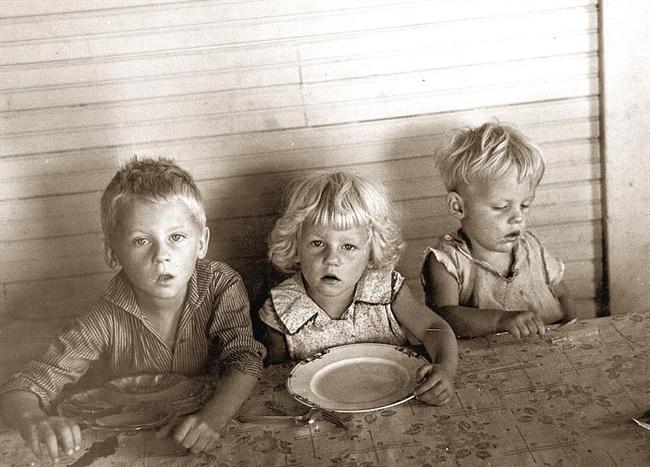
Can we make a difference?

Hungry Children

“The lessons of the nation’s past tell us that liberty and justice cannot be secured for ourselves and kept from others without turning sour. Because we have cherished liberty for others, this country has sacrificed enormously (if not always wisely) in lives and material resources. We have not cherished justice as much. But justice and equality are no less a part of the nation’s ideals, and we build on them by exercising them in our relationship with others. When we are rich and others are hungry or impoverished beyond description, justice calls for ending this imbalance.” 

— Art Simon, Founder – Bread for the World

HFH2

Image (b/w of three children) via blogs.dallasobserver.com.

The value of a book with a local story, but a global message

Visual

“The day that hunger is eradicated from the earth there will be the greatest spiritual explosion the world has ever known. Humanity cannot imagine the joy that will burst into the world.”

— Federico Garcia Lorca, Spanish poet

Although Casualties of the (Recession) Depression is about middle-class America, the experiences narrated in this book, along with the issue of recession, hunger, joblessness, homelessness… are experiences and issues that have no geographic boundaries. They are global. Especially in today’s world economy. Therefore, this book is applicable everywhere. As I write on the front cover: “They could be you. They could be me. They could be anyone.”

Regarding the book promotion I’ve been posting about, here’s who will find added value to buying a copy of Casualties of the (Recession) Depression:

  1. Civics and humanities students/teachers – this book would be perfect suggested reading for the class.
  2. If you are involved with your own organizations, in the fight for hunger, this book would be a good one to use as collateral material for your cause(s).
  3. If you are in government, this book would be good reference/collateral material for your political platform and/or constituency.
  4. If you are involved in your religious community and work with community outreach programs, to fight hunger and homelessness, this would be a good book to raise awareness in your congregation/religious programs.
  5. If you work in the field of hospital administration, social work or advocacy, this book would be an interesting (and valuable) reference to have.

Please feel free to share this blog with others.

Thank You!


Image (eye) via teachthought.com (photo attribute – Flickr/irargerich).

Action Against Hunger, Action Contre La Faim

how-to-start-a-business-where-i-can-make-a-difference-helping-people-21457152

“It is an eternal obligation toward the human being not to let him suffer from hunger when one has the chance of coming to his assistance.”

Simone Weil

Please Note:

The Canadian non-profit organization, Action Against Hunger/Action Contre La Faim (Canada) has been added to the list of organizations (Feeding America and The World Food Programme) that I will be sponsoring with my book promotion.

I’ve updated this site, to include a “Humanitarian Efforts” tab.  Please click on the tab on the top menu bar, and have a look…

All the best,

Heather 


Image via reachingneighbors.org.

Leading by Example: Teachers who inspire their students to think

Raised hands

There are many good teachers who do what they’re hired to do — they teach.  But then there are the teachers who elevate their profession to the next level.  These are the teachers who inspire.  They bring their own experiences and wisdom to the classroom and, rather than telling their students what to do (and how to do it), they teach them how to think.  They teach them to ask questions, and to search for their own answers. They teach them to be present, engaged, and aware. Leading by their own example, these teachers inspire their young charges to go out into the world and pay it forward, by inspiring and empowering others.

These are the teachers who treat their classroom like a garden in the making. They plant the seeds. They nurture the garden, recognizing and appreciating the unique nature of each flower. Then, they stand back and watch with wonder, as the garden takes on a shape and character of its own.

It is this brand of high caliber teachers who we, as adults remember with fondness, respect and profound gratitude… years, and even decades later.

I can count my most inspirational teachers on one hand.  There were five.  These men and women, unbeknownst to them, had a great impact on my life.

And, yes, I am going to name names.

In elementary school (Grade 6):  Philip Ploplis, of Lithuanian descent, had just graduated from Teacher’s College.  We were his very first students and he was our Homeroom teacher.  He treated us as a classroom of individuals and spent considerable one-on-one time with us, in an effort to bring out the best in each student.  He wanted to prepare us for high school and beyond.  He knew our weaknesses and our strengths.  He was one of the few adults who actually cared about what we thought, what we dreamed of doing, and he took great pains to guide us in the right direction, so that our interests could take shape.  Thank you, Mr. Ploplis.

In high school:  Barbara Friand, an ex-nun and free-thinker, was my Humanities teacher.  She taught us to embrace diversity, to open up our minds, and to recognize that there were infinite possibilities.  She taught us hope, respect, and she taught us how to listen — to each other and to ourselves.  Most importantly, she taught us to understand — with complete certainty — that although each of us is different, we are, in fact, all the same.  We are humans. This woman leads my list of five inspirational teachers.  I would have loved to have known her in my adult years.  Oh, the interesting conversations we would have had!  Miss Friand, from the bottom of my heart, I thank you.

In college:  Victor Garaway, a professional  dancer from South Africa, taught us theatre.  At this time in my life, I was actually quite shy and quiet. He was a mercurial teacher who intimidated most students, but not me.  I realized that his Svengali-like method of teaching had one objective:  to dare us to excel and to weed out the ones who didn’t even want to bother.  It is in his class that I finally found my voice.  And I’ve been speaking ever since.  Thank you, Professor Garaway.

In university:  John Hellman, a quiet but passionate intellectual, taught me history.  Specifically, the history of European intellectual thought.  More specifically, he opened my mind (and heart) to the world of 20th century French intellectuals like Jean-Paul Sartre, Emmanuel Mounier, Albert Camus, Simone Weil, and Simone de Beauvoir.  This is the world I feel most comfortable in … a generation of philosophical thinkers who, in turn, have had a major influence on the way I think, on how I view the world.  Merci infiniment, Prof. Hellman.

Finally, in Graduate school:  Linda Ghan, a quiet yet intense writer and author, taught me to write better. In her creative writing class, students dissected their work — amicably.  The objective was to embrace our individual writing styles, but  fine-tune  our skills. She shared her wisdom and knowledge with us and, with her guidance, we learned the important art of self-editing.  It truly is an art.  Clearly, I haven’t mastered it yet.  It’s a work in progress. Thank you, Linda.

These are the teachers who most inspired me. 

Who has inspired you?  Share your stories with us!

On a different note (perhaps not so different, as Barbara Friand would probably say), I came across an interesting website that provides information and classroom materials for teachers to teach their students about important world issues like hunger and peace.  Interested teachers and parents should check out The Hunger Site at:

http://thehungersite.greatergood.com/clickToGive/ths/teacher-resources

It’s Day 3 of my Help Fight Hunger  book promotion. Hope springs eternal.

HFH


Image via theguardian (photo credit: Alamy).


A Child’s Perspective on World Hunger

HungryGirl

As Day Two of my Fight For Hunger book promotion kicks off, I thought I would stand back and let a child’s words put things in perspective.

This was written in 1990, by Rachel Corrie.  At the time she wrote this, she was only ten years old.  Her words show a wisdom beyond her years.

It is no surprise that Rachel grew up to be an American peace activist.  She was a member of the pro-Palestinian group,  International Solidarity Movement.  She died on March 16, 2003 at the age of twenty-three while engaging in non-violent protest (in Israel) against the Israeli army’s demolition of Palestinian homes.  Wearing a bright orange fluorescent jacket and using a megaphone, Rachel was killed by a bulldozer (whose driver  ran over her twice), while she was  standing  in front of the soon-to-be-demolished home of Palestinian friends (the family of local pharmacist, Samir Nasralla).

A foundation in her name   The Rachel Corrie Foundation for Peace and Justice continues her work.

When you read what she, at the age of ten, writes about hunger… you can only imagine what wonderful things she would have accomplished, had she lived. 

Written in 1990, by Rachel Aliene Corrie:

“I’m here for other children.

I’m here because I care.

I’m here because children everywhere are suffering and because forty thousand people die each day from hunger.

I’m here because those people are mostly children.

We have got to understand that the poor are all around us and we are ignoring them.

We have got to understand that these deaths are preventable.

We have got to understand that people in third world countries think and care and smile and cry just like us.

We have got to understand that they dream our dreams and we dream theirs.

We have got to understand that they are us. We are them.

My dream is to stop hunger by the year 2000.

My dream is to give the poor a chance.

My dream is to save the 40,000 people who die each day.

My dream can and will come true if we all look into the future and see the light that shines there.

If we ignore hunger, that light will go out.

If we all help and work together, it will grow and burn free with the potential of tomorrow.” 

225px-Rachel_corrie

April 10, 1979 – March 16, 2003

Image of Rachel via rachelcorriefoundation.org.

HFH