Passion – the key ingredient to success

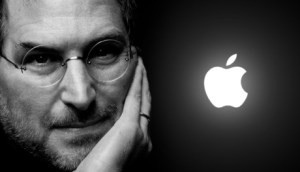
Many of us are mourning the recent loss of visionary, entrepreneur and philanthropist – Steve Jobs.  I’ve been thinking about him a lot lately and something he once said  struck a very familiar chord with me:   “People with passion can change the world for the better.”   Passion. It seems to be a common element in the DNA of every great innovator.

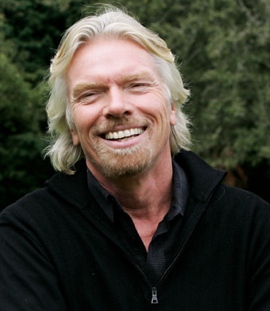
Take Sir Richard Branson, for example.  As Founder and Chairman of the Virgin Group of Companies (a multi-billion dollar, global publishing, retailing, aviation and entertainment conglomerate) based in London, England, Richard Branson has plenty of passion. And chutzpah.

What distinguishes him from so many other brilliant entrepreneurs is that he always has fun.  If asked “Who do you want to be when you grow up?” I would say — without hesitation —  “Richard Branson.”  I admire him. I respect him.  And, he makes me smile.

Here’s what he says about the importance of passion:

“Ideally, since 80 percent of your life is spent working,  you should
start your business around something that is a passion of yours.
If you’re into kite-surfing and you want to become an entrepreneur, do it with kite-surfing. 

Look, if you can indulge in your passion, life will be far more interesting than if you’re
just working. 
You’ll work harder at it, and you’ll know more about it.  But first you
must go out and educate yourself on whatever it is that you’ve decided to do –
know more about kite-surfing than anyone else. That’s where the work comes in.  But if you’re
doing things you’re passionate about, that will come naturally.”

As writers, we should always be passionate about what we write.  Otherwise, why write?  (clearly, it’s not for the money!).

So, follow your passion.  And, as Sir Richard has stated (most likely  with that wonderfully wide, infectious smile of his), “Life is a helluva lot more fun if you say yes rather than no.”Yes, sir – it is!

Images via Stopstressingnow.com  and  Power-of-giving.com.

Juggling writing time between multiple book projects

Sometimes I think I’ve fallen off that precarious balancing beam – from possessing a modicum of sanity to diving head first into a state of complete and utter madness.  The reason?  I am juggling multiple book projects. Thank goodness I’m compulsively organized, because the only way to handle the work load (without sacrificing creativity) is to compartmentalize my time.

Yes, compartmentalization is the way I am able to maintain my sanity – relatively speaking.  But it would be remiss for me not to mention the occasional help I receive from Mr. Glen Livet and Mr. Mac Allan!

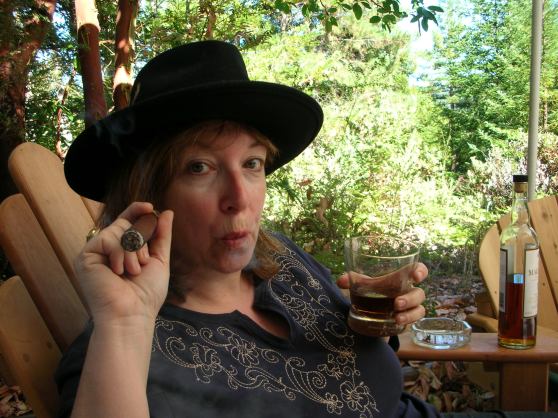
h.f.t.g. taking some quiet “me” time with Mr. Mac Allan
and enjoying a stogie, in between intense writing sessions

(Note: the photographer is also partaking in some libation!) 

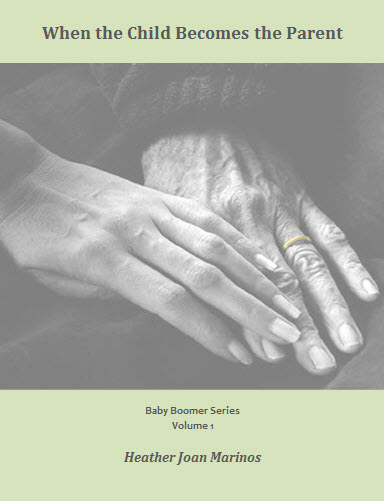
So, here’s the plan. As mentioned in my inaugural blog post, “Finding Grace” (the Novel) is set for release sometime in 2013.  In tandem, I’m writing a series of four non-fiction books targeted to the Baby Boomer generation.  I’m a quarter of the way through the first, entitled “When The Child Becomes The Parent,”  and am hoping to release this book by the end of 2012 (fingers crossed).  By setting an aggressive schedule, I’m putting a lot of pressure on myself – in an effort to battle my most dreaded enemy: Procrastination.

Here’s a sneak peek of the book summary (which will be located in the  book’s inside left flap) – as well as  the book cover design:

“We are the Baby Boomer Generation. That makes us forty-something, fifty-something and sixty-something.  Our parents and beloved aunts or uncles are in their twilight years. They need our help. The measure of a person is the degree to which she treats her fellow men and women with respect, kindness, compassion and – to those close – love.   Why do we all too often forget to tender the same treatment to our elderly? They are supposed to be our nearest and dearest. They gave us Life!  The child must now step up to the plate and become the parent.  

No one wants to reach the end of life’s journey and suddenly become a burden to their family or friends.  Perhaps we might find it helpful to see the world from their perspective and accord them the dignity they so rightly deserve.  Perhaps we should not be so overwhelmed or impatient with them and maybe we should shift our fear-of-aging mindset a bit.  After all, shouldn’t we consider it a privilege to help them through this final chapter of their lives?

This is a gentle guide on how to care for the elderly loved ones in your family – from home care to hospice care to preparing for death.  The author will also share stories about some of her own experiences – both deeply sad and delightfully humorous.

She is fifty-something, by the way and, yes, a Baby Boomer.”

Copyright © 2010-2011 Heather Joan Marinos – All Rights Reserved.

— To all the writers out there who are juggling multiple book projects – courage, my friends!  We will all complete our books and, once we do, we will very likely move onto the next project.  Are we masochists? No. We simply love what we do.
And that’s a good thing.

Image (top) via Sarparker.com.

A Writer’s Dilemma: traditional publishing or self-publishing?

Until recent years, I always believed the traditional publishing route was the only way to go.  I knew that it would entail sending out query letter after query letter and, inevitably, would be followed by rejection letter after rejection letter.  I knew that it would most likely take some time – perhaps years – before a positive response would be forthcoming. I would need to hire a literary agent, if I ever had a hope in hell of having my manuscript read by a publisher. Nevertheless, I envisaged a day when one of New York’s finest publishing houses would give me the thumbs-up.  I imagined the process, the kind of advance I would get, and what the contract would entail.  Would they want a one-book deal or a three- or five-book deal?  Most importantly, I would be published!

Times have changed.  Writers are increasingly favoring the self-publishing route. There used to be a stigma attached to what was once referred to as “vanity press.”  Not so much, anymore (although there are a few publishing purists who still curl their lips in disdain at the mere thought of  a self-published book or – gasp! – an Ebook!). But, with the advent of social media and publishing vehicles like Kindle Amazon and lulu.com – many writers are opting to eliminate the “middle man” and take control of their own publishing destiny.  Not convinced?  Frankly, I’m still in a quandary, myself.

Here are a few of the pros and cons in the traditional publishing versus self-publishing debate:

SELF-PUBLISHING

The author becomes the publisher (no middle man) and, as such,  she/he has to do all the work (proofread and edit the final text, provide camera-ready artwork, marketing and distribute the book – and provide all the funds to publish the book).  Yes, companies like lulu.com (for example) can market and distribute but you will inevitably have to pay the tab.  A hefty tab, at that.

Pros:

  • Control. You control the process and have full rights to your manuscript.
  • Time. You could easily have a book released in the space of six months.

Cons:

  • Money. You have to pay for everything and will only recoup your costs if the book sells – well.
  • Contacts. You don’t have the benefit of a publishing house’s experience, contacts and networking capabilities.
  • Time. Ahhh, there’s that Time issue again!  You will be spending a lot of your time marketing, distributing, filling orders, and so on.
  • Market  Saturation.  The market is saturated with low-quality books because so many people (who are not really writers) are publishing their own books or Ebooks. The end result:  self-publishing still gets a bad rap – like it or not.

TRADITIONAL PUBLISHING

Most larger publishing houses will not even look at a manuscript unless it is represented by a literary agent. Smaller or independent houses may possibly accept unrepresented work, but don’t hold your breath.  Expect to get rejection letters.  Don’t let rejection letters fill you with self-doubt. Keep trying.

Pros:

  • Money.  You will get an advance (ranging from a meager amount to as much as seven figures).  You will get a percentage of sales.
  • Effort. The publishing house will handle the whole process.  They have the resources to promote your book – well.
  • Credibility. To be published by a major publishing house is a good thing – really. Whether you like it or not, perception is important.

Cons:

  • Money.  You will have to pay the literary agent a percentage (usually 15%) of  your advance, as well as a percentage of the sales.
  • Control.  You are at the mercy of the publishing house.  You lose some or all control over your manuscript, including title, cover, content  – depending on the fine print in your contract.
  • Time.  It will likely take a publishing house anywhere from 12 – 18 months to publish your book.

Clearly, it is extremely important to research your publishing options further and think very carefully about which route you want to take.

As a writer, this is one of the most important decisions that you will make.

Personally, I am still torn between the two but am leaning towards the self-publishing option.  My main issue is Time.  The time is NOW!

Here’s wishing all of you the best of luck!

Cheers,

h.f.t.g.

Image via   Llamatastic.com.

The time is NOW!

Time is relative.

When we’re young,  time seems to pass ever so slo-o-o-o-owly.  Remember back to when you were 12, impatiently waiting to turn 13, and then aching to be 16, 18, and – the most desirable age of all – 21.  It seemed to take forever.  If we only knew then, what we know now!

What we know now is that, as we age, time flies by so quickly – too quickly.  Or so it seems.

Personally, I used to believe that I peaked in my 30’s – and that it would inevitably be downhill from there.  What a deluded fool I was!  There is something to be said about the fabulous 50’s.  And the wisdom – which comes from half a century’s worth of  experience and hard lessons, well learned.

This is what I know for sure:

  1. Make Time your friend, not your enemy.  Embrace it. Savor it. Use it well.
  2. The passage of Time does not necessarily heal all wounds. But, it does help you deal  with your wounds.
  3. Time gives you the ability to see things from a more enlightened perspective.
  4. Time will only treat you well if you treat yourself well.
  5. Time teaches you patience  – with yourself and with others.
  6. Time makes you appreciate the past and not take the present for granted.
  7. Time is absolute.  There is always a beginning and an end.
  8. Time will not stand still while you deliberate about when to write your opus. Do it now.

So,  follow your dream, your bliss – whatever it may be.  Be confident (but not egotistical), be motivated (but not frantic or hyperactive), and  – most importantly – maintain balance in your life (things often go awry when  there is no equilibrium).


Image via Blog.sciseek.com.

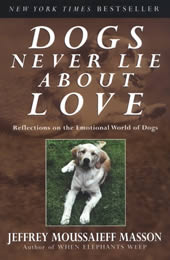
heatherfromthegrove book pick for Sunday reading: “Dogs Never Lie About Love” by Jeffrey Masson

In the world according to heatherfromthegrove, Sunday is that gloriously quiet day of reflection when we put everything aside and simply curl up in a favorite chair and read a good book. Usually, Bacchus (my grey-bearded black Lab) and Puss (my temperamental-yet-extremely-affectionate black Maine Coon cat) snuggle and snooze beside me, as I enjoy the words and thoughts of another kindred spirit  (likeminded writer).

Each Sunday my blog will spotlight a writer whose personal story and  “pièce de résistance”  has caught my fancy.

Let’s start with the controversial psychoanalyst and bestselling author, Jeffrey Masson. Residing with his family in the Lord of the Rings mecca, New Zealand, Jeff has published a series of books that are highly critical of Freud, psychiatry, and psychotherapy/analysis.

“Dedicated to the emotional lives of animals, vegetarianism, veganism (the ethics of food), animal rights, and human-animal interactions”,  he has written a spectrum of books on animals –analyzing their emotions and the lessons that we humans could (and should)  learn from these divine creatures (note by heatherfromthegrove: by “divine” – I mean “of God”  – because it is my personal belief that animals are spiritual beings).

Today, I am reading Jeff’s book, Dogs Never Lie About Love.  The book is both thoughtful and insightful. Do check this author out. I certainly will be reading more of his work!

Have a great Sunday!

Writer’s quote of the weekend ….

Every Saturday, I’ll be posting a quote pertaining to the joys (and sorrows!!) of writing, along with some writer witticisms.

I love this quote …

“Writing a book is an adventure. To begin with, it is a toy and an amusement. Then
it becomes a mistress, then it becomes a master, then it becomes a tyrant.
The last phase is that just as you are about to be reconciled to your servitude, you
kill the monster, and fling him to the public.”

~  Winston Churchill

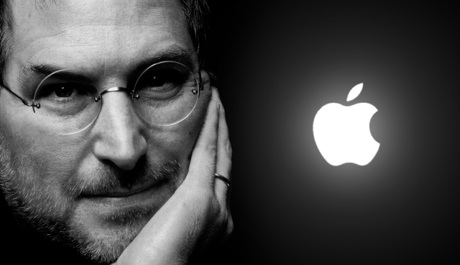
Steve Jobs – gone too soon….and in his own words “how to live before you die”

Steven Paul “Steve” Jobs  – February 24, 1955 – October 5, 2011

I am a Baby Boomer. I grew up in a time when I had to use an old Brother typewriter to type up my highschool essays.Then came a few tentative innovations in the evolution of wordprocessing: the Timex Sinclair and the Commodore 64 computer (yikes, we still have them stored somewhere, after all these years!).

Clearly, we all knew  that our generation was going to bear witness to a technological revolution that would change the way we worked, created, and communicated.   And we were not disappointed.  In the mid-1970’s,  young  technology visionairies-turned inventors-turned entrepreneurs led us all into a new era of computers  –  with the introduction of the Mac and the PC.  The names of some of these creative geniuses may sound familiar:  Steve Jobs, Steve Wozniak, and (of course) Bill Gates! These very (very) young men proceeded to take Silicon Valley by a storm!  And their impact was global.

So, yes, I am proud to say that I am part of that idealistic generation of young men and women who participated in a technological renaissance that we will likely not  ever see again … with the exception of  the Millennium’s new breed of tech geniuses who created Google and Facebook.

When I learned that Steve Jobs died two days ago at the very young age of 56,  after a long and brave battle with pancreatic cancer, I was very, very sad.  Gone too soon.

I would have loved to be sitting amongst the Stanford University graduates of 2005 at their Commencement Ceremony, as Steve Jobs imparted some passionate words of wisdom to a whole new breed of young idealists.

Here are some of  the highlights from his Commencement Speech:

On the subject of love and loss:

“Sometimes life hits you in the head with a brick. Don’t lose faith. I’m convinced that the only thing that kept me going was that I loved what I did. You’ve got to find what you love. And that is as true for your work as it is for your lovers. Your work is going to fill a large part of your life, and the only way to be truly satisfied is to do what you believe is great work. And the only way to do great work is to love what you do. If you haven’t found it yet, keep looking. Don’t settle.”

On the subject of death:

” Remembering that I’ll be dead soon is the most important tool I’ve ever encountered to help me make the big choices in life. Because almost everything — all external  expectations, all pride, all fear of embarrassment or failure – these things just fall away in the face of death, leaving only what is truly important. Remembering that you are going to die is the best way I know to avoid the trap of thinking you have something to lose. You are already naked. There is no reason not to follow your heart……”

“… No one wants to die. Even people who want to go to heaven don’t want to die to get there. And yet death is the destination we all share. No one has ever escaped it. And that is as it should be, because Death is very likely the single best invention of Life. It is Life’s change agent. It clears out the old to make way for the new. Right now the new is you, but someday not too long from now, you will gradually become the old and be cleared away. Sorry to be so dramatic, but it is quite true.

Your time is limited, so don’t waste it living someone else’s life. Don’t be trapped by dogma — which is living with the results of other people’s thinking. Don’t let the noise of others’ opinions drown out your own inner voice. And most important, have the courage to follow your heart and intuition. They somehow already know what you truly want to become. Everything else is secondary.”

And, Steve Jobs wrapped up his speech with four simple send-off words to the 2005 Stanford graduates  –  words to live by:

“Stay Hungry. Stay Foolish.”

Rest in peace, Steve.  And, thank you for having shared your dreams with the rest of us.
Photos via Thepoliticalcarnival.net, Wired.com, and Thedroidguy.com.