Three Nuggets of Wisdom for Writers

YoungWriter

1a

“The process of writing a book is infinitely more important than the book that is completed as a result of the writing, let alone the success or failure that book may have after it is written . . . the book is merely a symbol of the writing. In writing the book, I am living. I am growing. I am tapping myself. I am changing. The process is the product.”

Theodore Isaac Rubin

 2a

“Nothing in this world can take the place of persistence.

Talent will not; nothing is more common than unsuccessful people with talent.

Genius will not; unrewarded genius is almost a proverb.

Education will not; the world is full of educated derelicts.

Persistence and determination alone are omnipotent. The slogan ‘press on’ has solved and always will solve the problems of the human race.”

Calvin Coolidge

 3a

“And what, you ask, does writing teach us? First and foremost, it reminds us that we are alive and that it is a gift and a privilege, not a right. We must earn life once it has been awarded us. Life asks for rewards back because it has favored us with animation. So while our art cannot, as we wish it could, save us from wars, privation, envy, greed, old age, or death, it can revitalize us amidst it all.”

Ray Bradbury  (Zen in the Art of Writing(1990) Preface)

swirly2

 Image Credit: Aliaksei Lasevich/Shutterstock

More summer reading

highres_215549362

“I guess you can call me “old fashioned”. I prefer the book with the pages that you can actually turn. Sure, I may have to lick the tip of my fingers so that the pages don’t stick together when I’m enraptured in a story that I can’t wait to get to the next page. But nothing beats the sound that an actual, physical book makes when you first crack it open or the smell of new, fresh printed words on the creamy white paper of a page turner.” 

― Felicia Johnson 

Well, three weeks of poetry, fiction and non-fiction have come and gone, here at heatherfromthegrove. I hope you found the selections interesting and perhaps even added them to your own summer reading list.

Below, are just a few more for you to consider.  I’ve listed them by genre and category  (only the book title, author and thumbnail book cover). Please scroll slowly, all the way down.

Happy reading!

Cheers,

Heather

POETRY:

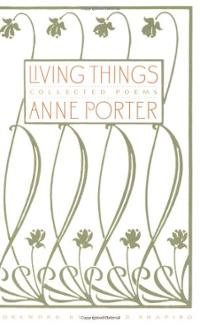
living-things-collected-poems-anne-porter-paperback-cover-artLiving Things: Collected Poems (2006), by Anne Porter

0978067943924_500X500

Phenomenal Women:  Four Poems Celebrating Women, by Maya Angelou

FICTION:

englishgirlflat2

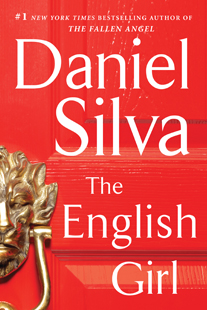
The English Girl, by Daniel Silva

the-ocean-at-the-end-of-the-lane-by-neil-gaiman

The Ocean at the End of the Lane, by Neil Gaiman

enders_game_book_cover

Ender’s Game, by Orson Scott Card

NON-FICTION:

Category – Cookbooks

51GlgWLgjnL._SL500_AA300_

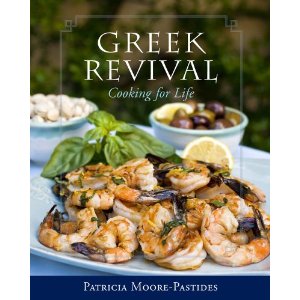
Greek Revival: Cooking for Life, by Patricia Moore-Pastides

51oXmEwmo6L

Jerusalem: A Cookbook, by Yotam Ottolenghi

Category – Memoir

fey_bossypants_custom-49b9189561f8ff85fbfaa7c243df72ef282e54b3-s6-c30

Bossypants, by Tina Fey

9780307731715_p0_v1_s260x420

To Heaven and Back: A Doctor’s Extraordinary Account of Her Death, Heaven, Angels, and Life Again: A True Story, by Mary C. Neal, M.D.

Category – History > North America > Canada

51ssUUIShcL._SY300_

Along the Shore: Rediscovering Toronto’s Waterfront Heritage, by  M. Jane Fairburn

Category – Mainstream Political and Economic Commentary  > United States

9780802194619_p0_v1_s260x420

Time to Start Thinking: America in the Age of Descent, by Edward Luce

9780393088694_custom-6e6b34e78bbf222100052cd95a5e63cc39ad1c5a-s6-c30
The Price of Inequality: How Today’s Divided Society Endangers Our Future, by Joseph E. Stiglitz

COTRD_Perfect
Casualties of the (Recession) Depression, by Heather Joan Marinos

Category – Mainstream Economic Commentary  > International

BreakoutNations

BreakoutNations: In Pursuit of the Next Economic Miracles, by Ruchir Sharma

Image (at the very top) via meetup.com.

heatherfromthegrove’s non-fiction spotlight for today: “Outliers: The Story of Success” by Malcolm Gladwell

♦ ♦ ♦

Monday, July 22 – Saturday, July 27

NON-FICTION

 @ heatherfromthegrove!

Enjoy some good summer reading.

♦ ♦ ♦

 outliers

“Do you see the consequences of the way we have chosen to think about success? Because we so profoundly personalize success, we miss opportunities to lift others onto the top rung…We are too much in awe of those who succeed and far too dismissive of those who fail. And most of all, we become much too passive. We overlook just how large a role we all play—and by “we” I mean society—in determining who makes it and who doesn’t.”

Malcolm Gladwell, Outliers: The Story of Success


True to form, bestselling author Malcolm Gladwell (Blink and Tipping Point) takes us on an intellectual expedition into the realm of high achievers – über-successful people like Microsoft co-founder Bill Gates and the phenomenon known as “The Beatles.”  An “outlier” is, in Gladwell’s own words, “a scientific term to describe things or phenomena that lie outside normal experience.” In the context of his book, outliers “are the men and women who, for one reason or another, are so accomplished and so extraordinary and so outside of ordinary experience that they are as puzzling to the rest of us as a cold day in August.

Dispelling the notion that extremely successful people attain success because they make it happen –through their own smarts, tenacious drive, willingness to hustle and, good old-fashioned hard work,  Gladwell points out that there are many extremely intelligent, highly gifted, hardworking people for whom success has been an elusive mistress. Therefore, the common dogma of “You are the author of your own destiny. You make your own success.”  does not apply in many cases. In this book, Gladwell asks us to shift our focus from what successful people are like,  to where successful people come from.  He argues that one’s culture, family background and upbringing play a significant role in the makeup of a high achiever.

Clear, witty and intelligent, Outliers offers a new perspective on what it takes to achieve extreme success. Granted, success does rely – to a great extent – on individual effort. However, what should not be ignored is the degree to which outside factors, such as people and circumstances, affect a person’s success or failure.  Therefore, we (as a society) have the ability to help shape people’s lives, and  (if directed in the right way and with the best intentions) for the better.   

heatherfromthegrove’s non-fiction spotlight for today: “Thinking, Fast and Slow” by Daniel Kahneman

♦ ♦ ♦

Monday, July 22 – Saturday, July 27

NON-FICTION

 @ heatherfromthegrove!

Enjoy some good summer reading.

♦ ♦ ♦

 uc5r5QklTM4NLrJVqNdRwTl72eJkfbmt4t8yenImKBVaiQDB_Rd1H6kmuBWtceBJ

“A remarkable aspect of your mental life is that you are rarely stumped. True, you occasionally face a question such as 17 × 24 = ? to which no answer comes immediately to mind, but these dumbfounded moments are rare. The normal state of your mind is that you have intuitive feelings and opinions about almost everything that comes your way. You like or dislike people long before you know much about them; you trust or distrust strangers without knowing why; you feel that an enterprise is bound to succeed without analyzing it. Whether you state them or not, you often have answers to questions that you do not completely understand, relying on evidence that you can neither explain nor defend.”

 – Daniel Kahneman, Thinking, Fast and Slow

Noted for his extensive research, knowledge and work on the psychology of judgment and decision-making, hedonic psychology and behavioral economics, renowned Israeli-American psychologist Daniel Kahneman delivers a very fascinating exploration of the mind in Thinking, Fast and Slow. In this compelling book, we learn that there are two systems which drive the mind:  System 1 – our fast, automatic, intuitive and emotional mode, and System 2 – our slower, more calculated and logical reasoning mode.  Kahneman explains how the two systems affect how and why we make certain choices and decisions (in business and in our personal lives) and, more importantly, how we can employ certain techniques  and preemptive measures to mitigate potential problems that our intuitive mind may cause. He then teaches us ways to successfully tap into the benefits of slow, deliberate thinking.

Thinking, Fast and Slow is a treat to the intellect, one that needs to be read and digested slowly.

Daniel Kahneman, winner of the 2002 Nobel Memorial Prize in Economic Sciences, is currently Professor Emeritus of psychology and public affairs at Princeton University’s Woodrow Wilson School.

heatherfromthegrove’s non-fiction spotlight for today: “Quiet: The Power of Introverts in a World That Can’t Stop Talking” by Susan Cain

♦ ♦ ♦

Monday, July 22 – Saturday, July 27

NON-FICTION

 @ heatherfromthegrove!

Enjoy some good summer reading.

♦ ♦ ♦

quiet-final-jacket

“Introverts, in contrast, may have strong social skills and enjoy parties and business meetings, but after a while wish they were home in their pajamas. They prefer to devote their social energies to close friends, colleagues, and family. They listen more than they talk, think before they speak, and often feel as if they express themselves better in writing than in conversation. They tend to dislike conflict. Many have a horror of small talk, but enjoy deep discussions.”

Susan Cain, Quiet: The Power of Introverts in a World That Can’t Stop Talking

I love the title of this book. Quiet: The Power of Introverts in a World That Can’t Stop Talking. Listening to loud, incessant talking gives me a headache. Unfortunately this “noise” is the norm, rather than the exception. Just turn on the television set and watch a few commercials or catch a daytime talk show. Personally, I do not enjoy listening to people as they talk over each other. However, as Susan Cain points out, the “Extrovert Ideal” has indeed “permeated our culture.” Despite the premise that introverts comprise, at the very least, one-third of the people we know, they remain undervalued in American society – much to our detriment.

Impeccably researched and beautifully written, this book is replete with interesting stories of real people and we get to meet some highly successful introverts, dispelling the myth that he who shouts loudest gets heard.

This book is a thought-provoking read.  Introverts will be inspired and extroverts will gain some new and interesting perspective.

Quiet has been on the New York Times Bestsellers List (Paperback, Non-fiction) for twenty-four weeks straight and is not likely to fall off the list anytime soon.

Pick up a good non-fiction for some enlightening summer reading

reading_a_book_wallpaper_6d0dd

“I prefer the company of books. When I’m reading, I’m never alone, I have a conversation with the book. It can be very intimate. Perhaps you know this feeling yourself? The sense that you’re having an intellectual exchange with the author, following his or her train thought and you accompany each other for weeks on end.” 
― Sophie DivrySignatura 400

And now it is time to change gears and delve into the world of non-fiction, a genre that is ideal for summer reading because we have more leisure time to absorb ideas, ponder them and perhaps even learn something unexpected.

Tomorrow marks the beginning of non-fiction week, here at heatherfromthegrove. Each day, from Monday through Saturday, I’ll be spotlighting one book/author. There will be a few surprise selections, a couple of memoirs and some humorous-yet-poignant reality pieces.

I hope that you will find my recommendations helpful and I would love to hear back from you, with some of your own favorites!

Cheers,

Heather

Image via youwall.com.


heatherfromthegrove’s story spotlight for today: “The Fratricides” by Nikos Kazantzakis

♦ ♦ ♦

Monday, July 15 – Saturday, July 20

FICTION

@ heatherfromthegrove!

Enjoy some good summer reading.

♦ ♦ ♦

edab9833e7a094e1d1012110.L

“Their life is an unceasing battle with God, with the winds, with the snow, with death. For this reason the Castellians were not surprised when the killing began, brother against brother. They were not afraid; they did not change their way of life.  But what had been simmering slowly within them, mute and unrevealed, now burst out, insolent and free. The primeval passion of man to kill poured from within them. Each had a neighbor, or a friend, or a brother, whom he had hated for years, without reason, often without realizing it. The hatred simmered there, unable to find an outlet.  And now, suddenly, they were given rifles and hand grenades; noble flags waved above their heads. The clergy, the army, the press urged them on — to kill their neighbor, their friend, their brother. Only in this manner, they shouted to them, can faith and country be saved! Murder, that most ancient need of man, took on a high mystic meaning. And the chase began — brother hunting brother.”

Nikos Kazantzakis , The Fratricides

To the rest of the world, the brilliant Greek writer and philosopher Nikos Kazantzakis is best known for his masterpiece, Zorba the Greek.   But to the Greeks, he remains a national treasure.  His body of writing is a clear attestation of the deep love he felt for his country and his people.  This passion, along with his devotion to his faith, and  a profound fascination with the magnetic power of charismatic leadership  ―  all come into play in his final curtain call, The Fratricides

The Fratricides (the act of a person killing his or her brother), was Kazantzakis’  last novel. The story takes place in a remote mountainside village (Castellos) in Macedonia, during the Greek Civil War (December  1944 – January 1945, and from 1946-49) when Greek communists tried (unsuccessfully) to gain control of Greece.  The novel’s central figure, the village priest (Father Yiannaros), tries to reconcile the two warring factions ― the monarchist troops who are in control of the town and the communist guerrillas who are trying to infiltrate the area.  Although sympathetic to some aspects of the communists’ vision of society, he is repelled by their acts of savagery. Their inhumanity goes against his moral and religious beliefs, yet Father Yiannaros takes steps to negotiate a settlement, with tragic results.  Enough said. 

Told by a master storyteller, The Fratricides is a gripping account of a turbulent time in Greek history, when brothers were (figuratively and literally) pitted against brothers.

Other novels by Nikos Kazantzakis:

* adapted into a film (1988) by the same name; directed by Martin Scorsese and starring Willem Dafoe (as Jesus), Harvey Keitel (as Judas) and Barbara Hershey (as Mary Magdalene).

** adapted into a film (1964) by the same name; directed by Mihalis Kakogiannis and starring Anthony Quinn (as Alexis Zorba) and Alan Bates (as Basil)

In addition, he wrote a vast body of work:  plays, poetry, and a wide selection of non-fiction works (travel books, translations, anthologies, memoirs, essays and letters).

My favorite Nikos Kazantzakis quote:

“I hope for nothing. I fear nothing. I am free.”


heatherfromthegrove’s poetry spotlight for today: “Forgiveness” by John Greenleaf Whittier

a-music-from-heart1

♦ ♦

As we wrap up poetry week @ heatherfromthegrove, enjoy this last one.

♦ ♦ ♦

Forgiveness

by John Greenleaf Whittier

poemForgiveness

John Greenleaf Whittier born on December 17, 1807, in Haverhill, Massachusetts – dubbed as one of the “Fireside Poets“, this American Quaker was an ardent and vocal advocate for the abolition of slavery.  His first poem was published in 1826, in a publication called the Newburyport Free Press.  The paper’s editor was abolitionist William Lloyd Garrison and it was Garrison who encouraged Whittier to take up the abolitionist cause – which he did on a local, state and national level.  He was involved with the formation of the Republican party and was keenly engaged in politics.  Whittier edited papers in Boston and Hartford (Connecticut) and – from 1857 until his death on September 7, 1892 – he was associated with the magazine, Atlantic Monthly.

Forgiveness although famous for his lengthy poems, the most popular being Snow-Bound: A Winter Idyll, this poem is one of his shortest and is often quoted because of its quiet but clear message of “forgive those who trespass against us.”  Only when we forgive, can we truly heal.  Forgiveness is freeing. And, to quote a line from the Prayer of  St. Francis, “It is in pardoning that we are pardoned.”  

Poem via poemhunter.com.

Image via pimminag.com.

heatherfromthegrove’s poetry spotlight for today: “The Fury of Abandonment” by Anne Sexton

HelpingHand

♦ ♦

POETRY 

@ heatherfromthegrove!

Enjoy!

♦ ♦ ♦

The Fury of Abandonment

by Anne Sexton

poemTheFuryOfAbandonment

Anne Sexton born on November 9,1928, in Newton, Massachusetts – a deeply troubled and brilliant American poet known for her extremely personal, emotional and conversational verse. She battled mental illness for most of her life.  Her first manic episode occurred in 1954, followed by a complete nervous breakdown a year later. Encouraged by her therapist to write poetry, as a means of cathartic therapy, Sexton discovered what was to be her true calling in life. Her poetry covered themes that reflected her own psychological challenges: depression, manic tendencies and suicide and nothing in her personal life was off-limits. She wrote about it all – becoming one of the most honored American poets and earning herself a Pulitzer Prize for Poetry. Sadly, her illness (today, she would have been diagnosed as suffering from bipolar disorder) began to escalate and, on October 4, 1974, she committed suicide by carbon monoxide poisoning. She was forty-six years old.

The Fury of Abandonment “Raw emotion” is what best describes this disturbing poem. One of 15 poems from the “Fury” sequence, later published in a collection titled, “The Death Notebooks.”  Published just after her divorce from her husband, it was the last collection of her poetry to be published before her suicide in the autumn of 1974. The advancement of her mental decline is felt with every unapologetically tortured word. It is as riveting as it is disturbing.

Poem via poemhunters.com.

Image via lydiamagazine.gr.

heatherfromthegrove’s poetry spotlight for today: “Love One Another” by Khalil Gibran

adorable-awesome-couple-hug-Favim.com-336964

♦ ♦

POETRY 

@ heatherfromthegrove!

Enjoy!

♦ ♦ ♦

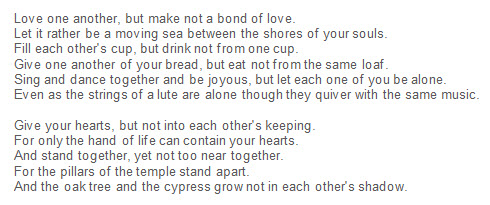
Love One Another

by Khalil Gibran

poemLoveOneAnother

Khalil Gibran born on January 6, 1883 in Lebanon – renowned Lebanese-American poet, philosopher and artist who emigrated to America with his family in 1895, settling in Boston’s culturally diverse South End.  Although he became popularly known in North America for his compilation of inspirational philosophical essays (written in poetic prose) , The Prophet, he was also a very accomplished artist, schooled (in Paris) in drawing and watercolors.  Favoring symbolism and romanticism over realism, Gibran showcased his work at his first exhibition in 1905 (Boston), where he met Mary Elizabeth Haskell, a respected headmistress.  He and Haskell formed an intimate, lifelong friendship and she played a pivotal role in his life, becoming his editor and confidante. Khalil Gibran, who never became a naturalized American citizen (in deference to his Lebanese roots), died in New York City, on April 10,1931 — at the age of forty-eight.  The cause of his death was a combination of cirrhosis of the liver and tuberculosis.  His request to be buried in his homeland of Lebanon was respected and fulfilled by his devoted friend, Mary Elizabeth.

Love One Another is an extract from his magnum opus, The Prophet. Beginning with the simple commandment of “Love One Another”, he writes philosophically about the sanctity of marital love while also acknowledging the importance of maintaining one’s individual spirit.  He writes poetically about the necessity to let love grow and evolve, just as we do.  If love is rigid and unchanging, the bonds of love will break down. In very eloquent and poetic language, he drives home the point that two people should complement each other, yet maintain and respect their separate identities.

Poem via poemhunter.com.

Image via write-brained.com