Pick up a good non-fiction for some enlightening summer reading

reading_a_book_wallpaper_6d0dd

“I prefer the company of books. When I’m reading, I’m never alone, I have a conversation with the book. It can be very intimate. Perhaps you know this feeling yourself? The sense that you’re having an intellectual exchange with the author, following his or her train thought and you accompany each other for weeks on end.” 
― Sophie DivrySignatura 400

And now it is time to change gears and delve into the world of non-fiction, a genre that is ideal for summer reading because we have more leisure time to absorb ideas, ponder them and perhaps even learn something unexpected.

Tomorrow marks the beginning of non-fiction week, here at heatherfromthegrove. Each day, from Monday through Saturday, I’ll be spotlighting one book/author. There will be a few surprise selections, a couple of memoirs and some humorous-yet-poignant reality pieces.

I hope that you will find my recommendations helpful and I would love to hear back from you, with some of your own favorites!

Cheers,

Heather

Image via youwall.com.


Think first, write later

5385287084_2702462500

 “Poirot,” I said. “I have been thinking.”
“An admirable exercise my friend. Continue it.”
 
― Agatha ChristiePeril at End House

Have you ever responded to an offensive or distressing email without thinking first?  “WHAT?!” you say to yourself, as your fingers agitatedly skim over the keys and, without a second thought…Send. Moments later, you could kick yourself for having been so impulsive.

This has surely happened to all of us, at one time or another.

Or perhaps, as a student, you were seated for your mid-term essay exam and you skimmed the questions quickly, then proceeded to write feverishly because the clock was ticking and you wanted to make sure that you had enough time to answer all the questions. It was only after you handed in the test, that you realized you missed the second part of the question because you didn’t take the time read carefully and organize your thoughts.

Mea culpa, mea culpa.

In the writing world, however, the process varies from writer to writer.  Not everyone likes to adhere to the “think first, write later” principle. Many writers just sit down at the computer (or, if they’re traditionalists, with pen and paper), and write. Then they edit. Stream of consciousness writing works for many and these are the writers who, when at home, probably don’t write shopping lists or who prefer not to structure their time rigidly. They are the free thinkers.  Write first, think while writing, and then edit later.

However, there are just as many writers (myself included) who prefer to organize their thoughts, prior to writing them down.  They do this by notes, index cards, outlines and also by just thinking (or daydreaming) it out in their minds. 

I am a great proponent of outlines.  My book writing process always commences with quiet contemplation… to think carefully about what I want to say and why, who will my readership be and how will I engage their attention. From there, I craft an initial Table of Contents which serves as my starting point and basic outline.  I then begin the initial research process (when research is required for the book) and the results of my initial research prompts me to write a more detailed outline which helps dictate the overall flow of the book. At that point. I move to a more advanced stage of research, finetune the outline further and then I am ready to sit down and write. I prefer to think first, write later. I carry a small  Moleskine reporter’s notebook with me wherever I go, to jot down thoughts. The challenge is being able to read my own messy handwriting later!

There really is no right or wrong process. Ultimately, the objective is to write.  How you get to that point is subject to whatever works for you.

So, think on the fly or  think in advance, but just make sure to carefully review your writing first before pressing that “Send” button!


Image via everydaygyaan.com.

Confessions of a Daydreamer

daydreaming-girl

“As I quietly stare off into space, eyes glazed over and brow thoughtfully taut, know that I am going about my business.  I am a storyteller.  Daydreaming is the best part of my job.”
― Richelle E. Goodrich

Couldn’t have said it better myself.

And now for the confession.

I have been daydreaming all of my life: characters, scenes and dialogue – all created in my mind. I am not crazy (although that subject is a matter of jovial debate in my family).  My mother totally understood the eccentricities of her youngest child.  After years of adjustment, my husband now knows that when he walks by the study and sees me in a trance-like state, tears streaming down my face, he needn’t worry.  Nor does he say a word because there is nothing more annoying to a consummate daydreamer than jarring interruptions. He just walks away, shaking his head and wondering to himself whether or not he lives in a madhouse.

So, I just like to conjure up storylines in my mind. The downside is that there are quite a few unfinished scripts in my filing drawer. Too many ideas, too little time. The upside is that I am never, ever bored.

One loop away from being totally loopy.

Now that the proverbial cat is out of the bag, I’d like to focus a little wrath on the naysayers who give daydreaming a bad name. In a world where everyone seems to be rushing around like the rabbit in Alice in Wonderland, daydreaming is often considered frivolous, lazy, a waste of valuable time and downright “flakey.” 

Not so, say many mental health experts. Daydreaming is not only beneficial to our state of mind, but it also contributes to our productivity.

“How on earth can this be true?”  say the anti-daydreamers.

Well, ye of little faith, psych specialists compare daydreaming to meditation.  Both help us to relax, relieve stress, take a mental “time out.”  After a daydreaming session, we are refreshed, energetic and ready to tackle the rest of the day.

In the Smithsonian article, The Benefits of Daydreaming,” Joseph Stromberg writes about a recent research study (published in Psychological Science) which indicates “that a wandering mind correlates with higher degrees of what is referred to as working memory. Cognitive scientists define this type of memory as the brain’s ability to retain and recall information in the face of distractions.

Therefore, despite the daydreamer’s propensity to let the mind wander, she (or he) possesses a heightened working memory which allows her (or him) to snap out of La-la Land when required to do so.

Moving the discussion of science back to the arts, most creative people would concur that daydreaming sparks the imagination. It helps to motivate and stimulate ideas.

Walk into a room filled with writers, authors, poets and novelists, and ask “Who among you daydreams regularly? Please raise your hand.”  With few exceptions, every hand will be raised.

Storytellers daydream. It’s what we do.

La-la land is a great place to visit.  The key is to know when it’s time to leave and come back home.


Image via mommasmoneymatters.com.

A Good Summer Read

Book-Reading-on-Beach

“One benefit of Summer was that each day we had more light to read by.”
― Jeannette WallsThe Glass Castle

Whether you’re en route to some exotic travel destination for the summer or simply sitting in your back yard, sipping a refreshing glass of your favorite libation… you’ll probably want to enjoy some good summer reading.  Here’s a list of ten books (novels, non-fiction and debut releases by new authors) that you may want to try out.

Happy reading!

Not in any particular order:

Fiction:

  1. The Secret Life of Bees by Sue Monk Kidd
  2. Lolita by Vladimir Nabokov
  3. South of Broad by Pat Conroy
  4. A Hundred Summers by Beatriz Williams
  5. Rockaway by Tara Ison

Non-fiction:

  1. Thinking In Numbers: On Life, Love, Meaning, and Math by Daniel Tammet
  2. Quiet: The Power of Introverts in a World That Can’t Stop Talking by Susan Cain

First Releases (Fiction) by New Authors:

  1. No One Could Have Guessed the Weather by Anne-Marie Casey

First Releases (Non-fiction) by New Authors:

  1. Along the Shore: Rediscovering Toronto’s Waterfront Heritage by M. Jane Fairburn
  2. Casualties of the (Recession) Depression by Heather Joan Marinos

“Come with me,’ Mom says.
To the library.
Books and summertime
go together.”
 

― Lisa SchroederI Heart You, You Haunt Me

Photo via holidayrentals.com.

How to Resist the Lure of Summer Distractions

17XgPyfrdGU

Summer is a temptress. She dazzles us with bright colors and hot sun. Every year, we impatiently await her arrival.  For many, she is a welcome respite after a long, cold winter.  She exudes a sense of lightness and freedom and her flamboyance and playfulness is infectious.  School is out and children suddenly find themselves with loads of time… to play!  And they don’t waste a minute.  With the rigor of school schedules and extracurricular activities set  aside, parents reconnect with their children.  Men and women start to loosen up a bit and their busy lives begin to take a back seat to weekend barbecues, picnics and summertime activities.  That glorious smell of barbecue grilling wafts from house to house.

Yes, summer is a temptress.  But, as a writer who is working on multiple book projects while trying to promote her newly published book, it is difficult to resist the lure of summertime distractions.   Am I up for the challenge?  Can I muster enough will and discipline? 

I’ll let you know at the end of the summer.

In the meantime, I am going to try out some of these tips.  Maybe they can help you, as well.

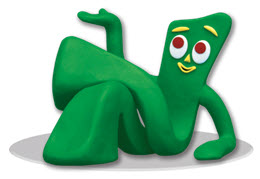
1. Channel your inner Gumby

gumbyThe key is flexibility.  Summer schedules need to be flexible, not rigid.  Otherwise, you’re setting yourself up to fail.  “Fail” is perhaps too strong a word, but I’m sure you understand my meaning.

2. Move like an inchworm

inchworm

Take it one steady, small step at a time. Break up your day into increments of time – time to research, time to write, time to relax and time for eating and sleeping. Set smaller, more frequent goals and milestones for yourself and this will encourage you to keep moving forward and ultimately fill you with a sense of accomplishment. On the other hand, if you flit like a butterfly – from task to task – nothing will ever get completed.

3. Set your boundaries

writing-contest-scams

Let your family and friends know when you’re in the writing zone, so that they can respect your space and privacy for the time that you’ve allocated. Afterwards, they can have your full attention.

4. Don’t bite off more than you can chew

gerbil

It’s summertime. Focus on the most important  and enjoyable projects, then make a plan to tackle the rest in the Autumn months.

5. Bring it outside

woman_writer_outside_laptop

You don’t have write behind closed doors on a beautiful summer’s day.  Take your laptop or notepad, a pot of tea or coffee, and do your writing (and thinking) outside.  If you live in an apartment and don’t have a yard, pack yourself some refreshments and go to your nearest park.  If you live near water, sit on the beach or by the lake. Maybe the sights and sounds all around you will bring you some interesting perspective or inspiration.

Enjoy your summer and happy writing!

Images via anordinarywomn.net, gumbyworld.com, piedmontwildlifecenter.org, writingforward.com,  dorrys.com and cloudsandchecks.com.

Let No Child Go Hungry This Summer

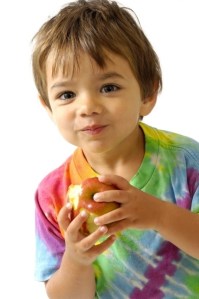
child_eating_apple

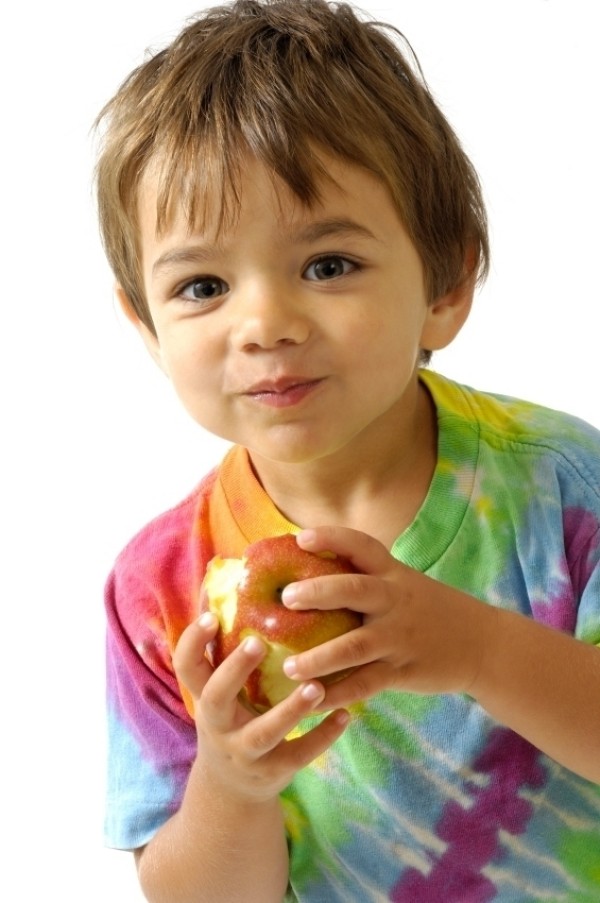
When that last school bell rings in June, droves of children come blasting out of the doors, eager to begin their summer. No more multiplication tables to memorize or spelling bees to prepare for – just fun in the sun, with no worries.

However, for the children who live in “food insecure”  households (the politically correct term coined by the USDA, which essentially means “hungry” or “without food.”), summertime means losing the luxury of daily breakfasts and lunches, provided by the schools.

For these children, food is a luxury.

This doesn’t just affect a few children here and there.  

Millions

Millions of children across the United States live in homes where food is scarce. Imagine, for a moment, what it must feel like, not knowing where your next meal is coming from – or when you will be able to have a next meal. 

Thankfully, national and community-wide summer food programs have been established, to provide free meals for these children  (aged 18 and under).

Non-profit organizations like Feeding America  and Feed The Children make it their mission to ensure that no child goes hungry.

Federal initiatives, such as the USDA’s (United States Department of Agriculture) Summer Food Service Program (SFSP), have approved sites located in areas (nationwide) where there is a higher concentration of children from low-income households.  These SFSP sites  provide free meals (which meet federal nutrition guidelines) to these children.

In communities across the country, local volunteers and organizations are banding together to provide food for children who are in need of assistance.  In New Haven, Connecticut, for example, the New Haven Public School Board – in collaboration with United Way, have rolled out a new Summer Food Truck.  This mobile “meals on wheels” drives around town, offering free, nutritious meals to kids and teens.
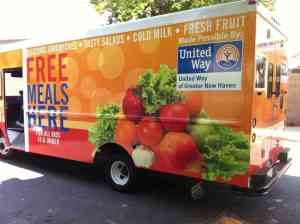
foodtruck

A lot of good things happen when communities rally together.

These organizations all need volunteers, and of course, they welcome donations.  If you  wish to volunteer your time (and/or money) to the summertime food programs in your neighborhood, check out the list of sites below. I am also listing a site that provides a  Food Bank Locator, in the event that you may want to volunteer at a food bank in your town.

If you are a business owner, you may want to consider sponsoring an SFSP food site in your area.

One last word.   If your children have friends or classmates who may be hungry, why not invite them over for lunch or dinner?  Not only will you be doing a kind deed, you will be teaching your own children the value of community and compassion.

And that is a good thing.

♥ ♥ ♥

Images via cacbelmont.org (boy with apple), npr.org (truck photo credit by Timothy Cipriano/New Haven Public Schools), and   fns.usda.gov (SFSP flyer).

♥ ♥ ♥

Feeding America:  http://feedingamerica.org/how-we-fight-hunger/programs-and-services/child-hunger/summer-food-program.aspx

Feed The Children: http://www.feedthechildren.org/site/PageServer?pagename=dotorg_homepage

USDA’s Summer Food Service Program: http://www.fns.usda.gov/summer-food-service-program-sfsp

SFSP Sponsorship:  http://www.fns.usda.gov/cnd/Summer/Sponsor.htm

Food Bank Locator: http://feedingamerica.org/foodbank-results.aspx

National Hunger Hotline: 1-866-3-HUNGRY or 1-877-8-HAMBRE for Spanish

6-14-2013 4-59-43 PM

Writing in an Authentic Voice

exam6

“Believe in yourself and in your own voice,

because there will be times in this business when you will be the only one who does.

Take heart from the knowledge that an author with a strong voice

will often have trouble at the start of his or her career –

because strong, distinctive voices sometimes make editors nervous.

 But in the end, only the strong survive.”

―  Jayne Ann Krentz

Most writers are blessed (although some would say, cursed) with the uncanny ability to see through another person’s outward façade, body language and emotional barriers.  Good writers are keen observers.  We watch. We don’t just listen, we hear.  And we notice – everything. Then, we write.

Similarly, a voracious reader opens up a book, in anticipation of a good read – expecting to be transported into someone else’s words, someone else’s thoughts. The reader has high expectations. He or she  wants to soak up all that the writer has to say. But when the words seem forced, when the thoughts do not ring true – the reader is left deflated and unsatisfied.

It all boils down to one word:  Authenticity.  When a writer is ready to commit his or her observations, experiences, life lessons and creativity to paper, it must be done clearly and in an authentic voice.  If the writing is not authentic, the reader will detect it in a flash. If a story appears forced to the reader, it is forced.

Say what you mean.  Mean what you say.

A writer should never worry about being popular.  We can’t please everybody.  There will always be those who take umbrage at what we say.  Conversely, there will be just as many who will champion us. One has to be philosophical about the whole writing experience.  When we are true to ourselves, when we write in an authentic voice – we should be happy with the end result.

However…

… this should not preclude us from exercising the art of self-restraint.  When a writer is passionate (and believe me, I know whereof  I speak), it becomes an interesting balancing act of saying what needs to be said, yet reigning the words in a tad – to avoid rabid repetition. 

A word to the wise:  gather together an unbiased focus group of people and have them read and critique the manuscript. Heed their feedback well, without taking it personally.  Then, apply it.  We are all classmates in a lifelong Continuing Education program. The objective must always be to learn and to keep on learning, until we are dead and buried.

On that lively note, I shall bid you all Godspeed as you continue your writing journey.

Be true to yourself and to your craft.  The best is yet to come.

Image via destinationsdreamsanddogs.com

Typecasting a writer: folly or not?

pigeonholed.expertise

“Don’t classify me, read me. I’m a writer, not a genre.” 
― Carlos Fuentes

In one of my earlier blogs (New Year’s Revelation No. 5, “Never, Never Assume!”), I wrote about the unfortunate common practice of making assumptions ― about people or situations.  So many of us, whether intentionally or unintentionally, fall into that trap – to our detriment.  In so doing, we run the risk of making erroneous assumptions (because we are not aware of all the mitigating factors) and rush to judgment, perhaps too quickly.  The same applies to pigeon holing or typecasting someone.

In the acting world, for example, actors are often typecast as comedic, dramatic, character, leading role, action hero, and so on.  Yet many actors have proven – time and time again – that they can seamlessly apply their acting talent and skills to any genre. And when they do this, we are always surprised (yet delighted).  Why are we surprised? The answer, of course, is that we made an erroneous assumption. Yes, Robert De Niro has played some seriously intense and dramatic roles.  However, as “Vitti” in Analyze This and Analyze That (opposite Billy Crystal), De Niro had me rolling on the floor, laughing.

The same applies to writing.  Just because a writer publishes a book in one genre, this does not mean he or she is incapable of writing in a different voice, for a variety of target audiences, or in multiple genres.

As for myself, I have multiple book projects in the works.  Many are non-fiction.  Casualties of the (Recession) Depression is a political and economic commentary and collection of real-life vignettes.   This does not mean that the only genre I write is non-fiction editorial.  I write fiction, as well as industry-specific pieces and scripts for documentaries. 

Whether one is a writer or a photographer, an actor or an artist ― the fact is, we are complex and multi-faceted.  Labels are very limiting and should not be assigned so readily.

If we only focus our eyes on the moon, we may miss the beauty of the rest of the galaxy.

Image via trivworks.com.

Bookworms of the World, Unite!

read-books

“The more you read, the more things you will know. The more that you learn, the more places you’ll go.”

― Dr. Seuss, “I Can Read With My Eyes Shut!”

Books, glorious books!  They are scattered around my house and I carry one in my bag, wherever I go.  When I’m not reading a book, I’m writing one.

Today, the day that both Miguel de Cervantes  and William Shakespeare died (two of several literary giants who died on April 23rd, 1616), is World Book and Copyright Day — created by UNESCO (United Nations Educational, Scientific and Cultural Organization) to pay worldwide tribute to books and to the authors who write them.

Introducing the world of books to someone — a child, or even an adult — is like opening a locked door, behind which lies the path to knowledge and empowerment.

“I have often reflected upon the new vistas that reading opened to me.  I knew right there in prison that reading had changed forever the course of my life.  As I see it today, the ability to read awoke in me some long dormant craving to be mentally alive.”    

Malcolm X

Today, in this second decade of the new Millennium, our busy lives often preclude us from taking time out to read a book.  Make the time… please.  I cannot emphasize enough the importance of  reading.  It exercises the mind, stretches the imagination, opens up new worlds and is far more enthralling and entertaining than a television sitcom (in my opinion). 

If you can’t spare the time, carry a book in your bag – just in case. Rather than complain about the long wait time in the dentist’s office or at the airport, just open up a book and read.  Before you know it, the plane will be boarding or the dental hygienist will be beckoning you to come on in.

As for me, I concur with the late President Thomas Jefferson, who said (simply and succinctly):

“I cannot live without books.”

Image via worksmartlivesmart.com.

Friends supporting friends

join-the-friends-704x318

“But friendship is precious, not only in the shade, but in the sunshine of life, and thanks to a benevolent arrangement, the greater part of life is sunshine.”

― Thomas Jefferson 

When friends support friends , not just during the tragic and sad moments…  but in times of accomplishment and triumph,  they show that they value their friendships and understand the true meaning of the word, “friend.”

It is good character to feel  joy and excitement for someone else, especially when that “someone else” is a friend or family member. 

Yet when it happens, it’s always such a delightful surprise and it truly invigorates the spirit.

In the past month, I have been the recipient of an outpouring of good wishes and congratulations, and many have been buying my book (some old friends have even bought multiple copies for their friends and family!). 

If I could do cartwheels, I would.  However, since I have never been overly flexible or athletic, it would be unwise for me to try it. But the thought is there.

Just to give you an idea, this is some of the feedback I’ve been receiving: 

“I had to put it down reluctantly (it was late at night) ….  Talk about the human side of political will and emotion and calling a spade a spade!”

“As a writer you want your reader to feel something when they read your words. You accomplished that. I was crying within a couple of chapters. The little girl and her doll did me in.”

“Can’t wait to read it! We’re so excited for you!”

” I can’t imagine how much discipline it takes to write a book! Wow!”

“It will have a place of honour on my coffee table!”

“This is very, very cool.”

What is very, very cool is having friends like you.

Right back at you, with love.

― heatherfromthegrove


Image via washoelibraryfriends.org.