Can we make a difference?

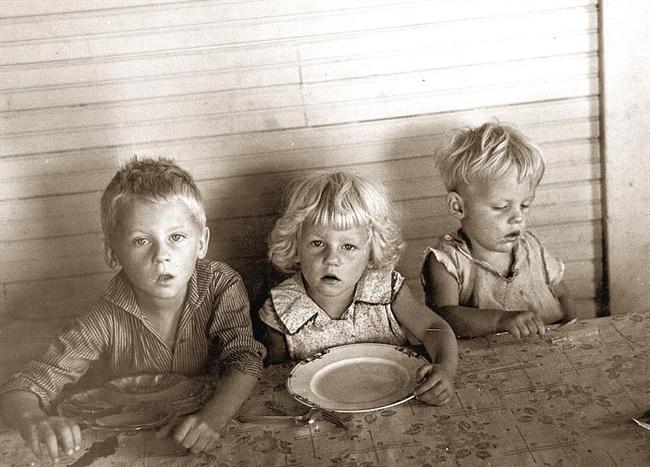
Hungry Children

“The lessons of the nation’s past tell us that liberty and justice cannot be secured for ourselves and kept from others without turning sour. Because we have cherished liberty for others, this country has sacrificed enormously (if not always wisely) in lives and material resources. We have not cherished justice as much. But justice and equality are no less a part of the nation’s ideals, and we build on them by exercising them in our relationship with others. When we are rich and others are hungry or impoverished beyond description, justice calls for ending this imbalance.” 

— Art Simon, Founder – Bread for the World

HFH2

Image (b/w of three children) via blogs.dallasobserver.com.

Leading by Example: Teachers who inspire their students to think

Raised hands

There are many good teachers who do what they’re hired to do — they teach.  But then there are the teachers who elevate their profession to the next level.  These are the teachers who inspire.  They bring their own experiences and wisdom to the classroom and, rather than telling their students what to do (and how to do it), they teach them how to think.  They teach them to ask questions, and to search for their own answers. They teach them to be present, engaged, and aware. Leading by their own example, these teachers inspire their young charges to go out into the world and pay it forward, by inspiring and empowering others.

These are the teachers who treat their classroom like a garden in the making. They plant the seeds. They nurture the garden, recognizing and appreciating the unique nature of each flower. Then, they stand back and watch with wonder, as the garden takes on a shape and character of its own.

It is this brand of high caliber teachers who we, as adults remember with fondness, respect and profound gratitude… years, and even decades later.

I can count my most inspirational teachers on one hand.  There were five.  These men and women, unbeknownst to them, had a great impact on my life.

And, yes, I am going to name names.

In elementary school (Grade 6):  Philip Ploplis, of Lithuanian descent, had just graduated from Teacher’s College.  We were his very first students and he was our Homeroom teacher.  He treated us as a classroom of individuals and spent considerable one-on-one time with us, in an effort to bring out the best in each student.  He wanted to prepare us for high school and beyond.  He knew our weaknesses and our strengths.  He was one of the few adults who actually cared about what we thought, what we dreamed of doing, and he took great pains to guide us in the right direction, so that our interests could take shape.  Thank you, Mr. Ploplis.

In high school:  Barbara Friand, an ex-nun and free-thinker, was my Humanities teacher.  She taught us to embrace diversity, to open up our minds, and to recognize that there were infinite possibilities.  She taught us hope, respect, and she taught us how to listen — to each other and to ourselves.  Most importantly, she taught us to understand — with complete certainty — that although each of us is different, we are, in fact, all the same.  We are humans. This woman leads my list of five inspirational teachers.  I would have loved to have known her in my adult years.  Oh, the interesting conversations we would have had!  Miss Friand, from the bottom of my heart, I thank you.

In college:  Victor Garaway, a professional  dancer from South Africa, taught us theatre.  At this time in my life, I was actually quite shy and quiet. He was a mercurial teacher who intimidated most students, but not me.  I realized that his Svengali-like method of teaching had one objective:  to dare us to excel and to weed out the ones who didn’t even want to bother.  It is in his class that I finally found my voice.  And I’ve been speaking ever since.  Thank you, Professor Garaway.

In university:  John Hellman, a quiet but passionate intellectual, taught me history.  Specifically, the history of European intellectual thought.  More specifically, he opened my mind (and heart) to the world of 20th century French intellectuals like Jean-Paul Sartre, Emmanuel Mounier, Albert Camus, Simone Weil, and Simone de Beauvoir.  This is the world I feel most comfortable in … a generation of philosophical thinkers who, in turn, have had a major influence on the way I think, on how I view the world.  Merci infiniment, Prof. Hellman.

Finally, in Graduate school:  Linda Ghan, a quiet yet intense writer and author, taught me to write better. In her creative writing class, students dissected their work — amicably.  The objective was to embrace our individual writing styles, but  fine-tune  our skills. She shared her wisdom and knowledge with us and, with her guidance, we learned the important art of self-editing.  It truly is an art.  Clearly, I haven’t mastered it yet.  It’s a work in progress. Thank you, Linda.

These are the teachers who most inspired me. 

Who has inspired you?  Share your stories with us!

On a different note (perhaps not so different, as Barbara Friand would probably say), I came across an interesting website that provides information and classroom materials for teachers to teach their students about important world issues like hunger and peace.  Interested teachers and parents should check out The Hunger Site at:

http://thehungersite.greatergood.com/clickToGive/ths/teacher-resources

It’s Day 3 of my Help Fight Hunger  book promotion. Hope springs eternal.

HFH


Image via theguardian (photo credit: Alamy).


New thought-provoking blog “Discourse on Reality” launching soon

DiscourseOnReality

“The work of an intellectual is not to mould the political will of others; it is, through the analyses that he does in his own field, to re-examine evidence and taglineassumptions, to shake up habitual ways of working and thinking, to dissipate conventional familiarities, to re-evaluate rules and institutions and to participate in the formation of a political will (where he has his role as citizen to play).”  ― Michel Foucault

Discourse on Reality, launching this Wednesday, will focus on current socio-economic, cultural, philosophical and political issues and challenges facing everyday men and women — across the globe.  As the title suggests, it is meant to be a forum for intelligent discourse, where people can share ideas, commentary, and information on subjects that are current, relevant and affect our communities — locally, nationwide, worldwide.  The objective is to learn, engage, raise awareness and, perhaps, become actively involved in the very causes, issues and challenges that we seek to address and remedy.

It is not my desire to write monologues day in and day out.  Dialoguing with oneself becomes tedious after a while.  To that end, I will be extending an invitation to anyone who may be interested in writing a guest blog post — within the scope of the subject matter discussed in the blog.  The invitation is open to writers, scholars, community leaders, and activists — subject to my approval, per  the guest blogging guidelines that will be available for review when Discourse on Reality goes live on Wednesday morning.  Non-fiction authors who post a guest blog will also be invited to highlight their latest work on the “Books” page.

Discourse on Reality embraces diversity.  This means: people from all walks of life, all cultures, all religions, all nationalities and ethnicities,  all political and philosophical leanings, all genders and orientations. 

Discourse on Reality will not provide a forum for hate, bigotry, and profanity.  It’s one thing to be passionate about what you believe in, but it is quite another to spew out hateful commentary.

One blog will be posted by 9 am EDT daily, from Monday to Friday.  Each day will focus on one theme, as follows:

       MONDAYS – Socio-economic Issues  (i.e. hunger, homelessness, health, education, environment and more)

       TUESDAYS – Economic Issues (i.e. the economy, business, technology, and more)

       WEDNESDAYS – Cultural Issues (i.e. civil rights, human rights, and more)

       THURSDAYS – Philosophical & Political Issues (i.e. commentary on current political events/news, ideology, religion)

       FRIDAYS – Philanthropy and Humanitarianism (i.e. role models and visionaries, non-profit organizations, humanitarian efforts and disaster relief,  sustainability, and more)

I hope that those of you who have been tuning in to my heatherfromthegrove (a writer’s musings) blog will also check out Discourse on Reality this Wednesday.  

As always, I welcome your feedback and comments.

Thanks for stopping by!

— Heather

Carpe Diem

the-pursuit-of-happiness

“If the sight of the blue skies fills you with joy, if a blade of grass springing up in the fields has power to move you, if the simple things of nature have a message that you understand, rejoice, for your soul is alive.”

Eleonora Duse

Have a great weekend, everyone!

Image via lesserevillife.com.

Know Thyself

Lineage

“We all grow up with the weight of history on us. Our ancestors dwell in the attics of our brains as they do in the spiraling chains of knowledge hidden in every cell of our bodies.”

Shirley Abbott

In the 1960s and 1970s,  a generation of young men and women coined the term “I’m trying to find myself.”  This quest for self-discovery (often stimulated by the use of soothing “herbal” supplements) was an earnest attempt, on their part,  to  find answers to such questions as “Who am I, really?” and “What should I do with my life?”  For some, the questions remain unanswered… which is probably why so many Baby Boomers suffer mid-life crises.

It is my firm belief that the answers to who we are (and why we are the way we are) – as individuals, as a society,  or as a nation – can only be found by learning more about our history.  To understand  the present and attempt to mold the future, one must have a clear understanding of the past.

To find out who we are, we must begin at the beginning.  Where do we come from? Who are the people who came before us, and before them? 

What are our roots?

If you like puzzles, as I do, this is when it starts to get interesting.  Tracing your family roots is like meandering through the pages of an epic story, only it’s your story. Your history.  It can be fascinating, enlightening and sometimes even shocking.  When you begin a genealogical study, you could very well open up  a Pandora’s box full of surprises.  My theory is:  it’s always better to know, than not to know.

I’m in the process of completing my maternal family tree. There are still a few missing pieces, but I hope to fill in the blanks soon.  Once that is complete, I will begin the research on my paternal roots.

And then, I will have chronicled the story of my life – from past to present.

My only wish is that I could have met each of these men and women whose blood courses through my veins, whose facial features I bear, and whose character traits I may have. 

I guess I’ll have to wait until I’m on the other side. 

Oh, what a reunion we shall have!

Some links that you may find interesting:

Image via sherrymonahan.com.

Dance like nothing matters

dancing-in-the-rain

“You’ve gotta dance like there’s nobody watching,
Love like you’ll never be hurt,
Sing like there’s nobody listening,
And live like it’s heaven on earth.” 
― William W. Purkey


When it feels like the walls are closing in on you and the stress is threatening to take you down…. stop.  Press the pause button.  You need  to take a moment, an hour, maybe even a whole  afternoon – to do something that will make you smile, grin… or even throw your head back  with uninhibited laughter.

My recommendation: Dance.

Why not?

Dance by yourself (don’t feel self-conscious, nobody is watching!) or grab a partner and twirl around, waltz, or – if you know how – tango!

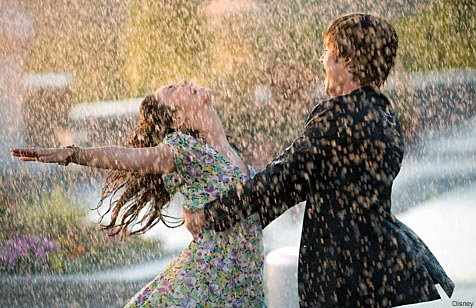
Here, in steamy South Florida, we enjoy daily (afternoon) tropical downpours and I love to go out and dance about  the yard. Lifting my face up to the sky, I welcome the rain as it washes away all the stresses and annoyances that had been niggling away at me.  I feel rejuvenated, refreshed and ready to take on any challenge that may cross my path. I look up at the window and there is my husband and black Lab, both staring at me as if I had just escaped an insane asylum.  I wave at them to join me, but my dog ducks away from the window as soon as the first loud peal of thunder shakes our rooftop.  My husband makes a crazy sign gesture, directed at me, and disappears from sight.  I shrug and continue my rain dance, choosing not to pay attention to the fluttering of curtains in several neighbors’ windows.  Completely soaked through, I finally pad my way up the stairs and go inside to dry up.  My dog greets me with a sniff and a lick. My husband stands beside him, a bath towel in his hand. He wraps it around me, and gives me a hug. 

All is right with the world.

Image via sheranescloset.com.

Three Nuggets of Wisdom for Writers

YoungWriter

1a

“The process of writing a book is infinitely more important than the book that is completed as a result of the writing, let alone the success or failure that book may have after it is written . . . the book is merely a symbol of the writing. In writing the book, I am living. I am growing. I am tapping myself. I am changing. The process is the product.”

Theodore Isaac Rubin

 2a

“Nothing in this world can take the place of persistence.

Talent will not; nothing is more common than unsuccessful people with talent.

Genius will not; unrewarded genius is almost a proverb.

Education will not; the world is full of educated derelicts.

Persistence and determination alone are omnipotent. The slogan ‘press on’ has solved and always will solve the problems of the human race.”

Calvin Coolidge

 3a

“And what, you ask, does writing teach us? First and foremost, it reminds us that we are alive and that it is a gift and a privilege, not a right. We must earn life once it has been awarded us. Life asks for rewards back because it has favored us with animation. So while our art cannot, as we wish it could, save us from wars, privation, envy, greed, old age, or death, it can revitalize us amidst it all.”

Ray Bradbury  (Zen in the Art of Writing(1990) Preface)

swirly2

 Image Credit: Aliaksei Lasevich/Shutterstock

The Intricate Web of Book Publicity, from the Author’s Perspective

book_promo-300x199

“A new book is just like any new product, like a detergent. You have to acquaint people with it.  They have to know it’s there. You only get to be number one when the public knows about you.”
  — Jacqueline Susann 

For many authors, the mere idea of self-promotion fills them with dread, discomfort and distaste (the alliteration… not intentional).  I was of the same mindset and so, recently,  I approached a seasoned publicist and asked him how he would go about selling my book. Aghast, he said “I can’t promise book sales, only exposure.”

“E-x-p-o-s-u-r-e,”  I repeated, speaking the word slowly, trying to digest its ramifications.

Sensing my skepticism, he went on to assure me that with the right exposure (which would entail a lot of dog and pony shows on radio/TV, book events and, of course,  a social media blitz), my book will likely garner enough publicity that will eventually translate to sales.  Note: the only word I heard was “eventually.”  

In my naïveté,  I (like Kevin Costner, in the movie “Field of Dreams”) truly believed that:

“If you build it, they will come.”

I thanked the publicist for his words of wisdom and decided to develop and implement a publicity plan for myself, starting with social media.  Everyday, I learn something new.  This wealth of knowledge will serve me well in the long run and, each week, I’ll be sharing some of my insights with all of you who may have a book, a product or a service to market.  Perhaps it will be helpful. I hope so.

A few days ago, I launched a Facebook Page for my book, Casualties of the (Recession) Depression.  I’m reserving judgment on this social media avenue, since it’s only been “live” for four days.  Too soon to tell.  Please drop by and let me know what you think.  I sincerely welcome all feedback.  At the top right sidebar of this blog, you’ll see the tally of “Likes” on the FB page.  Hopefully, the number will increase exponentially.

FB_Likes

I’ll sign off for now.  I need to go and search through my pile of DVDs for Field of Dreams.  Suddenly, I feel a bit nostalgic.

Here today, gone tomorrow

 0x600

“Writing is the only profession where no one considers you ridiculous if you earn no money.”

 ― Jules Renard 

I will preface this post by saying that there is certainly, in my view, nothing wrong with wanting to make money from writing.  That would be a hypocritical thing to say, since I write for a living.

However, I write about things that interest me, that I’m passionate about –  thoughts, ideas, issues and concerns that I want to share with others, raise awareness  about… and, ultimately, engage in discourse.

I do not write a book just to satisfy a market trend or to capitalize on a subject that I would not normally even consider, just to make a quick buck.

Trends are here today, and gone tomorrow.

It’s really, really important to remember that.  Writers, please heed this advice.  Trendy books eventually fizzle out. They do not live in perpetuity. Their final resting place lies in a dusty old box, stored in some obscure warehouse. 

Make every post, every article, every book you write… a labor of love. Whether you write as a hobby, part-time on the side, or 24/7 (like me) – write something that fuels your adrenaline.

If you find yourself writing for hours on end – oblivious to all the sights and sounds around you, with a cup of coffee that has been cold for at least three hours – you’re probably writing for the right reasons.

Recently, I read an article (can’t remember where, though) that said:

“Write the story that gives you insomnia.”

That’s when you know that your book will have staying power. And, once you’ve written it, perhaps you will catch up on your sleep!


Image: Sandra Gligorijevic/Stock

The dish about book reviews

confessions-of-a-book-reviewer

“I would rather be attacked than unnoticed. For the worst thing you can do to an author is to be silent as to his works.” 
― Samuel Johnson

So, you’ve written a book. It’s out there…. for all the world to pick up and read. Some may love it or  like it, others may have mixed feelings about it, and some readers may thoroughly hate it.  The worst scenario? No one bothers to read it at all.

Presumably if you’ve given birth to a book (after all, it is a long, laborious process and the end result is your very own precious “baby”), you’re proud of it – or at least, you should be (note: if you’re not, you shouldn’t have had it published).

As you wait for the feedback (reviews) to come in,….

… do you pace back and forth?

… wring your hands or restlessly tap your fingers on the desk?

… toss and turn in bed, one endless night after another?

… anxiously check and recheck your Inbox?

… pick up smoking again, to calm your nerves?

No, of course not.

Here’s the dish:  like, dislike, love, hate, indifference – these are all subjective emotions.

How one reader will react to your book or writing style may be radically different from how another reader will respond. Whether the reader is a respected book critic, a professor, an Amazon customer, a friend or family member – it’s all subjective.

This doesn’t mean that you should discount any positive or negative feedback. Nor should you let the great reviews swell up your head or the bad reviews keep you from ever writing again.

Keep it in context. Learn from the criticism.  Be thankful that someone actually took the time to read your book — your book! — and then took more of their own time to write a review. They may give you some new perspective, some information that you could benefit from and will help you as you sit down to write your next book.

Do not take anything personally.

However, there are (unfortunately) haters out there. These are people – cowards and bullies, really – who get off on writing mean-spirited things, who spread nasty gossip, and who try to bring you down.  Disregard those types of people, comments, and reviews.  They are not worth your mindshare. Enough said.

Now, here’s an interesting tidbit of information: in a recent study conducted by the Harvard Business School, it was found that Amazon customer book reviews are just as likely to give an accurate summary of a book’s quality as those of professional newspapers.” The study surveyed 100 non-fiction reviews from 40 media outlets, for HBS’ paper What Makes A Critic Tick? The study also examined all the Amazon customer reviews.  Whilst it was noted that there is “virtually no quality assurance” in Amazon customer reviews (in fact, some reviews can be “plants” by the book publisher, author or competitors),  they still found that both customers and book critics agreed (overall) about the quality of the book. Amazon ratings and expert media  ratings generally concurred.

I suppose that the lesson to be learned from this is to take Amazon customer reviews seriously, but be discerning.

The study further notes that Relative to consumer reviews, professional critics are less favorable to first-time authors. This suggests that one potential advantage of consumer reviews is that they are quicker to identify new and unknown books.”  Professional critics were generally more inclined to positively favor the works written by well-known, prizewinning authors.

Don’t let any of this dishearten you.  Keep writing. Stand by what you say and what you mean. The professional book critics will eventually come around.

But, remember, even the professionals are subjective, so stand your ground.

“From my close observation of writers… they fall into two groups: 1) those who bleed copiously and visibly at any bad review, and 2) those who bleed copiously and secretly at any bad review.”
Isaac Asimov 

Image: Vetta/Getty Images