Pick up a good non-fiction for some enlightening summer reading

reading_a_book_wallpaper_6d0dd

“I prefer the company of books. When I’m reading, I’m never alone, I have a conversation with the book. It can be very intimate. Perhaps you know this feeling yourself? The sense that you’re having an intellectual exchange with the author, following his or her train thought and you accompany each other for weeks on end.” 
― Sophie DivrySignatura 400

And now it is time to change gears and delve into the world of non-fiction, a genre that is ideal for summer reading because we have more leisure time to absorb ideas, ponder them and perhaps even learn something unexpected.

Tomorrow marks the beginning of non-fiction week, here at heatherfromthegrove. Each day, from Monday through Saturday, I’ll be spotlighting one book/author. There will be a few surprise selections, a couple of memoirs and some humorous-yet-poignant reality pieces.

I hope that you will find my recommendations helpful and I would love to hear back from you, with some of your own favorites!

Cheers,

Heather

Image via youwall.com.


heatherfromthegrove’s story spotlight for today: “Oscar and Lucinda” by Peter Carey

♦ ♦ ♦

Let’s wrap up fiction week, here @ heatherfromthegrove, with a love story.

♦ ♦ ♦

United_Kingdom7

“She held out her hand, like a man. He hesitated, then took the hand and shook it. It was very warm. You could not help but be aware of the wild passage of blood on the other side of its wall, veins, capillaries, sweat glands, tiny factories in the throes of complicated manufacture. [He] looked at the eyes and, knowing how eyes worked, was astonished, not for the first time, at the infinite complexity of Creation, wondering how this thing, this instrument for seeing, could transmit so clearly its entreaty while at the same time—-Look, I am only an eye—-denying that it was doing anything of the sort.”

Peter Carey, Oscar and Lucinda

What better way to enjoy a summer weekend than to curl up in your favorite chair and read a love story?  Written by Australian author Peter Carey, Oscar and Lucinda is a satire about two star-crossed lovers in mid-nineteenth century England and Australia. Growing up in a strict, religious (Plymouth) household, the shy young man rejects his father’s religion in favor of the C of E (Church of England), and becomes an Anglican priest.  Lucinda is a headstrong Australian heiress who is a feminist before her time. She buys a glass factory, in the hope of one day building a church made from glass and transporting it (intact) to the Australian Outback. Oscar and Lucinda meet on a ship, en route to Australia and discover they share a common vice:  gambling  (he, the racetrack; she, a deck of cards). When they arrive in Australia, neither one fits well in their social circles and the two “outsiders” form a bond.  The wickedly witty gambling duo make a wager that unleashes a series of events that affects the course of their lives.  The wager?  Lucinda bets Oscar her entire inheritance that he would be incapable of transporting the glass cathedral (without any breakage or damage) to the Outback.

Told in a long flashback, this enchanting story is about two people who were truly meant to be together.  And we, the readers, fall in love with them – vices and all.

Other novels by Peter Carey:

* adapted into a film (1997, USA) by the same name; directed by Gillian Armstrong, and starring Ralph Fiennes (as Oscar) and Cate Blanchett (as Lucinda).

** adapted into a film (1986, USA) by the same name; directed by Ray Lawrence.

In addition, he has written a large body of work: short story collections, uncollected short stories, juvenile fiction, non-fiction and screenplays.

heatherfromthegrove’s story spotlight for today: “Oryx and Crake” by Margaret Atwood

♦ ♦ ♦

Monday, July 15 – Saturday, July 20

FICTION

@ heatherfromthegrove!

Enjoy some good summer reading.

♦ ♦ ♦

81PBOoxlI4L._SL1500_

“He doesn’t know which is worse, a past he can’t regain or a present that will destroy him if he looks at it too clearly. Then there’s the future. Sheer vertigo.”

Margaret Atwood, Oryx and Crake

The creative and gifted mind of Canadian author Margaret Atwood unleashes itself yet again in the dystopian  novel, Oryx and Crake.  Written in 2003, it is the first in a trilogy in which Atwood takes us on a speculative journey into the future.  The story begins after a plague destroys civilization. The main protagonist, Snowman (formerly “Jimmy” before the world collapsed),  struggles with surviving in a world where he may be the last living human and coping with grief (and memories) over the loss of his best friend Crake, and the beautiful, evanescent Oryx , whom they both loved and coveted.  We learn more about Jimmy and his past, through flashbacks, and are drawn into his post-apocalyptic quest for answers.  Guiding this solitary man through his journey are these human-like, green-eyed Children of Crake.  As they travel through the wilderness which was once a great city, they see hybrid creatures (wolvogs, pigoons and rakunks) roaming the forest, and we later come to realize that these cross-species are the result of genetic engineering. 

It would be remiss of me to reveal more. I don’t want to spoil the story for you. 

I have read most of Atwood’s novels and this one roped me in from the get-go, and prompted me to read the second book (in the Oryx and Crake trilogy), called The Year of the Flood. Loved it. Her third installment, MaddAddam, will be released in early September (I’ve pre-ordered it).

Dystopian fiction is not for everyone.  In fact, I was ambivalent about reading Oryx and Crake but I am glad that I did.  It propelled me into a world of “what-if’s” – told by the award-winning storyteller par excellence, Margaret Atwood.

Other novels by Margaret Atwood:

adapted into a TV movie (2007, USA) by the same name; directed by David Evans and starring Mary-Louise Parker, Shawn Doyle and Susan Lynch

** adapted into a film (1990, USA) by the same name; directed by  Volker Schlöndorff and starring Natasha Richardson, Faye Dunaway and Aidan Quinn

*** adapted into a film (1981, Canada) by the same name; directed by Claude Jutra

In addition, she has written a large body of work:  children’s books,  short fiction, poetry, anthologies, television scripts, E-books,  and non-fiction.

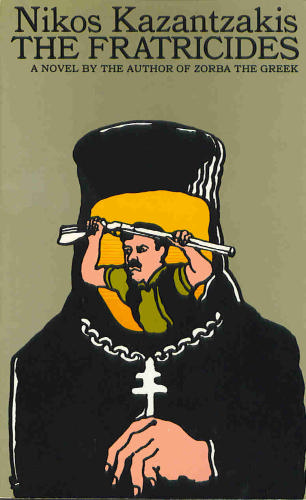
heatherfromthegrove’s story spotlight for today: “The Fratricides” by Nikos Kazantzakis

♦ ♦ ♦

Monday, July 15 – Saturday, July 20

FICTION

@ heatherfromthegrove!

Enjoy some good summer reading.

♦ ♦ ♦


edab9833e7a094e1d1012110.L

“Their life is an unceasing battle with God, with the winds, with the snow, with death. For this reason the Castellians were not surprised when the killing began, brother against brother. They were not afraid; they did not change their way of life.  But what had been simmering slowly within them, mute and unrevealed, now burst out, insolent and free. The primeval passion of man to kill poured from within them. Each had a neighbor, or a friend, or a brother, whom he had hated for years, without reason, often without realizing it. The hatred simmered there, unable to find an outlet.  And now, suddenly, they were given rifles and hand grenades; noble flags waved above their heads. The clergy, the army, the press urged them on — to kill their neighbor, their friend, their brother. Only in this manner, they shouted to them, can faith and country be saved! Murder, that most ancient need of man, took on a high mystic meaning. And the chase began — brother hunting brother.”

Nikos Kazantzakis , The Fratricides

To the rest of the world, the brilliant Greek writer and philosopher Nikos Kazantzakis is best known for his masterpiece, Zorba the Greek.   But to the Greeks, he remains a national treasure.  His body of writing is a clear attestation of the deep love he felt for his country and his people.  This passion, along with his devotion to his faith, and  a profound fascination with the magnetic power of charismatic leadership  ―  all come into play in his final curtain call, The Fratricides

The Fratricides (the act of a person killing his or her brother), was Kazantzakis’  last novel. The story takes place in a remote mountainside village (Castellos) in Macedonia, during the Greek Civil War (December  1944 – January 1945, and from 1946-49) when Greek communists tried (unsuccessfully) to gain control of Greece.  The novel’s central figure, the village priest (Father Yiannaros), tries to reconcile the two warring factions ― the monarchist troops who are in control of the town and the communist guerrillas who are trying to infiltrate the area.  Although sympathetic to some aspects of the communists’ vision of society, he is repelled by their acts of savagery. Their inhumanity goes against his moral and religious beliefs, yet Father Yiannaros takes steps to negotiate a settlement, with tragic results.  Enough said. 

Told by a master storyteller, The Fratricides is a gripping account of a turbulent time in Greek history, when brothers were (figuratively and literally) pitted against brothers.

Other novels by Nikos Kazantzakis:

* adapted into a film (1988) by the same name; directed by Martin Scorsese and starring Willem Dafoe (as Jesus), Harvey Keitel (as Judas) and Barbara Hershey (as Mary Magdalene).

** adapted into a film (1964) by the same name; directed by Mihalis Kakogiannis and starring Anthony Quinn (as Alexis Zorba) and Alan Bates (as Basil)

In addition, he wrote a vast body of work:  plays, poetry, and a wide selection of non-fiction works (travel books, translations, anthologies, memoirs, essays and letters).

My favorite Nikos Kazantzakis quote:

“I hope for nothing. I fear nothing. I am free.”


heatherfromthegrove’s story spotlight for today: “Lolita” by Vladimir Nabokov

♦ ♦ ♦

Monday, July 15 – Saturday, July 20

FICTION

@ heatherfromthegrove!

Enjoy some good summer reading.

♦ ♦ ♦

It should be noted that these book recommendations are not necessarily recently published works.  As Ralph Waldo Emerson once said, “Never read a book that is not a year old.” 

lolita_nabokov_lolita_lips_cover

“I looked and looked at her, and I knew, as clearly as I know that I will die, that I loved her more than anything I had ever seen or imagined on earth. She was only the dead-leaf echo of the nymphet from long ago – but I loved her, this Lolita, pale and polluted and big with another man’s child. She could fade and wither – I didn’t care. I would still go mad with tenderness at the mere sight of her face.”  ― Vladimir NabokovLolita

Although Vladimir Nabokov’s first nine novels were written in Russian, it was his intricate English prose that brought him the most distinction and international prominence in the literary world. Lolita is Nabokov at his best.  He wrote what would become his most famous and controversial book in 1955… in English. A decade later, he (himself) translated it into Russian. It is a tale about a middle-aged man, “Humbert Humbert” (this is not a typo!), who is both protagonist and erratic narrator — and his mad, obsessive (and very unseemly) love for a twelve-year old girl, Dolores Haze. “Lolita” is his private nickname for her.  As Humbert narrates, he draws from the disturbing, broken fragments of his own selective memory. Needless to say, the love story is doomed from the start.

This book is a masterpiece.  Listed as one of  The 100 Best Books of All Time, Lolita was adapted for film (in 1962) by the brilliant director, Stanley Kubrick and then again (in 1997), by director Adrian Lyne.

Other novels (in English) by Vladimir Nabokov:

In addition, he wrote a vast body of work:  many  short story collections, plays, poetry, Russian novels and novellas, and a wide selection of non-fiction works (critical reviews, memoirs, etc).

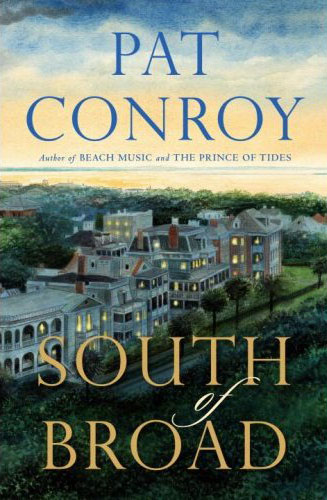
heatherfromthegrove’s story spotlight for today: “South of Broad” by Pat Conroy

♦ ♦ ♦

Monday, July 15 – Saturday, July 20

FICTION

@ heatherfromthegrove!

Enjoy some good summer reading.

♦ ♦ ♦

pat-conroy-south-of-broad-img

“Nothing happens by accident. I learned this the hard way, long before I knew that the hard way was the only path to true, certain knowledge. Early in my life, I came to fear the power of strange conveyances. Though I thought I always chose the safest path. I found myself powerless to avoid the small treacheries of fate. Because I was a timid boy, I grew up fearful and knew deep in my heart the world was out to get me. Before the summer of my senior year in high school, the real life I was always meant to lead lay coiled and ready to spring in the hot Charleston days that followed.” – from South of Broad, by Pat Conroy

I became a fan of Pat Conroy after reading Beach Music in 1995. In every novel, he masterfully weaves an intricate web of tales with southern charm and lyrical description ― exploring the fragility of the human mind and soul, the searing pain of tragedy and the healing  power of unexpected joy. For Conroy, all roads lead to home.  South Carolina.  Set against the lush backdrop of Charleston, South of Broad unravels an unforgettable tale of  families haunted and broken by tragedy, their closely guarded secrets that  become exposed, and the everpresent menace of racism and class division looming beneath the surface. Conroy’s protagonist and narrator is Leopold (Leo) Bloom King, the unassuming ringleader of a group of high school outcasts who sustain each other in good times and in bad, more the latter than the former. Their stories intertwine over a period of two decades, at the end of which they face their most daunting challenge which is the ultimate test of their friendship.

South of Broad is an exquisite, eloquently written ode, both to Conroy’s beloved hometown of Charleston and to the gift of lifelong friendships born and nurtured from these southern roots.

I was enchanted from beginning to end and read the book in one sitting. If you haven’t read any Pat Conroy’s novels, I would heartily recommend this as your first taste of this very gifted storyteller.

Other books by Pat Conroy:

* adapted into a film (1991) by the same name, directed by Barbra Streisand (she also starred in it), Nick Nolte and Blythe Danner.

** adapted into a feature film (1983) by the same name, starring David Keith.

*** adapted into a film (1979) by the same name, starring Robert Duvall.

**** adapted into the 1974 feature film, titled Conrack, starring Jon Voight and then later (in 2006) adapted into a TV movie, under the book’s original title, and starring Jeff Hephner.


heatherfromthegrove’s story spotlight for today: “Cocktail Hour Under the Tree of Forgetfulness” by Alexandra Fuller

♦ ♦ ♦

Monday, July 15 – Saturday, July 20

FICTION

@  heatherfromthegrove!

Enjoy some good summer reading.

♦ ♦ ♦

51sA8lMYYIL

“My mother has no patience with questions that begin, ”What if.” But I spend a great deal of my time circling that insensible eddy. What if we had been thinking straight? What if the setting of our lives had been more ordinary? What if we’d tempered passion with caution? “What-ifs are boring and pointless,” Mum says. Because however close to irreparably deep madness my mother had gone in her life, she does not now live in a ruined, regretful, Miss Havisham world and she doesn’t wish any of her life away, even the awful, painful, damaging parts. “What-ifs are the worst kind of post-mortem,” she says. “And I hate postmortems. Much better to face the truth, pull up your socks and get on with whatever comes next.”       

 — from Cocktail Hour Under The Tree of Forgetfulness, by Alexandra Fuller

The title of this book lured me in … and I was not disappointed.  This is a love story — a daughter’s ode to her mother.  It’s a real-life account of  a family’s resilience and loyalty, love wrought with pain and hardship, passion for land and country, a near descent into madness and the uphill struggle to regain some semblance of sanity — all told against a rich, vibrant canvas that was and is the untamed beauty and brutal violence of Central and Southern Africa.

Alexandra Fuller writes this candid and insightful family memoir from the perspective of both observer and participant.  She is a gifted storyteller whose beautifully crafted words and wry sense of humor caused me to tango between bouts of laughter and tears, as I read this book in one sitting.

As a writer, I admire this author’s talent and unabashed honesty. 

As a reader, I was enraptured from page 1. 

I intend to read this book a few more times, just to savour it.  I have also gone on to read what Nicola Fuller of Central Africa refers to as her daughter’s “Awful Book.”  (Note: You’ll have to read  “Cocktail Hour …” to  know what I’m referring to!!)

This book is a must-read. 

Other books by Alexandra Fuller:

Getting lost inside a book

Young-couple-reading-a-bo-001

“I go back to the reading room, where I sink down in the sofa and into the world of The Arabian Nights. Slowly, like a movie fadeout, the real world evaporates. I’m alone, inside the world of the story. My favourite feeling in the world.” 
― Haruki MurakamiKafka on the Shore

The great outdoors is my “reading room” this summer.  Whether lying down on a carpet of grass, sitting cross-legged on a terry cloth towel by the beach, or curled up in my comfy patio armchair — nature provides the perfect ambience for reading.

Tomorrow marks the beginning of fiction week, here at heatherfromthegrove. Each day, from Monday through Saturday, I’ll be spotlighting one novel/author. Summertime is ideal for catching up on all the books you’ve been meaning to read.  I hope that you will find my recommendations helpful and I would love to hear back from you, with some of your own favorites!

Cheers,

Heather

Image via guardian.co.uk (photograph: Kevin Mackintosh/Getty Images)

heatherfromthegrove’s poetry spotlight for today: “Forgiveness” by John Greenleaf Whittier

a-music-from-heart1

♦ ♦

As we wrap up poetry week @ heatherfromthegrove, enjoy this last one.

♦ ♦ ♦

Forgiveness

by John Greenleaf Whittier

poemForgiveness

John Greenleaf Whittier born on December 17, 1807, in Haverhill, Massachusetts – dubbed as one of the “Fireside Poets“, this American Quaker was an ardent and vocal advocate for the abolition of slavery.  His first poem was published in 1826, in a publication called the Newburyport Free Press.  The paper’s editor was abolitionist William Lloyd Garrison and it was Garrison who encouraged Whittier to take up the abolitionist cause – which he did on a local, state and national level.  He was involved with the formation of the Republican party and was keenly engaged in politics.  Whittier edited papers in Boston and Hartford (Connecticut) and – from 1857 until his death on September 7, 1892 – he was associated with the magazine, Atlantic Monthly.

Forgiveness although famous for his lengthy poems, the most popular being Snow-Bound: A Winter Idyll, this poem is one of his shortest and is often quoted because of its quiet but clear message of “forgive those who trespass against us.”  Only when we forgive, can we truly heal.  Forgiveness is freeing. And, to quote a line from the Prayer of  St. Francis, “It is in pardoning that we are pardoned.”  

Poem via poemhunter.com.

Image via pimminag.com.

heatherfromthegrove’s poetry spotlight for today: “The Fury of Abandonment” by Anne Sexton

HelpingHand

♦ ♦

POETRY 

@ heatherfromthegrove!

Enjoy!

♦ ♦ ♦

The Fury of Abandonment

by Anne Sexton

poemTheFuryOfAbandonment

Anne Sexton born on November 9,1928, in Newton, Massachusetts – a deeply troubled and brilliant American poet known for her extremely personal, emotional and conversational verse. She battled mental illness for most of her life.  Her first manic episode occurred in 1954, followed by a complete nervous breakdown a year later. Encouraged by her therapist to write poetry, as a means of cathartic therapy, Sexton discovered what was to be her true calling in life. Her poetry covered themes that reflected her own psychological challenges: depression, manic tendencies and suicide and nothing in her personal life was off-limits. She wrote about it all – becoming one of the most honored American poets and earning herself a Pulitzer Prize for Poetry. Sadly, her illness (today, she would have been diagnosed as suffering from bipolar disorder) began to escalate and, on October 4, 1974, she committed suicide by carbon monoxide poisoning. She was forty-six years old.

The Fury of Abandonment “Raw emotion” is what best describes this disturbing poem. One of 15 poems from the “Fury” sequence, later published in a collection titled, “The Death Notebooks.”  Published just after her divorce from her husband, it was the last collection of her poetry to be published before her suicide in the autumn of 1974. The advancement of her mental decline is felt with every unapologetically tortured word. It is as riveting as it is disturbing.

Poem via poemhunters.com.

Image via lydiamagazine.gr.