When Low-tech meets High-tech: a Writer’s Inferno

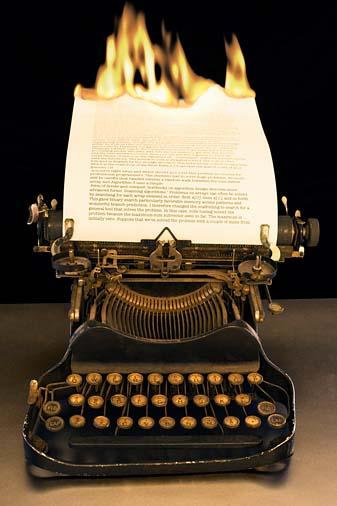
I always hated my typewriter (back in the stone age that was my youth).  It was awkward to handle, the keys skipped, and the letters were uneven (which irritated the living hell out of me). The only redeeming feature was that I could yank the paper out of the typewriter in a fit of temper (this was a time when anger management workshops were non-existent).

I do, however, have a deep affinity (passion, even) for paper and pen. Fountain pens, especially. And Moleskine® notebooks. And index cards, post-it notes, yellow highlighters, Sharpies®, and storyboards.

Did you know that the wonderful black  Moleskine® notebooks have been used by writers, poets and artists for over two centuries?  Yes, Picasso and Hemingway carried these notebooks everywhere.  Imagine what it would be like to catch a glimpse of the creative genius penned on each well-worn, hand-stitched page!  These infamous notebooks were their very own Holy Grail … of a simpler time.

They even have Moleskine®Storyboard notebooks ….  I use them, myself – specifically for novel writing.  They help me to organize the characters, chapters, plot lines, dialogue, and book flow.  I just jot down my thoughts – wherever I am (my pocket Moleskine fits easily into my purse).

Okay, this is where low-tech meets high-tech.  I transpose my “jottings” from paper to digital.  Yessssss, I know that seems like an unnecessary step but it actually helps me –to either reinforce (in my mind) what I’ve written or edit/delete.  I look at it as another stage in the quality control process.

Now, for those of you who do not want to carry a notebook (Moleskine or otherwise) around, there’s a product called Index Card – a writing tool designed specifically for the Apple iPad. It allows you to capture and store your ideas and notes in your own virtual storyboard.

There’s a French saying which goes something like this:  “Chacun à son goût” (each to his taste).

Low-tech, high-tech, or a hybrid of the two – you be the judge.

As for me, I need to go and buy some ink refill.

You know where I stand.

Here’s to simpler times.

h.f.t.g.

Images via writewritingwritten.blogspot.com, moleskineus.com, and appsforipad.net.

eBooks versus Print: do I have to take sides?

I cannot begin to tell you how many heated discussions I’ve had (with fellow writers, academics, and business clients) on the subject of  “eBooks versus Print.”  

There are many eBook naysayers who will insist that eBooks are not “real” books, that the quality control for eBooks is minimal – if at all, and that you cannot really claim to have written a book if the book is not in print form.  I concur – to a certain degree – with the second point.  Quality control is an issue. Anyone can put out an eBook, however, if it’s not well-written and interesting …. well, who will buy it?  I should point out that many published print books could also use a little QC!

Where do I stand?  Look, I’ve been a bookworm all of my life.  As a child, my friends would knock on the door and ask my mother whether I could come out to play.  My response (to my mother’s questioning look) usually went something like this: “I’m in the middle of a really good chapter. When I’m finished, I’ll come out.  Won’t be too long.”  Then, about five chapters later, I’d remember that I’d promised to go out and join my friends.

I’ve always loved libraries. I feel at home there. The musty smell of books, the hushed silence, the volumes neatly arranged according to the Dewey Decimal System,  the sheer opulence of printed matter –  bring me a quiet joy and sense of peace.  I love the feel of a book in my hand and am a voracious reader. That will never change.  My study is my sanctuary and my books are my friends. I cherish and value them more than any other possessions I own. I prefer books to diamonds — kid you not!

That being said, I look at eBooks as an opportunity to read more – wherever I may be.  It’s not always practical to carry around a heavy, bulky hardcover.  A Kindle (for example) is compact and light.

So, I embrace change because, in doing so, it offers me more accessibility to the written word. But – and this is a big But (no pun intended!) – I will still always prefer curling up with a good hardcover book.

Not surprisingly, I still have all of my old record albums and tape cassettes – from back in the day.  Yet, I also own an iPod. You see where I’m going with this?

Now, there’s probably lots more that should be said about the advantages of eBooks (from a writer’s perspective) – such as no distribution or printing costs.  I’ll leave that discussion for another day.  Right now I have to get back to reading this fabulous book I just picked up at Barnes and Noble.  I’m in the middle of a really good chapter …..

Later,

h.f.t.g.

Image via bethrevis.blogspot.com.

The perils of procrastination …….

Do you know how easy it would be to succumb to the temptation of relaxing on the beach?Especially here in South Florida, for heaven’s sake!  Just five minutes away from the ocean.  Yet, here I sit in my study – at least ten hours a day (5 hours a day on the weekend).  Believe it or not, I have been battling procrastination all of my life.  But the clock is ticking. Time is breathing down my neck, egging me on.  That’s why I’m so über-organized.  I need Structure:  outlines, lists, schedules, index cards, storyboards —whatever it takes. Without it, I might as well put a “Gone Fishing” sign on my door.

Why, oh why do writers continuously “suffer the slings and arrows” (certainly not of “outrageous fortune!”) of Procrastination?  We like to call it  “writer’s block.”  That’s a more palatable term for the “condition.”  Call it whatever you want.

According to psychologists, one of the root causes of procrastination is fear —  fear of failure or success.  The price of success is responsibility and recognition.  Procrastinators who fear success are essentially afraid of the fallout. Which brings us to the subject of perfectionism.  Procrastinators tend to be perfectionists (although perfectionists are not necessarily always procrastinators) – anxious for everything to be perfect. And since it’s virtually impossible to be perfect, why bother trying?

Okay, let’s presume that we understand the reasons why we do what we do.  The more salient question would be “how do we overcome procrastination?”  Here are some of the steps that have worked for me:

  1. Set a timeframe for yourself, with a beginning and an end.
  2. Visualize the end result you want.
  3. Set realistic goals and tackle them, one at a time.
  4. Pace yourself.  This is not a marathon. Didn’t your mother ever tell you that “haste makes waste?”
  5. Break up your writing time into segments, so that you allocate time to do non-sedentary activities like walking, gardening, swimming , or whatever you enjoy doing.
  6. Talk about your writing with friends, family and colleagues. Brainstorming always helps.
  7. Yes, write outlines, lists, index cards – whatever structure works for you. Like it or not, structure helps. A lot.
  8. Make a public commitment.  This is not for everybody. As you may have noticed (see the lower right side of this blog site), I have committed – publicly – to completing my non-fiction book (When the Child Becomes the Parent) and my novel (Finding Grace)  by 2013 and December 2012, respectively.  I did this purposely because I know that – come hell or high water – I will do it.
  9. Make commitments to others. In addition to my own work, I have committed to ghostwriting two client book projects (one is in progress, due for completion just before Thanksgiving) and the other is tentatively set to commence in January.
  10. Laugh. Don’t take yourself too seriously. Enjoy the ride. Presumably, we write because we enjoy it. When you love what you do, nine times out of ten – you’re good at what you do. So, chillax.
  11. Breathe. Not the type of breathing they teach in Lamaze class. I’m talking about Zen breathing techniques.  They work.
  12. Eat light, healthy snacks.  They give you energy.
  13. Hydrate yourself.  Whatever libation works for you.  Despite my many tongue-in-cheek jokes about single malt scotch and fine red wine, I actually drink tons of Earl Grey tea while writing for hours on end.  Getting up to put the kettle on is a great way to stretch your legs.

Hope this helps!

Best of luck,                                                                                                                                    

h.f.t.g.

Image via Itsasmartdecision.com.

Outlines, Schmoutlines!

I’ve been on the computer (writing) all day and just noticed that the house is in complete darkness. It’s 9:00 pm and, apparently, I’ve been in writer zombie mode (in the zone) –trying to make up for lost time after my darling feline toppled one of my storyboards and the hundreds of index cards that I had to painstakingly affix to the board (hence the discovery that pins were not a good idea, with four-legged creatures trolling about). Okay, maybe I exaggerate. There were only 76 index cards, but still…. I was mightily “annoyed” (for want of a better word). To those writers who, like me, are a little (ha!) bit OCD, you will no doubt understand that the cat-induced chaos disrupted my morning. Nevertheless, once each card was taped back in its proper place, all was right with the world. And this is where I segue, albeit not very gracefully, into the subject of book organization – namely, outlines. “Seriously?” – you might ask (while rolling your eyes). Yes, seriously. Outlines do work. Promise.

Outlines help to organize your thoughts and develop the message and flow of your book so that it’s not a jumbled, disjointed mess of creative ideas that, although no doubt brilliant, simply do not make sense. I realize that outlines may not be every writer’s cup of tea, but for those who are trying to tackle a book project and are feeling overwhelmed, try writing an outline. Humor me. You might be pleasantly surprised.

By the way, if you’re going the traditional publishing route, both the literary agent and publishing house will most likely want to see a book outline before determining whether your manuscript may be worth their while.

I know it may be tedious, but the more detailed your outline, the easier it will be to write the book. Outlines are truly efficient writing aids.

So, let’s begin at the beginning :

The “raison d’être”

1. Prepare a statement of purpose for your book and, subsequently, for each chapter. This is also part of the “book hook” that will either attract or repel a potential publisher.

Book Outline & TOC

2. Develop a preliminary Table of Contents. It will help to structure your thoughts logically and give you a cursory overview of your book – i.e. The Big Picture. This is your overall book outline.

3. Establish your chapter titles (they don’t have to be exact, and can be revised, as you progress with your book).

4. Determine who, if anyone, will be contributing to your book (i.e. writing the Foreword or Afterword).

Chapter-by-chapter

5. Yup, more outlines. Prepare a brief outline for each chapter. Each chapter should have its own statement of purpose (which ties to the overall book’s SOP).

6. The chapter outlines should ideally not be in bullet format. “Talking” outlines are best. This is a chapter-by-chapter summary, in paragraph form, explaining the What and the Why of each chapter, followed by points covering the important events (fiction) or areas (non-fiction) of the chapter.

7. Each chapter should have a concluding sentence.

Book Conclusion

8. All chapters should lead to this final conclusion – whether the book is either a work of fiction or non-fiction.

References, Resources, Bibliography, Photo Citations, Index

9. This is a very important (but admittedly tedious) part of the book outline. Gather your sources (primary and secondary). List your photo citations (don’t wait until you’ve written the book …. do this in advance). And develop a cursory Index.

Again, this is an organic process …..your outline(s) will change as you progress with your book. This is okay. The purpose of developing an outline is not just to appease a publisher. It’s much more basic than that. An outline is, in my opinion, an indispensible tool to help you … write your book!

And, one more thing: “mind maps” help you to visualize your ideas. You may want to consider using some mind mapping software.

To each his/her own.

Word to the wise – keep your pets away from your easel or storyboard!!!!

Image via Creewalker.wordpress.com.

heatherfromthegrove book recommendation of the week: Julie Salamon’s ” Wendy and the Lost Boys – The Uncommon Life of Wendy Wasserstein”

I grew up in an enlightened, feisty, and intellectually engaged generation when  women made the conscious decision to try to do it all – juggle intimacy, children and home life with career, profession, and advanced education.  Words like “Women’s Lib (Liberation)” and “feminism” or “feminists” (words that were often spat at us) were part of the vocabulary of a Baby Boom generation that was coming of age.  I’m sure I still have my 1976 “International Year of the Woman” pin (think Helen Reddy – singing “I am Woman….I am Invincible..”) and, although I did not burn my bra back in the day when that was very “de rigeur”  (I needed the wire support), I did and still do consider myself a feminist. For some reason, people did not react well to that word. My response: get over it.

So, when I picked up Julie Salamon’s new book, “Wendy and the Lost Boys – The Uncommon Life of Wendy Wasserstein” – I was reminded of this intelligent breed of women who dared to cross the boundaries of gender and did so with grace, compassion andhumor. Wendy Wasserstein was the first female playwright to win a Tony Award. She also won the Pulitzer Prize for the Heidi Chronicles.”  Everyone in the Broadway circle knew this witty, intelligent and gregarious New York  playwright who wrote about driven women and their struggle to balance ambition and achievement with the need for romance and companionship. Drawing from her own life experiences, she crafted characters who – with eloquence and wit –  expressed the contrasting emotions of self-doubt, ferocity and yet also vulnerability.

Like many luminaries before her, Wendy Wasserstein’s light went out too soon. She died in 2006, of lymphoma – at the age of 55.

In Julie Salamon’s poignant portrait of the enigmatic Wendy Wasserstein,  she reveals some of the unexpected and extraordinary nuances of this wonderfully complex character.

This is a really, really good read.

Passion – the key ingredient to success

Many of us are mourning the recent loss of visionary, entrepreneur and philanthropist – Steve Jobs.  I’ve been thinking about him a lot lately and something he once said  struck a very familiar chord with me:   “People with passion can change the world for the better.”   Passion. It seems to be a common element in the DNA of every great innovator.

Take Sir Richard Branson, for example.  As Founder and Chairman of the Virgin Group of Companies (a multi-billion dollar, global publishing, retailing, aviation and entertainment conglomerate) based in London, England, Richard Branson has plenty of passion. And chutzpah.

What distinguishes him from so many other brilliant entrepreneurs is that he always has fun.  If asked “Who do you want to be when you grow up?” I would say — without hesitation —  “Richard Branson.”  I admire him. I respect him.  And, he makes me smile.

Here’s what he says about the importance of passion:

“Ideally, since 80 percent of your life is spent working,  you should
start your business around something that is a passion of yours.
If you’re into kite-surfing and you want to become an entrepreneur, do it with kite-surfing. 

Look, if you can indulge in your passion, life will be far more interesting than if you’re
just working. 
You’ll work harder at it, and you’ll know more about it.  But first you
must go out and educate yourself on whatever it is that you’ve decided to do –
know more about kite-surfing than anyone else. That’s where the work comes in.  But if you’re
doing things you’re passionate about, that will come naturally.”

As writers, we should always be passionate about what we write.  Otherwise, why write?  (clearly, it’s not for the money!).

So, follow your passion.  And, as Sir Richard has stated (most likely  with that wonderfully wide, infectious smile of his), “Life is a helluva lot more fun if you say yes rather than no.”Yes, sir – it is!

Images via Stopstressingnow.com  and  Power-of-giving.com.

Juggling writing time between multiple book projects

Sometimes I think I’ve fallen off that precarious balancing beam – from possessing a modicum of sanity to diving head first into a state of complete and utter madness.  The reason?  I am juggling multiple book projects. Thank goodness I’m compulsively organized, because the only way to handle the work load (without sacrificing creativity) is to compartmentalize my time.

Yes, compartmentalization is the way I am able to maintain my sanity – relatively speaking.  But it would be remiss for me not to mention the occasional help I receive from Mr. Glen Livet and Mr. Mac Allan!

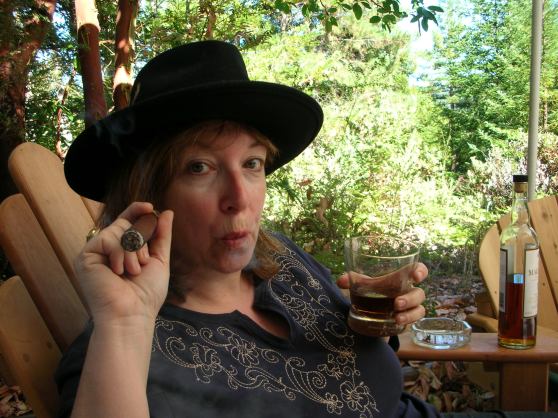
h.f.t.g. taking some quiet “me” time with Mr. Mac Allan
and enjoying a stogie, in between intense writing sessions

(Note: the photographer is also partaking in some libation!) 

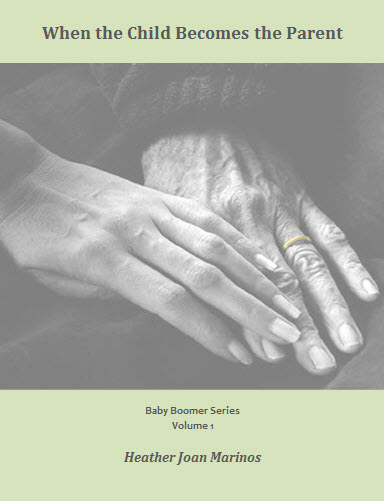
So, here’s the plan. As mentioned in my inaugural blog post, “Finding Grace” (the Novel) is set for release sometime in 2013.  In tandem, I’m writing a series of four non-fiction books targeted to the Baby Boomer generation.  I’m a quarter of the way through the first, entitled “When The Child Becomes The Parent,”  and am hoping to release this book by the end of 2012 (fingers crossed).  By setting an aggressive schedule, I’m putting a lot of pressure on myself – in an effort to battle my most dreaded enemy: Procrastination.

Here’s a sneak peek of the book summary (which will be located in the  book’s inside left flap) – as well as  the book cover design:

“We are the Baby Boomer Generation. That makes us forty-something, fifty-something and sixty-something.  Our parents and beloved aunts or uncles are in their twilight years. They need our help. The measure of a person is the degree to which she treats her fellow men and women with respect, kindness, compassion and – to those close – love.   Why do we all too often forget to tender the same treatment to our elderly? They are supposed to be our nearest and dearest. They gave us Life!  The child must now step up to the plate and become the parent.  

No one wants to reach the end of life’s journey and suddenly become a burden to their family or friends.  Perhaps we might find it helpful to see the world from their perspective and accord them the dignity they so rightly deserve.  Perhaps we should not be so overwhelmed or impatient with them and maybe we should shift our fear-of-aging mindset a bit.  After all, shouldn’t we consider it a privilege to help them through this final chapter of their lives?

This is a gentle guide on how to care for the elderly loved ones in your family – from home care to hospice care to preparing for death.  The author will also share stories about some of her own experiences – both deeply sad and delightfully humorous.

She is fifty-something, by the way and, yes, a Baby Boomer.”

Copyright © 2010-2011 Heather Joan Marinos – All Rights Reserved.

— To all the writers out there who are juggling multiple book projects – courage, my friends!  We will all complete our books and, once we do, we will very likely move onto the next project.  Are we masochists? No. We simply love what we do.
And that’s a good thing.

Image (top) via Sarparker.com.

A Writer’s Dilemma: traditional publishing or self-publishing?

Until recent years, I always believed the traditional publishing route was the only way to go.  I knew that it would entail sending out query letter after query letter and, inevitably, would be followed by rejection letter after rejection letter.  I knew that it would most likely take some time – perhaps years – before a positive response would be forthcoming. I would need to hire a literary agent, if I ever had a hope in hell of having my manuscript read by a publisher. Nevertheless, I envisaged a day when one of New York’s finest publishing houses would give me the thumbs-up.  I imagined the process, the kind of advance I would get, and what the contract would entail.  Would they want a one-book deal or a three- or five-book deal?  Most importantly, I would be published!

Times have changed.  Writers are increasingly favoring the self-publishing route. There used to be a stigma attached to what was once referred to as “vanity press.”  Not so much, anymore (although there are a few publishing purists who still curl their lips in disdain at the mere thought of  a self-published book or – gasp! – an Ebook!). But, with the advent of social media and publishing vehicles like Kindle Amazon and lulu.com – many writers are opting to eliminate the “middle man” and take control of their own publishing destiny.  Not convinced?  Frankly, I’m still in a quandary, myself.

Here are a few of the pros and cons in the traditional publishing versus self-publishing debate:

SELF-PUBLISHING

The author becomes the publisher (no middle man) and, as such,  she/he has to do all the work (proofread and edit the final text, provide camera-ready artwork, marketing and distribute the book – and provide all the funds to publish the book).  Yes, companies like lulu.com (for example) can market and distribute but you will inevitably have to pay the tab.  A hefty tab, at that.

Pros:

  • Control. You control the process and have full rights to your manuscript.
  • Time. You could easily have a book released in the space of six months.

Cons:

  • Money. You have to pay for everything and will only recoup your costs if the book sells – well.
  • Contacts. You don’t have the benefit of a publishing house’s experience, contacts and networking capabilities.
  • Time. Ahhh, there’s that Time issue again!  You will be spending a lot of your time marketing, distributing, filling orders, and so on.
  • Market  Saturation.  The market is saturated with low-quality books because so many people (who are not really writers) are publishing their own books or Ebooks. The end result:  self-publishing still gets a bad rap – like it or not.

TRADITIONAL PUBLISHING

Most larger publishing houses will not even look at a manuscript unless it is represented by a literary agent. Smaller or independent houses may possibly accept unrepresented work, but don’t hold your breath.  Expect to get rejection letters.  Don’t let rejection letters fill you with self-doubt. Keep trying.

Pros:

  • Money.  You will get an advance (ranging from a meager amount to as much as seven figures).  You will get a percentage of sales.
  • Effort. The publishing house will handle the whole process.  They have the resources to promote your book – well.
  • Credibility. To be published by a major publishing house is a good thing – really. Whether you like it or not, perception is important.

Cons:

  • Money.  You will have to pay the literary agent a percentage (usually 15%) of  your advance, as well as a percentage of the sales.
  • Control.  You are at the mercy of the publishing house.  You lose some or all control over your manuscript, including title, cover, content  – depending on the fine print in your contract.
  • Time.  It will likely take a publishing house anywhere from 12 – 18 months to publish your book.

Clearly, it is extremely important to research your publishing options further and think very carefully about which route you want to take.

As a writer, this is one of the most important decisions that you will make.

Personally, I am still torn between the two but am leaning towards the self-publishing option.  My main issue is Time.  The time is NOW!

Here’s wishing all of you the best of luck!

Cheers,

h.f.t.g.

Image via   Llamatastic.com.

The time is NOW!

Time is relative.

When we’re young,  time seems to pass ever so slo-o-o-o-owly.  Remember back to when you were 12, impatiently waiting to turn 13, and then aching to be 16, 18, and – the most desirable age of all – 21.  It seemed to take forever.  If we only knew then, what we know now!

What we know now is that, as we age, time flies by so quickly – too quickly.  Or so it seems.

Personally, I used to believe that I peaked in my 30’s – and that it would inevitably be downhill from there.  What a deluded fool I was!  There is something to be said about the fabulous 50’s.  And the wisdom – which comes from half a century’s worth of  experience and hard lessons, well learned.

This is what I know for sure:

  1. Make Time your friend, not your enemy.  Embrace it. Savor it. Use it well.
  2. The passage of Time does not necessarily heal all wounds. But, it does help you deal  with your wounds.
  3. Time gives you the ability to see things from a more enlightened perspective.
  4. Time will only treat you well if you treat yourself well.
  5. Time teaches you patience  – with yourself and with others.
  6. Time makes you appreciate the past and not take the present for granted.
  7. Time is absolute.  There is always a beginning and an end.
  8. Time will not stand still while you deliberate about when to write your opus. Do it now.

So,  follow your dream, your bliss – whatever it may be.  Be confident (but not egotistical), be motivated (but not frantic or hyperactive), and  – most importantly – maintain balance in your life (things often go awry when  there is no equilibrium).


Image via Blog.sciseek.com.