How to Resist the Lure of Summer Distractions

17XgPyfrdGU

Summer is a temptress. She dazzles us with bright colors and hot sun. Every year, we impatiently await her arrival.  For many, she is a welcome respite after a long, cold winter.  She exudes a sense of lightness and freedom and her flamboyance and playfulness is infectious.  School is out and children suddenly find themselves with loads of time… to play!  And they don’t waste a minute.  With the rigor of school schedules and extracurricular activities set  aside, parents reconnect with their children.  Men and women start to loosen up a bit and their busy lives begin to take a back seat to weekend barbecues, picnics and summertime activities.  That glorious smell of barbecue grilling wafts from house to house.

Yes, summer is a temptress.  But, as a writer who is working on multiple book projects while trying to promote her newly published book, it is difficult to resist the lure of summertime distractions.   Am I up for the challenge?  Can I muster enough will and discipline? 

I’ll let you know at the end of the summer.

In the meantime, I am going to try out some of these tips.  Maybe they can help you, as well.

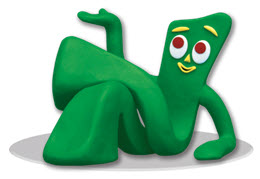
1. Channel your inner Gumby

gumbyThe key is flexibility.  Summer schedules need to be flexible, not rigid.  Otherwise, you’re setting yourself up to fail.  “Fail” is perhaps too strong a word, but I’m sure you understand my meaning.

2. Move like an inchworm

inchworm

Take it one steady, small step at a time. Break up your day into increments of time – time to research, time to write, time to relax and time for eating and sleeping. Set smaller, more frequent goals and milestones for yourself and this will encourage you to keep moving forward and ultimately fill you with a sense of accomplishment. On the other hand, if you flit like a butterfly – from task to task – nothing will ever get completed.

3. Set your boundaries

writing-contest-scams

Let your family and friends know when you’re in the writing zone, so that they can respect your space and privacy for the time that you’ve allocated. Afterwards, they can have your full attention.

4. Don’t bite off more than you can chew

gerbil

It’s summertime. Focus on the most important  and enjoyable projects, then make a plan to tackle the rest in the Autumn months.

5. Bring it outside

woman_writer_outside_laptop

You don’t have write behind closed doors on a beautiful summer’s day.  Take your laptop or notepad, a pot of tea or coffee, and do your writing (and thinking) outside.  If you live in an apartment and don’t have a yard, pack yourself some refreshments and go to your nearest park.  If you live near water, sit on the beach or by the lake. Maybe the sights and sounds all around you will bring you some interesting perspective or inspiration.

Enjoy your summer and happy writing!

Images via anordinarywomn.net, gumbyworld.com, piedmontwildlifecenter.org, writingforward.com,  dorrys.com and cloudsandchecks.com.

Maximize Your Five Senses

FiveSenses

“Our senses are indeed our doors and windows on this world, in a very real sense the key to the unlocking of meaning and the wellspring of creativity.”

Jean Houston  

There is one thing I know for sure:  we should never take anything or anyone for granted.  The saying “Here today, gone tomorrow” rings true for many of us, unfortunately.  Such is the reality of life.  That is why we must savor every moment and appreciate those around us – open our eyes, ears  and minds to all the wonderful experiences that are ours to earn and to claim.

What connects us – to ourselves, to each other, and to everything we do – is very basic… so basic, in fact, that not only do many of us take it for granted, we also fail to maximize its potential.  What does “it” refer to? 

Sense.

We have five basic senses:  sight, sound, smell, taste, and touch.  When we utilize these senses to their fullest extent and in every aspect of our lives, we achieve success and fulfillment… and, most of all, balance.  Those who are missing one or more senses (due to blindness, deafness, a physical inability to smell, impaired taste buds, or paralysis) often find that their remaining senses are heightened.

In the following weeks, I will be writing about each of the five senses – exploring their impact and potential, and sharing a few pertinent anecdotes along the way.  Storytelling is, after all, the most powerful way to connect  people with ideas and thoughts. And finally, I will dedicate a blog to what is commonly referred to as the “sixth sense.”   More on that later.

Upcoming heatherfromthegrove blog:  “Keep That Lens Focused.”   

Until then… enjoy the journey.

Image via coolhunting.com

Writing in an Authentic Voice

exam6

“Believe in yourself and in your own voice,

because there will be times in this business when you will be the only one who does.

Take heart from the knowledge that an author with a strong voice

will often have trouble at the start of his or her career –

because strong, distinctive voices sometimes make editors nervous.

 But in the end, only the strong survive.”

―  Jayne Ann Krentz

Most writers are blessed (although some would say, cursed) with the uncanny ability to see through another person’s outward façade, body language and emotional barriers.  Good writers are keen observers.  We watch. We don’t just listen, we hear.  And we notice – everything. Then, we write.

Similarly, a voracious reader opens up a book, in anticipation of a good read – expecting to be transported into someone else’s words, someone else’s thoughts. The reader has high expectations. He or she  wants to soak up all that the writer has to say. But when the words seem forced, when the thoughts do not ring true – the reader is left deflated and unsatisfied.

It all boils down to one word:  Authenticity.  When a writer is ready to commit his or her observations, experiences, life lessons and creativity to paper, it must be done clearly and in an authentic voice.  If the writing is not authentic, the reader will detect it in a flash. If a story appears forced to the reader, it is forced.

Say what you mean.  Mean what you say.

A writer should never worry about being popular.  We can’t please everybody.  There will always be those who take umbrage at what we say.  Conversely, there will be just as many who will champion us. One has to be philosophical about the whole writing experience.  When we are true to ourselves, when we write in an authentic voice – we should be happy with the end result.

However…

… this should not preclude us from exercising the art of self-restraint.  When a writer is passionate (and believe me, I know whereof  I speak), it becomes an interesting balancing act of saying what needs to be said, yet reigning the words in a tad – to avoid rabid repetition. 

A word to the wise:  gather together an unbiased focus group of people and have them read and critique the manuscript. Heed their feedback well, without taking it personally.  Then, apply it.  We are all classmates in a lifelong Continuing Education program. The objective must always be to learn and to keep on learning, until we are dead and buried.

On that lively note, I shall bid you all Godspeed as you continue your writing journey.

Be true to yourself and to your craft.  The best is yet to come.

Image via destinationsdreamsanddogs.com

Slicing and Dicing (or what writers grudgingly call “Book Editing”)

Devour a Book

While contemplating and writing about my 7 New Year Revelations,  I’ve been trying not to think about the redlining, scratchy margin comments, strikethroughs and all the nasty little markings that a few no-nonsense editors are doing to my manuscript. 

As any writer will attest, it’s important to give your completed manuscript a thorough and objective (that’s the hard part) edit yourself first, but then you must hand it over to an editor who will have no qualms about ripping it to shreds,  if need be.   As a person who uses the numbers 3 and 7 all the time (it’s a spiritual thing, perhaps even a bit O.C.D.),  I always like to choose 3 editors (a professional editor, a person who has personal  experience with the subject, and a scholar/professional who is a specialist on the subject).  This gives me a nice cross-section of expertise from people whose commentary I respect and will take to heart, when producing the final copy for publication.  

I give them a timeframe and my own set of  guidelines (for them to keep in mind, while editing)  …  with the expectation that, on the end date, I will receive all their edits and comments. Some prefer to edit on a hard copy manuscript, others edit on my PDF  text. I usually give them three weeks , although it may extend further – depending upon the length of the manuscript.

My manuscript-specific  “guidelines”  vary from book to book. These include a list of questions or points that relate to specific characters or story lines that I want to receive objective feedback on.

However,  the general guidelines simply follow the standard editing process which, in turn, involves multiple read-throughs or “passes.”

1. First Pass:       A READ-THROUGH  (no editing)

It’s important for the editor to get a feel for the book first, before grabbing that red pencil!

2. Second Pass —  SUBSTANTIVE  EDITING

This is the heavy, line editing phase. Sentence structure, grammar, spelling and punctuation are all addressed here.  At this stage, the editor will also look at whether the book  reads  well and whether  or not a story, character, or setting may need readjustment.

3. Third Pass —  CONTENT  EDITING

This may include substantive editing (above) but focuses on the quality of the writing, the use of words, and the strength/continuity of the author’s voice.  The content editing process points its high beam on clarity and conciseness.  This is where a lot of the dreaded snippity-snip-snip comes into play. Conciseness …  the bane of my existence.

4. Fourth Pass —  COPY  EDITING

Once more, punctuation and grammar are reviewed, as well as whether or not the use of words and tense is consistent throughout the manuscript. The copy editing process serves to catch any minor or major mistakes and whether or not the perceived errors were intentional (i.e. stylistic) or not.

5. Fifth Pass —  PROOFREADING*

A final review of  grammar, punctuation and spelling. This is the polishing stage.

*CAVEAT:  Once the writer incorporates all the edits into the final manuscript, the writer must (himself/herself) do another round of proofreading — it is very important to do this carefully. Hasty proofreading will result in unwanted errors.  In the world of home renovation, the do-it-yourself folks are told, time and time again, “measure twice, cut once.”  Well, the same applies in the writing world.  Proofread, proofread, and proofread again!

Furthermore, if the writer is self-publishing, it is important to do yet another round of proofreading upon receiving the printer’s proofs (always request  to have a sign-off on the printer’s proof, prior to printing).  This is not only important for catching any errors within the text, but also to ensure that the formatting and graphics are perfect. Similarly, if using a company like CreateSpace or lulu.com to publish the book, follow the same proofing/sign-off procedure as with the printer. 

By the 21st, I should be receiving all of my edits back, for my manuscript (Casualties of the Recession Depression) — redlines, scratchy margin comments, strikethroughs and nasty little markings.

I can hardly wait.


Image from howtoshuckanoyster.com.

New Year’s Revelation No. 3 of 7: Resist the Mañana Syndrome

image-articolo-i-benefici-della-vacanza-manteniamoli-cosi

“Know the true value of time; snatch, seize, and enjoy every moment of it.  No idleness, no laziness, no procrastination: never put off till tomorrow what you can do today.
~ Lord Chesterfield 

In theory, I completely concur with Lord Chesterfield.  In practice, however, I’ve been known to occasionally follow Scarlett O’Hara’s logic (from Gone with the Wind):  “I can’t think about that right now. If I do, I’ll go crazy. I’ll think about that tomorrow …… After all, tomorrow is another day.” 

Putting things off until tomorrow — or, as I like to call it, The Mañana Syndrome …. has been a challenge for me throughout my life — not because I’m lazy, but because I always have so many concurrent projects and so many lists-upon-lists-upon-lists, that it becomes overwhelming sometimes.  And then I completely detach.  But, something changed for me last summer.  It wasn’t any specific event or drama.  I was just sitting at my computer, with Janis Joplin rasping in the background.  The song was Ball and Chain and the lyrics that spoke to me were:

“That’s what it is, man. If you got it today you don’t wear it tomorrow, man. ‘Cause you don’t need it. ‘Cause as a matter of fact, as we discovered on the train, tomorrow never happens, man. It’s all the same fxxxxxx day, man.”

And, right there and then, I thought to myself  “What if tomorrow never happens?”  I would not want to leave this world without having done the things I needed and wanted to do.  Now, I know that I’m taking the meaning of Janis’ lyrics out of context … but it just triggered something in my head.  So, then I thought “How can I complete what I need to complete?”   And the answers came to me in short staccato words and phrases:  You’re not Superwoman.  Be reasonable.  Prioritize.   Compartmentalize.  Streamline.  Keep it simple.  Stop writing lists.  Take a breath. 

Let’s be real, here.  This is not a Mensa puzzle.  I just needed to tweak my thinking and my process of multitasking.  And so I did. 

It worked. My book, Casualties of the Recession Depression, is written and currently in the editing phase.  The launch is set for the 26th of February, barring any glitches. And, I’ll soon pick up where I left off on my next book, When the Child Becomes the Parent. Everything is on track and on schedule. 

Yet, each day I make time to read a book while enjoying the sights, sounds and smells of my garden.

Speaking of thought processes, I’ll leave you with another very loosely related anecdote.  One evening, my husband and I were gazing up at the stars.  I asked him “What do you see when you look up in the sky?”  He looked at me quizzically and said “Well, there’s Orion’s Belt   ….”   He saw the starry sky in a structured, compartmentalized way.  I said, “When I look up, I see a sea of stars in an endless array of different sizes and formations …. too many to count, or even discern.  I just love to soak in the beauty of it all.”  And so I wondered whether the stark difference in the way we saw the night sky was a function of gender (i.e. ‘Men are from Mars, Women are from Venus’) or  was it simply that our personalities are such that he see things in black and white and I, in every shade of grey in between.

Which is why I tended  (note the past tense) to bite off more than I could chew. 

Lesson learned.

“Yesterday is gone. Tomorrow has not yet come. We have only today. Let us begin.” 
Mother Teresa

Image via donnamoderna.com (Photo credit:  Inga Ivanova)

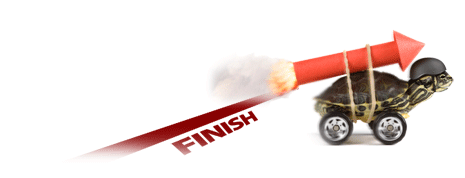
Never underestimate a turtle

“Writing is the only thing that, when I do it, I don’t feel I should be doing something else.”
Gloria Steinem 

Except maybe home reno projects.

One would think that working on a number of book projects in tandem would accomplish less than simply focusing on one piece at a time. Not so.  Although, I speak only for myself.  Allocating time for each book actually helps me to be more productive. By alternating between manuscripts, I am able to resume work on each one — with fresh (and critical) eyes.  Nothing gets stale. And the manuscripts continually get refined, which streamlines the final editing stage.

That is my usual writing process. However, for the past few weeks, I’ve veered away from the regular routine, since becoming completely immersed in my book of short stories — Casualties of the Recession Depression.  I am so passionate and excited about this piece, that I can’t seem to switch gears.  The result of all this writing enthusiasm is that I will have a completely finished manuscript imminently.  By year’s end (think Mayan).

Yes, the turtle is reaching the finish line!  (If my chronic bronchitis doesn’t kill me first).  My desk is a sea of kleenex tissues and cough drops. My husband is worried that I may be coughing up my own vocal cords, but I reminded him that there are benefits losing my voice:  Silence.  See, the cup is always half full, never half empty!

Although —between you, me and the lamp post — he’ll probably miss the constant yapping.

Stay tuned …

Ideas lost in shades of grey …

Photo Credit: K.R. Deepak

“However vague they are, dreams have a way of concealing themselves and leave us no peace until they are translated into reality, like seeds germinating underground, sure to sprout in their search for the sunlight.” 

~ Lin Yutang  (b.1895 – d.1976) – Chinese writer and inventor.

Have you ever thought  of a brilliant idea in your sleep, only to wake up and  find that you can’t remember it?

I hate it when that happens!

Last night, a few really good ideas for one of my chapters came to me and, being a light sleeper, I should have had the sense to wake up and jot them down but …. no, I decided to go back to sleep!

And now, for the life of me, I can’t bloody well remember them!

I’ve been wracking my brain, trying to retrace my thoughts ….

… still drawing a blank.

Maybe they’ll come back to me again tonight. Fingers crossed.

So this begs the question: Why does this happen? Why? WHY?

Is it because we:

  1. are sleep-deprived?
  2. suffer from too much stress?
  3. don’t meditate enough?
  4. lack vitamins?
  5. don’t eat enough seafood?
  6. are growing old (er)?

It could be any one, a combination, or all of the above.

As I’ve said many times before (maybe one day I’ll take my own advice!), the recipe for a healthy mind, body and spirit lies in one, simple practice:   Balance.

“We have overstretched our personal boundaries and forgotten that true happiness comes from living an authentic life fueled with a sense of purpose and balance.”   

~ Dr. Kathleen Hall, Author and Stress Expert

When we maintain a balanced life, we operate at peak level.  Our minds are stimulated. We think well and sleep well. We dream. And, amazingly, we recall/remember.  Here are a few tried and true tips to achieve Balance:

  1. Rest. Insomniacs are not able to function optimally. The brain needs to rest, in order to operate at its best.
  2. Meditate. Take a break and relax the mind. Gather our thoughts. Sit in silence. Regroup. This will bring us clarity of thought and completely re-energize us.
  3. Exercise. Do not omit this step! The process is simple:  cardiovascular exercise → improves blood flow to the brain → thus optimizing brain function.
  4. Eat healthy.  And, do NOT skip breakfast. Nuts (unless allergic), fresh fruit, green veggies and, yes, fish!
  5. Reduce your alcohol consumption.  Especially two hours before we sleep.  Alcohol is a depressant and it slows down/impairs mental function.
  6. Turn off the tellie (TV)! It’s a brain drain and, for the most part, a waste of valuable time.
  7. Stop relying on gadgets and exercise our minds.  Do we really need to use a calculator for simple math?  Do we really need to use the GPS every time?  Isn’t it fun and adventurous to discover a new place … by chance?
  8. Read a good book.  Reading helps us process ideas and thoughts.  It stimulates the imagination.
  9. Laugh and laugh often. Laughter is a great tonic for the brain and the spirit. Blood pressure goes down, and the “feel-good” endorphins flow to the brain.  Play the song  I Love to Laugh (from Mary Poppins) – remember that one? Laughter is infectious … in a good way!

On that note,  I shall go and fetch my notebook.  I just remembered the ideas and need to jot them down, lest I forget again!


Image via thehindu.com.

A Writer’s Primer on Fitness and Ergonometry

I am by no means a fitness guru, although — once upon a time — I did have a 24-inch waist and could sit (effortlessly) in the lotus position with perfect posture.

Once upon a time.

The ravages of time and (admittedly) neglect have taken their toll.  It wasn’t an overnight transformation, and there were definitely plenty of warning signs.

My mother always used to say: “Where there’s life, there’s hope.”  Modern day translation:  “As long as we’re still breathing,  we can do damage control!”  We can’t turn the clock back, but we can certainly turn things around — for the better. 

Our bodies speak to us. Sometimes the messages are subtle, like a slightly stiff neck, a tingling sensation in the hands, or a split-second numbness in the feet.  Often (too often) we shrug them off, until our bodies send us more urgent signals like swollen legs, severe back pain/spasms, insomnia, and shortness of breath or even arrhythmia (irregular heartbeat).  These messages and signals, if unheeded, may possibly lead to a deterioration in health, mobility, and lifestyle — or worse.

Listen to your body.  Try to be proactive. Get out of the chair, stretch and move around. A sedentary lifestyle is a prescription for poor health.

“We are under exercised as a nation. We look instead of play. We ride instead of walk. Our existence deprives us of the minimum of physical activity essential for healthy living.”

~ John F. Kennedy (b.1917 – d.1963)  — 35th President of the United States – In office from January 20, 1961 – November 22, 1963

As writers (and, indeed, anyone who spends 8+ hours per day sitting in front of a computer), we face several “occupational hazards.”  We sit for prolonged periods of time (especially when the creative juices are flowing) and, more often than not, our backs are crouched and tense, our hands are curled over the keyboard (when not clutching the mouse). Sometimes we squint at the screen, because it’s either too bright or we lost track of the time and forgot to turn the light on (which happens to me very, very frequently when I’m caught up in an intense writing spurt).  Knees are bent and legs are in the same position for hours on end. I have a nasty habit of placing one foot over the other – and leaving it there.  It’s easy to forget to take a break, to have a bite to eat or drink a glass of something refreshing – like water, juice or tea.

“Intellectual tasting of life will not supersede muscular activity.”

~ Ralph Waldo Emerson (b.1803 – d.1882) — American essayist, champion of individualism, lecturer, and poet

Yes, we need to move our muscles, so that we can be mentally alert, energized, and physically able to continue doing what we love to do … write.

Fitness 101 for Writers

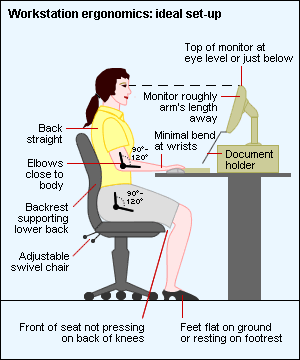
Invest in a good chair. The two tools that a writer should not scrimp on is (a) a computer and (b)  a chair.  Your writing chair should have the right amount of cushion, back support, and adjustability (for height). There are some superbly ergonomic chairs on the market —  designed specifically for writers and computer users.  More on that  further on in this post.

Minimize eye strain. Place the monitor directly in front of you (so you don’t have to turn your head). The top of the monitor should be directly in front of your eyes, at a distance of 18-24 inches. Reduce the screen glare and adjust the brightness/contrast. Periodically look away from the screen and focus your eyes on something else. Consult your ophthalmologist and/or optician, should you encounter any problems with your vision.

Maintain good posture. It’s all a matter of simple geometry. Specifically, right angles (90°): feet and lower legs (at ankles) must be 90°; lower legs and thighs (at knees) must be 90°; buttocks and back (at hips/waist) must be 90°; lower arms and upper arms (at elbows) must be 90°.  If your elbows aren’t on a 90° angle, this means that your desk is too high.  Simply adjust the chair height.  Do not slump your back!!!

Take care of your hands. Carpal Tunnel Syndrome is, according to the  Mayo Clinic (.com)“a progressively painful hand and arm condition caused by a pinched nerve in your wrist.”  Take a break from time to time. Typing continuously will have an adverse effect on your hand and wrist. Do finger and wrist exercises.  Move your fingers, do wrist stretches and rub (massage) your palms.

Use a timer. When you’re “on a roll,” it’s easy to get lost in your writing and forget that you need to move and stretch your muscles.  Why not set a timer/alarm every hour, to remind you that you need to get up and walk around for a bit, just to get that circulation going once again.

Exercise at your desk. If you’re feeling a little numb or stiff, consider doing some stretching exercises right at your desk.  Do neck rolls; loosen your hands with circular motions – clockwise, and then counter-clockwise; shrug your shoulders and release, then repeat (loosens neck and shoulders); do torso twists, and leg extensions

Take a break! If you can, break up your time with a walk (or run) outside. Maybe you could do an impromptu yoga or pilates session.  If you don’t want to lose your writing mojo, you may want to consider carrying a voice recorder with you. Remember to eat and, repeat after me, “Hydrate, hydrate, hydrate!”  


Ergonometry 101 for Writers

When we use the word “ergonomics,”  we are referring to “the applied science of equipment design, as for the workplace, intended to maximize productivity by reducing operator fatigue and discomfort.” And, if anything reduces user fatigue or discomfort, it’s an ergonomic chair!

This is the Ergohuman V2 Chair V200HRBLK  – High Back with Black Frame and Mesh. This chair also comes in either leather or fabric.
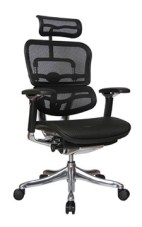
Need I say more? 

One final word about exercise.  Running is not for everyone.  Walking is always a good thing. But, if you want to boost your spirit (as well as your fitness level), grab your nearest and dearest …. and dance!  You’ll be rejuvenated and ready to write that next chapter … !

Note:  Before commencing any physical exercise or fitness program, please consult your physician.

Images via bodyandsoul.com.au, brainmass.com, ergonomics-info.com, and ergohuman.com.

A Writer’s greatest tonic: SLEEP!

Ha!  I know, you thought I would say that the writer’s greatest tonic is  …. perhaps, some scotch (straight up, of course) or a glass of Pinot Noir!  Well, I jest you not … a good night’s sleep does indeed stimulate the creative juices.  Waking up in the morning and feeling refreshed and alert (until you catch a glimpse of your puffy-eyed reflection in the mirror!) will go a long way to helping you finish that oh-so-wordy chapter 6 (the chapter that keeps on giving ….. me heartburn).  All right, enough of my writing woes.  Here are some interesting tidbits and links on the physical and psychological benefits of sleep — not just for neurotic writers, but for everyone:

Many of us think that we can get by on very little sleep.  When deadlines loom near, we pull a few all-nighters. And this is okay …. once in a while.  The startling news is that far too many of us follow a daily sleep regimen of less than 6 hours per night. This, according to researchers at Harvard Medical School, falls under the category of chronic sleep loss and may contribute to a number of health problems, such as  a compromised immune system, weight gain, and high blood pressure.  The Harvard Women’s Health Watch reports that there are at least 6 good reasons to get enough sleep:

  1. Learning and memory: Sleep helps the brain commit new information to memory through a process called memory consolidation. In studies, people who’d slept after learning a task did better on tests later.
  2. Metabolism and weight: Chronic sleep deprivation may cause weight gain by affecting the way our bodies process and store carbohydrates, and by altering levels of hormones that affect our appetite.
  3. Safety: Sleep debt contributes to a greater tendency to fall asleep during the daytime. These lapses may cause falls and mistakes such as medical errors, air traffic mishaps, and road accidents.
  4. Mood: Sleep loss may result in irritability, impatience, inability to concentrate, and moodiness. Too little sleep can also leave you too tired to do the things you like to do.
  5. Cardiovascular health: Serious sleep disorders have been linked to hypertension, increased stress hormone levels, and irregular heartbeat.
  6. Disease: Sleep deprivation alters immune function, including the activity of the body’s killer cells. Keeping up with sleep may also help fight cancer.

And, here are some sleep guidelines from the National Institute of Neurological Disorders and Stroke:

Sleep Requirements by Age

Newborns (0-2 months old) 12-18 hours
Infants (3-11 months old) 14-15 Hours
Toddlers (1-3 years old)l 12-14 Hours
Pre-schoolers (3-5 years old) 11-13 Hours
School-aged Children (5-10 years old) 10-11 Hours
Teens (11-17 years old) 8-9 Hours
Adults 7-9 Hours

And, for those of you who complain incessantly that your mattress is the reason why you don’t sleep well at night — please do some research and then invest in a new mattress!

Sweet dreams …

Sleep – the most beautiful experience in life – except drink.
W. C. Fields

I couldn’t resist.

Cheers,  h.f.t.g.

Image via kiwimagonline.com.

When Low-tech meets High-tech: a Writer’s Inferno

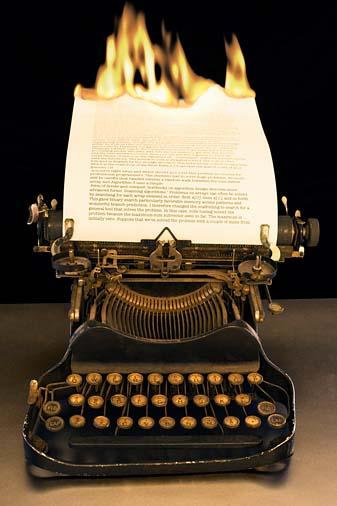
I always hated my typewriter (back in the stone age that was my youth).  It was awkward to handle, the keys skipped, and the letters were uneven (which irritated the living hell out of me). The only redeeming feature was that I could yank the paper out of the typewriter in a fit of temper (this was a time when anger management workshops were non-existent).

I do, however, have a deep affinity (passion, even) for paper and pen. Fountain pens, especially. And Moleskine® notebooks. And index cards, post-it notes, yellow highlighters, Sharpies®, and storyboards.

Did you know that the wonderful black  Moleskine® notebooks have been used by writers, poets and artists for over two centuries?  Yes, Picasso and Hemingway carried these notebooks everywhere.  Imagine what it would be like to catch a glimpse of the creative genius penned on each well-worn, hand-stitched page!  These infamous notebooks were their very own Holy Grail … of a simpler time.

They even have Moleskine®Storyboard notebooks ….  I use them, myself – specifically for novel writing.  They help me to organize the characters, chapters, plot lines, dialogue, and book flow.  I just jot down my thoughts – wherever I am (my pocket Moleskine fits easily into my purse).

Okay, this is where low-tech meets high-tech.  I transpose my “jottings” from paper to digital.  Yessssss, I know that seems like an unnecessary step but it actually helps me –to either reinforce (in my mind) what I’ve written or edit/delete.  I look at it as another stage in the quality control process.

Now, for those of you who do not want to carry a notebook (Moleskine or otherwise) around, there’s a product called Index Card – a writing tool designed specifically for the Apple iPad. It allows you to capture and store your ideas and notes in your own virtual storyboard.

There’s a French saying which goes something like this:  “Chacun à son goût” (each to his taste).

Low-tech, high-tech, or a hybrid of the two – you be the judge.

As for me, I need to go and buy some ink refill.

You know where I stand.

Here’s to simpler times.

h.f.t.g.

Images via writewritingwritten.blogspot.com, moleskineus.com, and appsforipad.net.