Legacy of Words

I do not have children.  I will not be passing on my legacy through a next generation of my own creation.  But please do not misunderstand or make assumptions.  This was a conscious choice — made by two people who chose a path which focused exclusively on the pursuit of knowledge, advanced education, career, business ventures, literary pursuits, and travel.  If I could turn the clock back, I believe that I would have followed that same path.

So, when I read this passage written by an author I deeply admire —Alexandra Fuller — it resonated with me and, frankly, I couldn’t have articulated my thoughts any better.  In the Author’s Note of her novel, Scribbling the Cat: Travels with an African Soldier, Alexandra Fuller says it best:

“What is important is the story.

Because when we are all dust and teeth and kicked-up bits of skin — when we’re dancing with our own skeletons — our words might be all that’s left of us.”

Words. I hope that they will be my legacy.

h.f.t.g.

Image via arkarthick.com.

A Writer’s greatest tonic: SLEEP!

Ha!  I know, you thought I would say that the writer’s greatest tonic is  …. perhaps, some scotch (straight up, of course) or a glass of Pinot Noir!  Well, I jest you not … a good night’s sleep does indeed stimulate the creative juices.  Waking up in the morning and feeling refreshed and alert (until you catch a glimpse of your puffy-eyed reflection in the mirror!) will go a long way to helping you finish that oh-so-wordy chapter 6 (the chapter that keeps on giving ….. me heartburn).  All right, enough of my writing woes.  Here are some interesting tidbits and links on the physical and psychological benefits of sleep — not just for neurotic writers, but for everyone:

Many of us think that we can get by on very little sleep.  When deadlines loom near, we pull a few all-nighters. And this is okay …. once in a while.  The startling news is that far too many of us follow a daily sleep regimen of less than 6 hours per night. This, according to researchers at Harvard Medical School, falls under the category of chronic sleep loss and may contribute to a number of health problems, such as  a compromised immune system, weight gain, and high blood pressure.  The Harvard Women’s Health Watch reports that there are at least 6 good reasons to get enough sleep:

  1. Learning and memory: Sleep helps the brain commit new information to memory through a process called memory consolidation. In studies, people who’d slept after learning a task did better on tests later.
  2. Metabolism and weight: Chronic sleep deprivation may cause weight gain by affecting the way our bodies process and store carbohydrates, and by altering levels of hormones that affect our appetite.
  3. Safety: Sleep debt contributes to a greater tendency to fall asleep during the daytime. These lapses may cause falls and mistakes such as medical errors, air traffic mishaps, and road accidents.
  4. Mood: Sleep loss may result in irritability, impatience, inability to concentrate, and moodiness. Too little sleep can also leave you too tired to do the things you like to do.
  5. Cardiovascular health: Serious sleep disorders have been linked to hypertension, increased stress hormone levels, and irregular heartbeat.
  6. Disease: Sleep deprivation alters immune function, including the activity of the body’s killer cells. Keeping up with sleep may also help fight cancer.

And, here are some sleep guidelines from the National Institute of Neurological Disorders and Stroke:

Sleep Requirements by Age

Newborns (0-2 months old) 12-18 hours
Infants (3-11 months old) 14-15 Hours
Toddlers (1-3 years old)l 12-14 Hours
Pre-schoolers (3-5 years old) 11-13 Hours
School-aged Children (5-10 years old) 10-11 Hours
Teens (11-17 years old) 8-9 Hours
Adults 7-9 Hours

And, for those of you who complain incessantly that your mattress is the reason why you don’t sleep well at night — please do some research and then invest in a new mattress!

Sweet dreams …

Sleep – the most beautiful experience in life – except drink.
W. C. Fields

I couldn’t resist.

Cheers,  h.f.t.g.

Image via kiwimagonline.com.

Everyone’s a critic …

“A critic is a bundle of biases held loosely together by a sense of taste.”

Whitney Balliett

Writing is subjective.  And, we can’t please everybody.  Nor should we try, because that would be an exercise in futility.

That being said, criticism can really sting.  Inevitably, the immediate reaction is to be defensive − because it hurts our feelings and,  if we’re really honest, our ego.  Sometimes it makes us angry, especially when the criticism is either unfounded or, worse, mean-spirited. 

Conversely, constructive criticism can be a good thing. After all, we should always strive to write better and if we determine that there is merit to the criticism, why not apply it?  

Whether the criticism is useless, biased, well-informed, helpful, or downright nasty − the important thing to remember is: always respond with grace.

Here are a few suggestions:

  1. No need to crawl under the covers or curl up in the fetal position.  Remember the old childhood chant “Sticks and stones may break my bones, but words will never hurt me!”  Now, keep repeating that one hundred times and maybe you’ll believe it!  Seriously, though, they are only words.  Try to develop a thicker skin because, as a writer, you will always be subject to criticism. Get used to it. It’s how you handle it that counts.
  2. Bite your tongue (not a literal suggestion, folks!). Sit on the criticism for awhile. Your first reaction may not be your best. Digest the information, formulate your thoughts and respond − logically, and with grace.
  3. Whatever you do don’t lash out at the critic!  You may be inclined to tell them to  #$@%  &##!   Not a good idea.  You may be tempted to criticize them right back. Not a graceful approach. You’re better than that.  And, you don’t want to appear defensive.
  4. Just say “thank you.”  And then either apply the criticism (i.e. learn from it) or move on.
  5. Look at it as an opportunity to improve.  After all, isn’t that the goal?

Don’t let criticism paralyze you. Keep writing. Keep learning. And, hold your head up high. Just don’t trip over yourself.

h.f.t.g.

Image via guardian.co.uk.

All roads travelled lead to Inspiration

“I only write when I am inspired. Fortunately, I am inspired at nine o’clock every morning.”

William Faulkner, Novelist (b.1897 – d.1962)

∞ ∞ ∞ ∞ ∞ ∞ ∞

If we, as writers, keep waiting for inspiration to strike,  we may well find ourselves in the same predicament as the two tramps, Vladimir and Estragon, in Samuel Beckett’s Waiting for Godot − drowning in immobility.  Neither Faulkner nor Beckett  sat idly, waiting for light bulb moments to magically appear.  No, they wrote, wrote, and wrote some more.  Sure, they may have had an inkling of what to write about, but it was while going about the daily business of writing that the inspiration began to flow − from mind to pen.  It was their perseverance (and, of course, their brilliant writing) which awarded each of them a Nobel Prize in Literature (Faulkner, in 1949 and Beckett, in 1969).

It is true that inspiration may come to us when we least expect it. In a dream. On a train. Or, while enjoying a dinner with family and friends.  Believe it or not, we all have at least twenty-five stories in us. At least!  Think about all the people who have come into our lives  − either to stay or just passing through.  And the events we’ve experienced, the observations we’ve made, as well as all the anecdotes we could tell (humorous, ironic, sad, and sometimes even tragic). 

All the roads we’ve travelled lead to Inspiration. We really don’t have to look much further.  We just need to sit down and write.

So, let’s get on with it.

h.f.t.g.

Image via jcshakespeare.wordpress.com.

The perils of procrastination …….

Do you know how easy it would be to succumb to the temptation of relaxing on the beach?Especially here in South Florida, for heaven’s sake!  Just five minutes away from the ocean.  Yet, here I sit in my study – at least ten hours a day (5 hours a day on the weekend).  Believe it or not, I have been battling procrastination all of my life.  But the clock is ticking. Time is breathing down my neck, egging me on.  That’s why I’m so über-organized.  I need Structure:  outlines, lists, schedules, index cards, storyboards —whatever it takes. Without it, I might as well put a “Gone Fishing” sign on my door.

Why, oh why do writers continuously “suffer the slings and arrows” (certainly not of “outrageous fortune!”) of Procrastination?  We like to call it  “writer’s block.”  That’s a more palatable term for the “condition.”  Call it whatever you want.

According to psychologists, one of the root causes of procrastination is fear —  fear of failure or success.  The price of success is responsibility and recognition.  Procrastinators who fear success are essentially afraid of the fallout. Which brings us to the subject of perfectionism.  Procrastinators tend to be perfectionists (although perfectionists are not necessarily always procrastinators) – anxious for everything to be perfect. And since it’s virtually impossible to be perfect, why bother trying?

Okay, let’s presume that we understand the reasons why we do what we do.  The more salient question would be “how do we overcome procrastination?”  Here are some of the steps that have worked for me:

  1. Set a timeframe for yourself, with a beginning and an end.
  2. Visualize the end result you want.
  3. Set realistic goals and tackle them, one at a time.
  4. Pace yourself.  This is not a marathon. Didn’t your mother ever tell you that “haste makes waste?”
  5. Break up your writing time into segments, so that you allocate time to do non-sedentary activities like walking, gardening, swimming , or whatever you enjoy doing.
  6. Talk about your writing with friends, family and colleagues. Brainstorming always helps.
  7. Yes, write outlines, lists, index cards – whatever structure works for you. Like it or not, structure helps. A lot.
  8. Make a public commitment.  This is not for everybody. As you may have noticed (see the lower right side of this blog site), I have committed – publicly – to completing my non-fiction book (When the Child Becomes the Parent) and my novel (Finding Grace)  by 2013 and December 2012, respectively.  I did this purposely because I know that – come hell or high water – I will do it.
  9. Make commitments to others. In addition to my own work, I have committed to ghostwriting two client book projects (one is in progress, due for completion just before Thanksgiving) and the other is tentatively set to commence in January.
  10. Laugh. Don’t take yourself too seriously. Enjoy the ride. Presumably, we write because we enjoy it. When you love what you do, nine times out of ten – you’re good at what you do. So, chillax.
  11. Breathe. Not the type of breathing they teach in Lamaze class. I’m talking about Zen breathing techniques.  They work.
  12. Eat light, healthy snacks.  They give you energy.
  13. Hydrate yourself.  Whatever libation works for you.  Despite my many tongue-in-cheek jokes about single malt scotch and fine red wine, I actually drink tons of Earl Grey tea while writing for hours on end.  Getting up to put the kettle on is a great way to stretch your legs.

Hope this helps!

Best of luck,                                                                                                                                    

h.f.t.g.

Image via Itsasmartdecision.com.

Juggling writing time between multiple book projects

Sometimes I think I’ve fallen off that precarious balancing beam – from possessing a modicum of sanity to diving head first into a state of complete and utter madness.  The reason?  I am juggling multiple book projects. Thank goodness I’m compulsively organized, because the only way to handle the work load (without sacrificing creativity) is to compartmentalize my time.

Yes, compartmentalization is the way I am able to maintain my sanity – relatively speaking.  But it would be remiss for me not to mention the occasional help I receive from Mr. Glen Livet and Mr. Mac Allan!
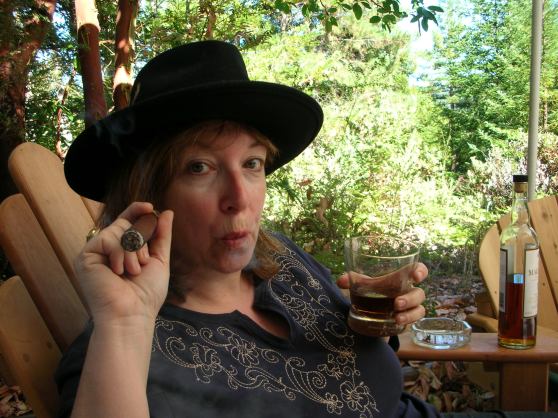
h.f.t.g. taking some quiet “me” time with Mr. Mac Allan
and enjoying a stogie, in between intense writing sessions

(Note: the photographer is also partaking in some libation!) 

So, here’s the plan. As mentioned in my inaugural blog post, “Finding Grace” (the Novel) is set for release sometime in 2013.  In tandem, I’m writing a series of four non-fiction books targeted to the Baby Boomer generation.  I’m a quarter of the way through the first, entitled “When The Child Becomes The Parent,”  and am hoping to release this book by the end of 2012 (fingers crossed).  By setting an aggressive schedule, I’m putting a lot of pressure on myself – in an effort to battle my most dreaded enemy: Procrastination.

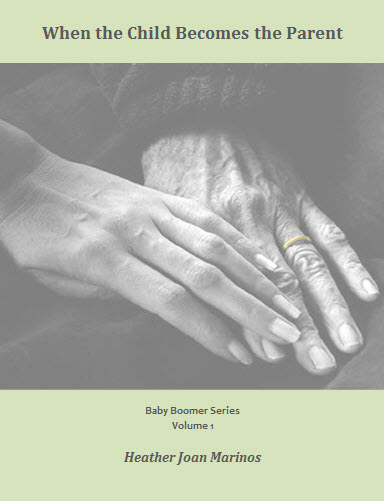
Here’s a sneak peek of the book summary (which will be located in the  book’s inside left flap) – as well as  the book cover design:

“We are the Baby Boomer Generation. That makes us forty-something, fifty-something and sixty-something.  Our parents and beloved aunts or uncles are in their twilight years. They need our help. The measure of a person is the degree to which she treats her fellow men and women with respect, kindness, compassion and – to those close – love.   Why do we all too often forget to tender the same treatment to our elderly? They are supposed to be our nearest and dearest. They gave us Life!  The child must now step up to the plate and become the parent.  

No one wants to reach the end of life’s journey and suddenly become a burden to their family or friends.  Perhaps we might find it helpful to see the world from their perspective and accord them the dignity they so rightly deserve.  Perhaps we should not be so overwhelmed or impatient with them and maybe we should shift our fear-of-aging mindset a bit.  After all, shouldn’t we consider it a privilege to help them through this final chapter of their lives?

This is a gentle guide on how to care for the elderly loved ones in your family – from home care to hospice care to preparing for death.  The author will also share stories about some of her own experiences – both deeply sad and delightfully humorous.

She is fifty-something, by the way and, yes, a Baby Boomer.”

Copyright © 2010-2011 Heather Joan Marinos – All Rights Reserved.
— To all the writers out there who are juggling multiple book projects – courage, my friends!  We will all complete our books and, once we do, we will very likely move onto the next project.  Are we masochists? No. We simply love what we do.
And that’s a good thing.

Image (top) via Sarparker.com.

The time is NOW!

Time is relative.

When we’re young,  time seems to pass ever so slo-o-o-o-owly.  Remember back to when you were 12, impatiently waiting to turn 13, and then aching to be 16, 18, and – the most desirable age of all – 21.  It seemed to take forever.  If we only knew then, what we know now!

What we know now is that, as we age, time flies by so quickly – too quickly.  Or so it seems.

Personally, I used to believe that I peaked in my 30’s – and that it would inevitably be downhill from there.  What a deluded fool I was!  There is something to be said about the fabulous 50’s.  And the wisdom – which comes from half a century’s worth of  experience and hard lessons, well learned.

This is what I know for sure:

  1. Make Time your friend, not your enemy.  Embrace it. Savor it. Use it well.
  2. The passage of Time does not necessarily heal all wounds. But, it does help you deal  with your wounds.
  3. Time gives you the ability to see things from a more enlightened perspective.
  4. Time will only treat you well if you treat yourself well.
  5. Time teaches you patience  – with yourself and with others.
  6. Time makes you appreciate the past and not take the present for granted.
  7. Time is absolute.  There is always a beginning and an end.
  8. Time will not stand still while you deliberate about when to write your opus. Do it now.

So,  follow your dream, your bliss – whatever it may be.  Be confident (but not egotistical), be motivated (but not frantic or hyperactive), and  – most importantly – maintain balance in your life (things often go awry when  there is no equilibrium).


Image via Blog.sciseek.com.