Food insecurity around the world

worldwide_giving_efforts_552x331

“Those who wish for a more peaceful, just and sustainable world are helping to make ending world hunger a major priority… Together we can end hunger.”

Robert Alan Silverstein

That we, as a global community, could end world hunger is not a naïve notion. No, it is not as far-fetched as it seems, despite the daunting numbers and the amount of time, effort and resources needed to accomplish such a gargantuan task.  As with any challenge of great magnitude, the reasonable approach is (and has been) to compartmentalize the problem into smaller, more manageable components. Since the whole is equal to (not lesser than or greater than ) the sum of its parts,  each “part” (and, by extension, each of the subparts, and sub-subparts) can be (and have been) uniquely addressed.  In this instance, the “parts” refer, of course, to the continents;  the “subparts” are the countries, and “sub-subparts” are the cities, counties or communities.  If it sounds simple enough, experience has taught  us that the real bottleneck lies in the allocation and acquisition of the “time, effort and resources” required to eradicate the problem.  Just how big a problem is it?

The Numbers:

According to The United Nations Food and Agriculture Organization:

  • In 2010-2012, estimated that nearly 870 million people throughout the world (that’s one in eight people) suffer from chronic undernourishment and food insecurity.
  • an estimated 852 million live in developing countries; 16 million live in developed countries.
  • Asia and Pacific region: saw a 30% decrease (from 739M to 563M) in the number of undernourished people – due to socio-economic progress. <heatherfromthegrove: I believe that these numbers may increase by next year, as the recession makes its hasty way to Asia>
  • Latin America and the Caribbean:  also saw a decrease, from 65M (1990-92) to 49M hungry (2010-2012).
  • Africa: by sharp contrast, saw a huge increase, from 175M to 239M hungry (one in four people are hungry).
  • In developed countries, the number increased from 13M (2004-6) to 16M (2010-12).

The Causes:

According to The United Nations Food and Agriculture Organization, there are five (5) principle causes of hunger:

  1. Poverty.
  2. Harmful/unstable economic and political systems.
  3. Conflict (the influx of refugees from unstable, conflict-ridden regimes/countries).
  4. Hunger (hunger causes physical and mental health issues which, in turn, bring on poverty – due to the inability to work or function properly; and this creates greater hunger).
  5. Climate Change (drought, flooding, erratic  climate patterns).

The Solutions:

According to Josette Sheeran, formerly the Executive Director (until her term ended in 2012) of the UN World Food Programme and now the Vice Chairman of the World Economic Forum, there are ten new approaches to eradicating world hunger:

  1. Humanitarian action.
  2. Provide free school meals.
  3. Safety nets (for when disaster strikes or a food crisis occurs).
  4. Connect farmers to markets.
  5. Special focus on providing children under two years old with proper nutrition, to help them develop properly and give them  fighting chance.
  6. Empower women.
  7. Technology is a powerful tool.
  8. Building resiliency… against national disasters.
  9. People power (individuals, partners, organizations, communities)
  10. Accountability (countries’ political leaders make it their mission to ensure that no child (in their country) will die from hunger.

For a more comprehensive understanding of world hunger, please refer to the United Nations Food and Agriculture Organization’s report, The State of Food Insecurity in the World 2012.

Ending world hunger… an impossible dream, or an attainable reality?

You know where I stand. 

HFH2

From Aug 14-Sept 7, purchase a copy of  Casualties of the (Recession) Depression, and for every $20 book purchased directly from my website, I will be donating $5 from the proceeds of each book sale to either: Feeding America (US), Action Against Hunger (Canada), or The World Food Programme (Global). The purchaser chooses one of the three.

Image via blog.igt.com.

A tribute to the unsung heroes who help others

How-Helping-Others-Benefits-YOU

“If you can’t feed a hundred people, then just feed one.”

Mother Teresa

They don’t have the power of money or celebrity to back them up.  Nor do they receive any payment or compensation for what they do.  Self-gratification is not their ulterior motive. 

They are simply ordinary people who do extraordinary things… to help others − for no other reason than love and respect for humanity.

These are the people who…

… save their leftover food from their restaurant meal, so they may give it to the person standing outside… that hungry person who’s seen better times but who, for one reason or another, finds himself down and out.

… volunteer their time to work in community outreach programs.

… make daily visits to elderly neighbors who live alone, just to make sure that they are okay and to give them a little caregiving and companionship.

… regularly help out at the food banks and missions.

… notice that an exhausted single mother, trying to do it all, may need  a little assistance with carpooling, babysitting, or a few ready-made meals that she can freeze and reheat later.

… sense that a friend may be going through hard times, and invite him/her over for dinner each week.

… teach their children kindness and empathy towards others.

The list is endless.

These are the people who, although not labeled as “activists”,  are quietly making a difference in the lives of others.

One person at a time.

HFH2

From Aug 14-Sept 7, purchase a copy of  Casualties of the (Recession) Depression, and for every $20 book purchased directly from my website, I will be donating $5 from the proceeds of each book sale to either: Feeding America (US), Action Against Hunger (Canada), or The World Food Programme (Global). The purchaser chooses one of the three.

Image (of hands) via mysuccessprinciples.com.

The value of altruism

4737591_orig

“I am of the opinion that my life belongs to the community. And as long as I live, it is my privilege to do for it whatever I can. I want to be thoroughly used up when I die, for the harder I work, the more I live.  Life is no brief candle to me; it is a sort of splendid torch, which I have got hold of for a short moment, and I want to make it burn as brightly as possible before handing it on to the future generations.”

George Bernard Shaw

8-24-2013 2-06-22 AM

Image via faithkitchen.org.

The “Golden Years” are not always so golden

elderlywoman1

Unless one’s heart is made of stone, most can agree that the reality of child hunger is a heartbreaking and very unpalatable pill to swallow. 

Human existence is cyclical. We begin life as children who depend on parents or family members for our food, our living conditions, and our sense of well-being and worth.   

As we move towards the last chapter of our lives, our health and frailty make it impossible to survive without depending on our children, family members, or community − for our food, our living conditions, and our sense of well-being and continued worth.

The golden years are supposed to be a time in life when we, who have worked so hard and who have taken care of so many, earn the right to kick back, relax and enjoy the company of loving family and friends, as they surround us with their affection and care.

Sadly, this is not everyone’s reality.  Many seniors are left to cope alone.  Many have to juggle with decisions like whether to eat or pay the utility bills, whether to eat or pay for medication, and whether to eat or pay the rent. 

As I mentioned earlier, human existence is cyclical.

Unless one’s heart is made of stone, most can agree that the reality of senior hunger is a heartbreaking and very unpalatable pill to swallow. 

I’ll leave you with some sobering statistics, cited by the folks at Feeding America.  Next week, I will be taking a virtual hunger tour around the world because, as we all know, hunger has no geographic boundaries.

According to Feeding America,

“The number of older adults is projected to increase by 36% over the next decade and continue to rise in the following decade. In 2030 there will be 72.1 million older adults, almost twice as many as in 2008. Additionally, the senior population is becoming increasingly diverse.  Between 2010 and 2030, the white population of 65 and plus is projected to increase by 59% compared with 160% of older minorities.”

“These changing demographics will have profound impacts on the demand for social services, especially the need for adequate and culturally appropriate nutrition services.  Seniors may have unique nutritional needs and challenges that separate them from the rest of the population and must be considered.”

“In 2011, 4.8 million Americans over the age of 60 were food insecure. This constitutes 8.4% of all seniors. “

“The number of food insecure seniors is projected to increase by 50% when the youngest of the Baby Boom Generation reaches age 60 in 2025.”

HFH2

From Aug 14-Sept 7, purchase a copy of  Casualties of the (Recession) Depression, and for every $20 book purchased directly from my website,  I will be donating $5 from the proceeds of each book sale to either: Feeding America (US), Action Against Hunger (Canada), or The World Food Programme (Global). The purchaser chooses one of the three.

Image (at the very top) via mycarforcharity.com.

New thought-provoking blog “Discourse on Reality” launching soon

DiscourseOnReality

“The work of an intellectual is not to mould the political will of others; it is, through the analyses that he does in his own field, to re-examine evidence and taglineassumptions, to shake up habitual ways of working and thinking, to dissipate conventional familiarities, to re-evaluate rules and institutions and to participate in the formation of a political will (where he has his role as citizen to play).”  ― Michel Foucault

Discourse on Reality, launching this Wednesday, will focus on current socio-economic, cultural, philosophical and political issues and challenges facing everyday men and women — across the globe.  As the title suggests, it is meant to be a forum for intelligent discourse, where people can share ideas, commentary, and information on subjects that are current, relevant and affect our communities — locally, nationwide, worldwide.  The objective is to learn, engage, raise awareness and, perhaps, become actively involved in the very causes, issues and challenges that we seek to address and remedy.

It is not my desire to write monologues day in and day out.  Dialoguing with oneself becomes tedious after a while.  To that end, I will be extending an invitation to anyone who may be interested in writing a guest blog post — within the scope of the subject matter discussed in the blog.  The invitation is open to writers, scholars, community leaders, and activists — subject to my approval, per  the guest blogging guidelines that will be available for review when Discourse on Reality goes live on Wednesday morning.  Non-fiction authors who post a guest blog will also be invited to highlight their latest work on the “Books” page.

Discourse on Reality embraces diversity.  This means: people from all walks of life, all cultures, all religions, all nationalities and ethnicities,  all political and philosophical leanings, all genders and orientations. 

Discourse on Reality will not provide a forum for hate, bigotry, and profanity.  It’s one thing to be passionate about what you believe in, but it is quite another to spew out hateful commentary.

One blog will be posted by 9 am EDT daily, from Monday to Friday.  Each day will focus on one theme, as follows:

       MONDAYS – Socio-economic Issues  (i.e. hunger, homelessness, health, education, environment and more)

       TUESDAYS – Economic Issues (i.e. the economy, business, technology, and more)

       WEDNESDAYS – Cultural Issues (i.e. civil rights, human rights, and more)

       THURSDAYS – Philosophical & Political Issues (i.e. commentary on current political events/news, ideology, religion)

       FRIDAYS – Philanthropy and Humanitarianism (i.e. role models and visionaries, non-profit organizations, humanitarian efforts and disaster relief,  sustainability, and more)

I hope that those of you who have been tuning in to my heatherfromthegrove (a writer’s musings) blog will also check out Discourse on Reality this Wednesday.  

As always, I welcome your feedback and comments.

Thanks for stopping by!

— Heather

Carpe Diem

the-pursuit-of-happiness

“If the sight of the blue skies fills you with joy, if a blade of grass springing up in the fields has power to move you, if the simple things of nature have a message that you understand, rejoice, for your soul is alive.”

Eleonora Duse

Have a great weekend, everyone!

Image via lesserevillife.com.

Summer Harvest in The Grove

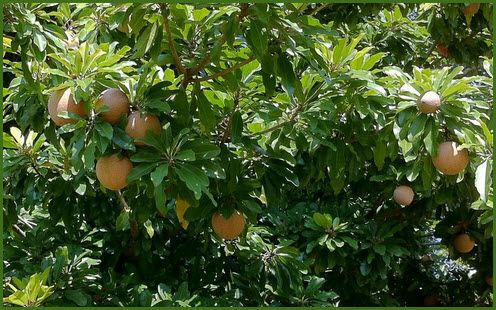
mangoes

Mango Tree

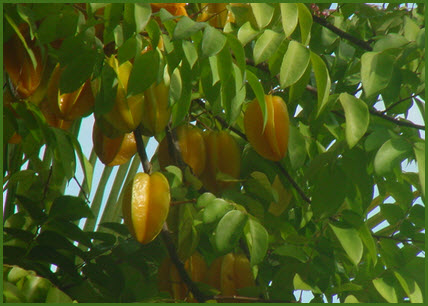
In my town of Coconut Grove – an eclectic South Florida village and bohemian haven to local writers, artists, architects and musicians – summer harvest is in full swing. Virtually every house in The Grove is surrounded by lush tropical flora and fruit trees. Starfruit, sea grapes, lemons, oranges, avocados, mangoes, lychee, guava, coconuts, figs, and olives. As they  ripen, the pungent smells fill the air.  What abundance! And, how grateful we are that the daily spurts of tropical rain, followed by sunshine and steamy, hot air provide the perfect climate for growth. 

Starfruit

Starfruit (“Carambola”) Tree

In this sustainable environment, not only does nature produce a rich bounty for individual households and all the outdoor creatures that inhabit the yards (birds, cats, possum, squirrels, frogs, lizards and geckos), it also encourages neighborliness. Just the other day, one of my neighbors dropped by with a bag full of mangoes from her tree.  Everyone shares their harvest. It is not uncommon to see baskets of fruit  set outside a front gate, with a sign saying “Please help yourself. Enjoy!”

My sea grape trees cascade over the front yard, providing shade for the sidewalk and part of the street.  Hanging from the branches, the ripe grapes are a welcome treat to anyone strolling by.  Blending (chameleon-like) with the large, green sea grape leaves, the mischievous parrots teeter precariously as they hop from branch to branch – tipsy from indulging in  their very own bacchanalian feast. Their loud and gleeful squawking can be heard from one end of the street to the other. Their joy is infectious.  

Just this morning, I stood smiling as I looked up at the parrots.  My smile turned into a belly laugh when several grape pits pinged my forehead. I’m sure those naughty feathered creatures did it on purpose, but I didn’t mind.  Not at all.  I’m just deeply thankful that my trees are bearing fruit and that they are being savoured by animals and humans alike.

“The thankful receiver bears a plentiful harvest.”
William Blake

seagrape

Sea Grape Tree and Parrot (posing for the camera)

Know Thyself

Lineage

“We all grow up with the weight of history on us. Our ancestors dwell in the attics of our brains as they do in the spiraling chains of knowledge hidden in every cell of our bodies.”

Shirley Abbott

In the 1960s and 1970s,  a generation of young men and women coined the term “I’m trying to find myself.”  This quest for self-discovery (often stimulated by the use of soothing “herbal” supplements) was an earnest attempt, on their part,  to  find answers to such questions as “Who am I, really?” and “What should I do with my life?”  For some, the questions remain unanswered… which is probably why so many Baby Boomers suffer mid-life crises.

It is my firm belief that the answers to who we are (and why we are the way we are) – as individuals, as a society,  or as a nation – can only be found by learning more about our history.  To understand  the present and attempt to mold the future, one must have a clear understanding of the past.

To find out who we are, we must begin at the beginning.  Where do we come from? Who are the people who came before us, and before them? 

What are our roots?

If you like puzzles, as I do, this is when it starts to get interesting.  Tracing your family roots is like meandering through the pages of an epic story, only it’s your story. Your history.  It can be fascinating, enlightening and sometimes even shocking.  When you begin a genealogical study, you could very well open up  a Pandora’s box full of surprises.  My theory is:  it’s always better to know, than not to know.

I’m in the process of completing my maternal family tree. There are still a few missing pieces, but I hope to fill in the blanks soon.  Once that is complete, I will begin the research on my paternal roots.

And then, I will have chronicled the story of my life – from past to present.

My only wish is that I could have met each of these men and women whose blood courses through my veins, whose facial features I bear, and whose character traits I may have. 

I guess I’ll have to wait until I’m on the other side. 

Oh, what a reunion we shall have!

Some links that you may find interesting:

Image via sherrymonahan.com.

Dance like nothing matters

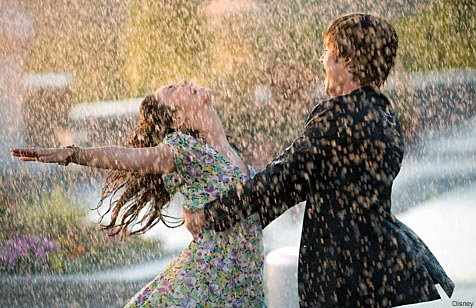
dancing-in-the-rain

“You’ve gotta dance like there’s nobody watching,
Love like you’ll never be hurt,
Sing like there’s nobody listening,
And live like it’s heaven on earth.” 
― William W. Purkey


When it feels like the walls are closing in on you and the stress is threatening to take you down…. stop.  Press the pause button.  You need  to take a moment, an hour, maybe even a whole  afternoon – to do something that will make you smile, grin… or even throw your head back  with uninhibited laughter.

My recommendation: Dance.

Why not?

Dance by yourself (don’t feel self-conscious, nobody is watching!) or grab a partner and twirl around, waltz, or – if you know how – tango!

Here, in steamy South Florida, we enjoy daily (afternoon) tropical downpours and I love to go out and dance about  the yard. Lifting my face up to the sky, I welcome the rain as it washes away all the stresses and annoyances that had been niggling away at me.  I feel rejuvenated, refreshed and ready to take on any challenge that may cross my path. I look up at the window and there is my husband and black Lab, both staring at me as if I had just escaped an insane asylum.  I wave at them to join me, but my dog ducks away from the window as soon as the first loud peal of thunder shakes our rooftop.  My husband makes a crazy sign gesture, directed at me, and disappears from sight.  I shrug and continue my rain dance, choosing not to pay attention to the fluttering of curtains in several neighbors’ windows.  Completely soaked through, I finally pad my way up the stairs and go inside to dry up.  My dog greets me with a sniff and a lick. My husband stands beside him, a bath towel in his hand. He wraps it around me, and gives me a hug. 

All is right with the world.

Image via sheranescloset.com.

The Quirks and Eccentricities of Writers

nanowrimo_crazyy_event_better_writer

“I am a completely horizontal author. I can’t think unless I’m lying down, either in bed or stretched on a couch and with a cigarette and coffee handy. I’ve got to be puffing and sipping. As the afternoon wears on, I shift from coffee to mint tea to sherry to martinis. No, I don’t use a typewriter. Not in the beginning. I write my first version in longhand (pencil). Then I do a complete revision, also in longhand. Essentially I think of myself as a stylist, and stylists can become notoriously obsessed with the placing of a comma, the weight of a semicolon. Obsessions of this sort, and the time I take over them, irritate me beyond endurance.”    

Truman Capote

Writers are a curious species.  From writing rituals, superstitions, and funny quirks to over-the-top, Mad Hatter-type eccentricities… we immerse ourselves in an environment, and a process from which all creative juices can flow freely.

If my old marketing colleagues could see me now, they would be shocked.  I used to sport a coiffed, stylish shoulder-length bob  (think Cindy Williams, in her role as Shirley on the TV sitcom “Laverne & Shirley) and always wore chic, professional business attire.  I now look like a cross between Janis Joplin and Bonnie Raitt, but with round, black glasses. My “writing wear” consists of red Stewart plaid pajama bottoms and my favorite black t-shirt, inscribed (in white) with the words: “Drink Ouzo. [Help save Greece].”  I sit, always barefoot, at my desk oblivious to anyone or anything.  Sometimes, I mutter out loud.

Unlike Truman Capote, I am a vertical author. When I’m deep in thought, I pace back and forth.  Like Capote, however, I am ridiculously obsessed with punctuation and this obsession is annoying even to me.

At the commencement of each day, my desk must be clear and pristine, before I’m able to start writing. I can’t function if it’s messy.

My daily ritual of libation-while-writing evolves from early morning to late night: from water (with a lemon slice) in the early AM, to black coffee (Gevalia, French Roast) until 1 pm, to tea (Earl Grey, no milk or sugar) in the afternoon, to single malt scotch (Glenlivet) at 6pm-ish, then on to wine (preferably a nice Burgundy) in the evening, and, late at night, back to water (with a lemon slice).

And, I hate phones.

I know that I am not alone in my “madness” … so, ‘fess up writers.  What are your writing quirks and eccentricities?  I would love to hear about them!

Don’t worry, we’re in good company.  Some of the greatest literary minds of yore (and also a few familiar modern authors) have been clouded (or sharpened…. it’s all a matter of perspective) by their writing fetishes. 

Victor Hugo, a procrastinator by nature, would remove all of his clothes and give them to his servant, with instructions not to return them until he had completed his writing day.

Charles Dickens had a ritual whereby he would drink a sip of hot water after every 50 lines of writing.

Joyce Carol Oates commences her writing day very early and will not eat breakfast until her day’s work is done.  Sometimes her “breakfast” is at dinnertime!

Orhan Pamuk had a quirky ritual. By his own admission, he would leave his house each morning (after saying goodbye to his wife), as if he were going off to work. He would then walk around a few blocks and return home, as if arriving at the office. This put him in the “work zone” frame of mind.

Johann Wolfgang von Goethe would retreat like a hermit into a completely sealed room, devoid of fresh air, and stay there until he completed his work.

So, there you have it.  We are a loopy bunch.

I wouldn’t have it any other way, would you?

Photo credit: Nina Matthews Photography