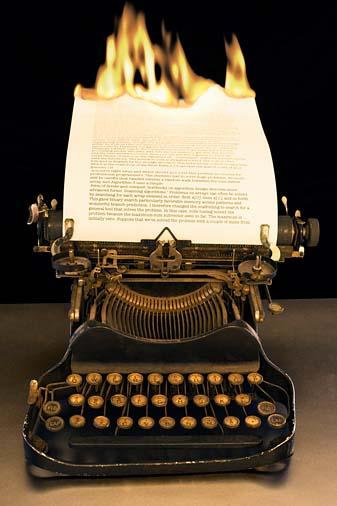
Crossing over …. to the writer zombie zone

I’m working on  a unique book project for a client in the Managed Print Services industry.  The book is replete with leopard undertones (you’ll have to read it to find out why) and the deadline for the first draft is looming closer.  November 9th…9th…9th….(the echo is getting louder in my head, or maybe I have a bad case of tinnitus).  In any event, I’ve officially entered into what I refer to as the writer zombie zone.  And it’s Halloween. Coincidence? I think not. 

The countdown has begun, and the midnight oil is burning. If or when I manage to sleep for a few hours or so, I’ll probably have psychedelic dreams of leopard spots.  And very revealing leopard outfits (don’t ask).

Oddly enough, I enjoy the pressure.  It fuels me. 

What is less than thrilling is having to stare at a computer screen for hours and hours on end. Especially when my eyes start to play tricks on me. And when the lights keep flickering on and off, due to the incessant thunderstorm activity here in South Florida (it’s still hurricane season).

So, to all the zombie writers out there, I commiserate. 

Hark! IT is beckoning to me….. gotta get back to the zone.

Images via scalliwags.co.za and flipside.theiet.org.
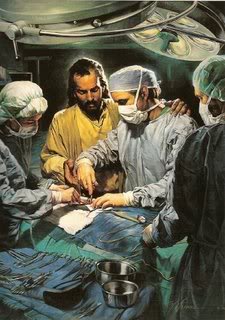
This one’s for you, Ro

Today’s post is not about writers, writing, or anything relating to the business of writing.

It’s about Faith, old friends, and the trials and tribulations that we’re forced to deal with from time to time. 

So, to that dear, old friend of mine who is going into surgery tomorrow morning:  You will ace it!  You’ve got loads of family and friends rooting for you, a great surgical team, and – for sure – a little divine intervention!

Xewqat sbieħ! (“good luck” in Maltese) ….. from Heather


Fear not, for I am with you;
be not dismayed, for I am your God;
I will strengthen you, I will help you,
I will uphold you with my righteous right hand.

— Isaiah 41:10


Image via minimomist.com.


When Low-tech meets High-tech: a Writer’s Inferno

I always hated my typewriter (back in the stone age that was my youth).  It was awkward to handle, the keys skipped, and the letters were uneven (which irritated the living hell out of me). The only redeeming feature was that I could yank the paper out of the typewriter in a fit of temper (this was a time when anger management workshops were non-existent).

I do, however, have a deep affinity (passion, even) for paper and pen. Fountain pens, especially. And Moleskine® notebooks. And index cards, post-it notes, yellow highlighters, Sharpies®, and storyboards.

Did you know that the wonderful black  Moleskine® notebooks have been used by writers, poets and artists for over two centuries?  Yes, Picasso and Hemingway carried these notebooks everywhere.  Imagine what it would be like to catch a glimpse of the creative genius penned on each well-worn, hand-stitched page!  These infamous notebooks were their very own Holy Grail … of a simpler time.

They even have Moleskine®Storyboard notebooks ….  I use them, myself – specifically for novel writing.  They help me to organize the characters, chapters, plot lines, dialogue, and book flow.  I just jot down my thoughts – wherever I am (my pocket Moleskine fits easily into my purse).

Okay, this is where low-tech meets high-tech.  I transpose my “jottings” from paper to digital.  Yessssss, I know that seems like an unnecessary step but it actually helps me –to either reinforce (in my mind) what I’ve written or edit/delete.  I look at it as another stage in the quality control process.

Now, for those of you who do not want to carry a notebook (Moleskine or otherwise) around, there’s a product called Index Card – a writing tool designed specifically for the Apple iPad. It allows you to capture and store your ideas and notes in your own virtual storyboard.

There’s a French saying which goes something like this:  “Chacun à son goût” (each to his taste).

Low-tech, high-tech, or a hybrid of the two – you be the judge.

As for me, I need to go and buy some ink refill.

You know where I stand.

Here’s to simpler times.

h.f.t.g.

Images via writewritingwritten.blogspot.com, moleskineus.com, and appsforipad.net.

The perils of procrastination …….

Do you know how easy it would be to succumb to the temptation of relaxing on the beach?Especially here in South Florida, for heaven’s sake!  Just five minutes away from the ocean.  Yet, here I sit in my study – at least ten hours a day (5 hours a day on the weekend).  Believe it or not, I have been battling procrastination all of my life.  But the clock is ticking. Time is breathing down my neck, egging me on.  That’s why I’m so über-organized.  I need Structure:  outlines, lists, schedules, index cards, storyboards —whatever it takes. Without it, I might as well put a “Gone Fishing” sign on my door.

Why, oh why do writers continuously “suffer the slings and arrows” (certainly not of “outrageous fortune!”) of Procrastination?  We like to call it  “writer’s block.”  That’s a more palatable term for the “condition.”  Call it whatever you want.

According to psychologists, one of the root causes of procrastination is fear —  fear of failure or success.  The price of success is responsibility and recognition.  Procrastinators who fear success are essentially afraid of the fallout. Which brings us to the subject of perfectionism.  Procrastinators tend to be perfectionists (although perfectionists are not necessarily always procrastinators) – anxious for everything to be perfect. And since it’s virtually impossible to be perfect, why bother trying?

Okay, let’s presume that we understand the reasons why we do what we do.  The more salient question would be “how do we overcome procrastination?”  Here are some of the steps that have worked for me:

  1. Set a timeframe for yourself, with a beginning and an end.
  2. Visualize the end result you want.
  3. Set realistic goals and tackle them, one at a time.
  4. Pace yourself.  This is not a marathon. Didn’t your mother ever tell you that “haste makes waste?”
  5. Break up your writing time into segments, so that you allocate time to do non-sedentary activities like walking, gardening, swimming , or whatever you enjoy doing.
  6. Talk about your writing with friends, family and colleagues. Brainstorming always helps.
  7. Yes, write outlines, lists, index cards – whatever structure works for you. Like it or not, structure helps. A lot.
  8. Make a public commitment.  This is not for everybody. As you may have noticed (see the lower right side of this blog site), I have committed – publicly – to completing my non-fiction book (When the Child Becomes the Parent) and my novel (Finding Grace)  by 2013 and December 2012, respectively.  I did this purposely because I know that – come hell or high water – I will do it.
  9. Make commitments to others. In addition to my own work, I have committed to ghostwriting two client book projects (one is in progress, due for completion just before Thanksgiving) and the other is tentatively set to commence in January.
  10. Laugh. Don’t take yourself too seriously. Enjoy the ride. Presumably, we write because we enjoy it. When you love what you do, nine times out of ten – you’re good at what you do. So, chillax.
  11. Breathe. Not the type of breathing they teach in Lamaze class. I’m talking about Zen breathing techniques.  They work.
  12. Eat light, healthy snacks.  They give you energy.
  13. Hydrate yourself.  Whatever libation works for you.  Despite my many tongue-in-cheek jokes about single malt scotch and fine red wine, I actually drink tons of Earl Grey tea while writing for hours on end.  Getting up to put the kettle on is a great way to stretch your legs.

Hope this helps!

Best of luck,                                                                                                                                    

h.f.t.g.

Image via Itsasmartdecision.com.