And then there’s Hope

iStock_000007173441Small-468x283

“They thought that attending the baptism of their friend’s baby daughter would be a welcome and much-needed distraction. For one afternoon, they could put all their troubles aside and partake in a joyous and blessed occasion. In the last two years, life had been spiraling out of control. Food and money were scarce. They had lost their car.  They had nearly lost their home.  They needed something to grasp on to.  They needed a little hope.  And so, they thought that participating in a young child’s first Sacrament would remind them of all things good — purity, innocence, new beginnings… Faith.

They gathered up what little cash they had ($58) to pay for the train and taxi that they would have to take.  What would have taken them half an hour by car was going to be a three-hour transit ordeal (there was no public bus route in the area they were traveling to). They dressed up in their Sunday best and began their journey.  When they got off the train, there were no taxis in sight. The afternoon heat and humidity was making their clothes stick to their bodies. They realized that they may have to walk for at least an hour or so, if they didn’t find a taxi. They would miss the Baptism. They began to walk and then spotted a cab parked nearby, hidden by a big tree. The driver was standing by the car.  He was a small, wiry man with dark, wrinkled skin, grey hair and white teeth. But it was his hazel eyes that caught their attention. Or, rather, what his eyes conveyed.  Old eyes (although he didn’t look more than 50) — eyes that had seen much and learned much.  They had one of those déja-vu moments where they felt that they had met him before, that they knew him and he knew them. But, they hadn’t.  He asked them if he could drive them anywhere.  They nodded and asked how much it would cost to get to their destination.  The driver said “$48.”  They told him that they only had $38 left (not enough for either the taxi fare or tip). They had spent $20 on two return train tickets and were hoping to get a lift back (from friends)  to the train station, after the Baptism party.  The driver looked at them kindly and said, “$38 will be fine.”  They were elated and hopped into the air-conditioned cab

They exchanged pleasantries and names. The driver’s name was Mohammed. He was from Pakistan and had come to America to make a better life for his siblings, wife and children.  He hadn’t always been a taxi driver.  Like everyone else, he had been adversely affected by the economic downturn.  He worked long shifts to pay for his children’s’  tuition. He had put his sister through medical school. Education, according to Mohammed, was the key to freedom and empowerment. They agreed. He went on to say that “Faith is what helps us to put one foot in front of the other and carry on, day after day, despite the troubles looming all around us.”  And he looked into their eyes from the rear-view mirror. Everyone was silent for the rest of the ride.

When they arrived at the church, Mohammed got out and opened the door for them.  They shook his hand, thanked him, and once again apologized that they could only give him $38.  He brushed their apologies aside and said “Enjoy your blessed event and the company of your friends. Leave your worries at the door.”  With that, he went into his car and drove away. Feeling uplifted, they smiled at each other and walked, hand-in-hand, into the church.”

― from  the vignette “Faith, a Powerful Tonic” –  Casualties of the (Recession) Depression, by Heather Joan Marinos

(Copyright © 2013-2018 by Heather Joan Marinos – All Rights Reserved)

This is not fiction.  This book is about real people and their stories – in vignette form.

Hope comes to us in many guises.   The important thing is that we recognize it when it does.

I’m not going to add much more, because I think that the story speaks for itself. Despite all of the domino negative effects that this Recession has had on millions of families – not only in America, but around the world  –  there is always Hope. 

This is not a cliché. I can personally vouch for the authenticity of what I am saying. 


Image (at the very top) via thelifeweshared.com.
Can we make a difference?

Hungry Children

“The lessons of the nation’s past tell us that liberty and justice cannot be secured for ourselves and kept from others without turning sour. Because we have cherished liberty for others, this country has sacrificed enormously (if not always wisely) in lives and material resources. We have not cherished justice as much. But justice and equality are no less a part of the nation’s ideals, and we build on them by exercising them in our relationship with others. When we are rich and others are hungry or impoverished beyond description, justice calls for ending this imbalance.” 

— Art Simon, Founder – Bread for the World

HFH2

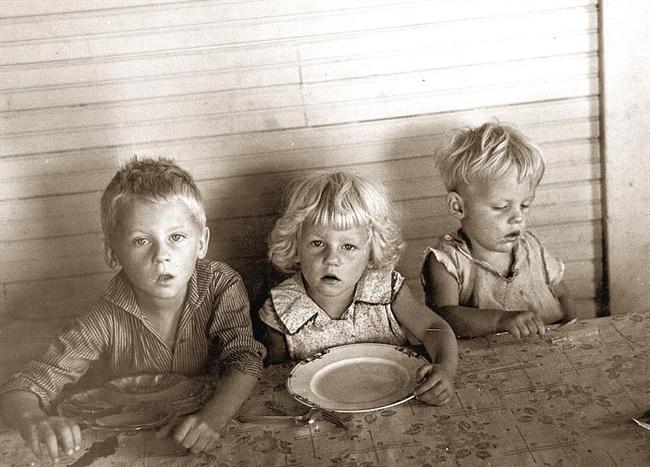
Image (b/w of three children) via blogs.dallasobserver.com.

The value of a book with a local story, but a global message

Visual

“The day that hunger is eradicated from the earth there will be the greatest spiritual explosion the world has ever known. Humanity cannot imagine the joy that will burst into the world.”

— Federico Garcia Lorca, Spanish poet

Although Casualties of the (Recession) Depression is about middle-class America, the experiences narrated in this book, along with the issue of recession, hunger, joblessness, homelessness… are experiences and issues that have no geographic boundaries. They are global. Especially in today’s world economy. Therefore, this book is applicable everywhere. As I write on the front cover: “They could be you. They could be me. They could be anyone.”

Regarding the book promotion I’ve been posting about, here’s who will find added value to buying a copy of Casualties of the (Recession) Depression:

  1. Civics and humanities students/teachers – this book would be perfect suggested reading for the class.
  2. If you are involved with your own organizations, in the fight for hunger, this book would be a good one to use as collateral material for your cause(s).
  3. If you are in government, this book would be good reference/collateral material for your political platform and/or constituency.
  4. If you are involved in your religious community and work with community outreach programs, to fight hunger and homelessness, this would be a good book to raise awareness in your congregation/religious programs.
  5. If you work in the field of hospital administration, social work or advocacy, this book would be an interesting (and valuable) reference to have.

Please feel free to share this blog with others.

Thank You!


Image (eye) via teachthought.com (photo attribute – Flickr/irargerich).

Action Against Hunger, Action Contre La Faim

how-to-start-a-business-where-i-can-make-a-difference-helping-people-21457152

“It is an eternal obligation toward the human being not to let him suffer from hunger when one has the chance of coming to his assistance.”

Simone Weil

Please Note:

The Canadian non-profit organization, Action Against Hunger/Action Contre La Faim (Canada) has been added to the list of organizations (Feeding America and The World Food Programme) that I will be sponsoring with my book promotion.

I’ve updated this site, to include a “Humanitarian Efforts” tab.  Please click on the tab on the top menu bar, and have a look…

All the best,

Heather 


Image via reachingneighbors.org.

A Child’s Perspective on World Hunger

HungryGirl

As Day Two of my Fight For Hunger book promotion kicks off, I thought I would stand back and let a child’s words put things in perspective.

This was written in 1990, by Rachel Corrie.  At the time she wrote this, she was only ten years old.  Her words show a wisdom beyond her years.

It is no surprise that Rachel grew up to be an American peace activist.  She was a member of the pro-Palestinian group,  International Solidarity Movement.  She died on March 16, 2003 at the age of twenty-three while engaging in non-violent protest (in Israel) against the Israeli army’s demolition of Palestinian homes.  Wearing a bright orange fluorescent jacket and using a megaphone, Rachel was killed by a bulldozer (whose driver  ran over her twice), while she was  standing  in front of the soon-to-be-demolished home of Palestinian friends (the family of local pharmacist, Samir Nasralla).

A foundation in her name   The Rachel Corrie Foundation for Peace and Justice continues her work.

When you read what she, at the age of ten, writes about hunger… you can only imagine what wonderful things she would have accomplished, had she lived. 

Written in 1990, by Rachel Aliene Corrie:

“I’m here for other children.

I’m here because I care.

I’m here because children everywhere are suffering and because forty thousand people die each day from hunger.

I’m here because those people are mostly children.

We have got to understand that the poor are all around us and we are ignoring them.

We have got to understand that these deaths are preventable.

We have got to understand that people in third world countries think and care and smile and cry just like us.

We have got to understand that they dream our dreams and we dream theirs.

We have got to understand that they are us. We are them.

My dream is to stop hunger by the year 2000.

My dream is to give the poor a chance.

My dream is to save the 40,000 people who die each day.

My dream can and will come true if we all look into the future and see the light that shines there.

If we ignore hunger, that light will go out.

If we all help and work together, it will grow and burn free with the potential of tomorrow.” 

225px-Rachel_corrie

April 10, 1979 – March 16, 2003

Image of Rachel via rachelcorriefoundation.org.

HFH

Book Promotion “Help Fight Hunger” Launches Today

As mentioned in yesterday’s post, I decided to launch a 3½-week Help Fight Hunger campaign – beginning today (August 14) and ending on Saturday, September 7, 2013, at 5:00 PM (EDT) —  For every $20 book purchased directly from my website, I will be donating $5 from the proceeds of each book sale to either Feeding America or The World Food Programme (the purchaser chooses).

GETTY_H_110711_DepressedDad

All too often, we waste food — sometimes without giving a second thought to whether or not the person sitting next to us may be living in a food insecure household.  An alarming number of middle-class families are now, for the first time,  experiencing what it is like to be hungry.  Their stories will break your heart. Their stories will make you want to kneel down, bow your head and say a prayer of thanks for the food on your table, for being spared the suffering, despair, and indignity of being hungry. 

Below is a vignette from my book, Casualties of the (Recession) Depression.  This is a true story.

Young and Hungry

“He sat in the coffee shop, his fingers restlessly turning the pages of his textbook.  He had been there for three and a half hours, nursing a cup of coffee.  “Thank God for free refills!” – he thought to himself.  He was trying hard to focus on the words in front of him, willing the gurgling in his empty stomach to go away.  His hands were slightly shaky.  He could smell the toasted ham and cheese sandwich that someone was eating at a nearby table.  Freshly baked bread had just come out of the oven and the lady behind the counter was stacking the loaves on the shelf.  His mouth started to water and he felt dizzy.  He willed himself to block it all out. Two more hours passed by.

It was closing time.  The coffee shop lady was rushing to close up. She grabbed all the leftover loaves of bread (two were left), bagels (all seven of them), and two donuts – and threw them roughly into a big garbage can, which she wheeled into the back room. He swallowed, throat dry.  A tear escaped from the corner of his eye. He was too proud to ask. And the coffee shop lady didn’t see, nor would she probably have given him a second thought if she had. He clenched his jaw and grimly packed his book into his bag. 

He glanced once at the lady behind the counter. Her face was blank when she looked back at him. Oblivious.  She tapped her fingers on the glass, impatient to close the lights.

He left quietly, not looking back.  He wondered whether things would get better after he graduated from college. He wasn’t so sure.”

Casualties of the (Recession) Depression – Copyright © 2013 by Heather Joan Marinos.  All Rights Reserved.

Help Fight Hunger. 

Drop by www.heatherjoanmarinos.com.

HFH


Image (of young man) via   abcradionewsonline.com (Jupiterimages/Thinkstock).

We, the People

middleclass

“I am a firm believer in the people. If given the truth, they can be depended upon to meet any national crises. The great point is to bring them the real facts.” 

— Abraham Lincoln

♦ ♦ ♦

Excerpt from Casualties of the (Recession) Depression  (last two sentences in the Conclusions):

“The bottom line is:  if there are middle-class Americans who continue to experience economic hardship, then the problem still exists. If they are not in the process of recovering, then we are not “in a recovery.”

♦ ♦ ♦


(Copyright © 2013 Heather Joan Marinos – All Rights Reserved).


Photo: iStockphoto

The Intricate Web of Book Publicity, from the Author’s Perspective

book_promo-300x199

“A new book is just like any new product, like a detergent. You have to acquaint people with it.  They have to know it’s there. You only get to be number one when the public knows about you.”
  — Jacqueline Susann 

For many authors, the mere idea of self-promotion fills them with dread, discomfort and distaste (the alliteration… not intentional).  I was of the same mindset and so, recently,  I approached a seasoned publicist and asked him how he would go about selling my book. Aghast, he said “I can’t promise book sales, only exposure.”

“E-x-p-o-s-u-r-e,”  I repeated, speaking the word slowly, trying to digest its ramifications.

Sensing my skepticism, he went on to assure me that with the right exposure (which would entail a lot of dog and pony shows on radio/TV, book events and, of course,  a social media blitz), my book will likely garner enough publicity that will eventually translate to sales.  Note: the only word I heard was “eventually.”  

In my naïveté,  I (like Kevin Costner, in the movie “Field of Dreams”) truly believed that:

“If you build it, they will come.”

I thanked the publicist for his words of wisdom and decided to develop and implement a publicity plan for myself, starting with social media.  Everyday, I learn something new.  This wealth of knowledge will serve me well in the long run and, each week, I’ll be sharing some of my insights with all of you who may have a book, a product or a service to market.  Perhaps it will be helpful. I hope so.

A few days ago, I launched a Facebook Page for my book, Casualties of the (Recession) Depression.  I’m reserving judgment on this social media avenue, since it’s only been “live” for four days.  Too soon to tell.  Please drop by and let me know what you think.  I sincerely welcome all feedback.  At the top right sidebar of this blog, you’ll see the tally of “Likes” on the FB page.  Hopefully, the number will increase exponentially.

FB_Likes

I’ll sign off for now.  I need to go and search through my pile of DVDs for Field of Dreams.  Suddenly, I feel a bit nostalgic.

More summer reading

highres_215549362

“I guess you can call me “old fashioned”. I prefer the book with the pages that you can actually turn. Sure, I may have to lick the tip of my fingers so that the pages don’t stick together when I’m enraptured in a story that I can’t wait to get to the next page. But nothing beats the sound that an actual, physical book makes when you first crack it open or the smell of new, fresh printed words on the creamy white paper of a page turner.” 

― Felicia Johnson 

Well, three weeks of poetry, fiction and non-fiction have come and gone, here at heatherfromthegrove. I hope you found the selections interesting and perhaps even added them to your own summer reading list.

Below, are just a few more for you to consider.  I’ve listed them by genre and category  (only the book title, author and thumbnail book cover). Please scroll slowly, all the way down.

Happy reading!

Cheers,

Heather

POETRY:

living-things-collected-poems-anne-porter-paperback-cover-artLiving Things: Collected Poems (2006), by Anne Porter

0978067943924_500X500

Phenomenal Women:  Four Poems Celebrating Women, by Maya Angelou

FICTION:

englishgirlflat2

The English Girl, by Daniel Silva

the-ocean-at-the-end-of-the-lane-by-neil-gaiman

The Ocean at the End of the Lane, by Neil Gaiman

enders_game_book_cover

Ender’s Game, by Orson Scott Card

NON-FICTION:

Category – Cookbooks

51GlgWLgjnL._SL500_AA300_

Greek Revival: Cooking for Life, by Patricia Moore-Pastides

51oXmEwmo6L

Jerusalem: A Cookbook, by Yotam Ottolenghi

Category – Memoir

fey_bossypants_custom-49b9189561f8ff85fbfaa7c243df72ef282e54b3-s6-c30

Bossypants, by Tina Fey

9780307731715_p0_v1_s260x420

To Heaven and Back: A Doctor’s Extraordinary Account of Her Death, Heaven, Angels, and Life Again: A True Story, by Mary C. Neal, M.D.

Category – History > North America > Canada

51ssUUIShcL._SY300_

Along the Shore: Rediscovering Toronto’s Waterfront Heritage, by  M. Jane Fairburn

Category – Mainstream Political and Economic Commentary  > United States

9780802194619_p0_v1_s260x420

Time to Start Thinking: America in the Age of Descent, by Edward Luce

9780393088694_custom-6e6b34e78bbf222100052cd95a5e63cc39ad1c5a-s6-c30
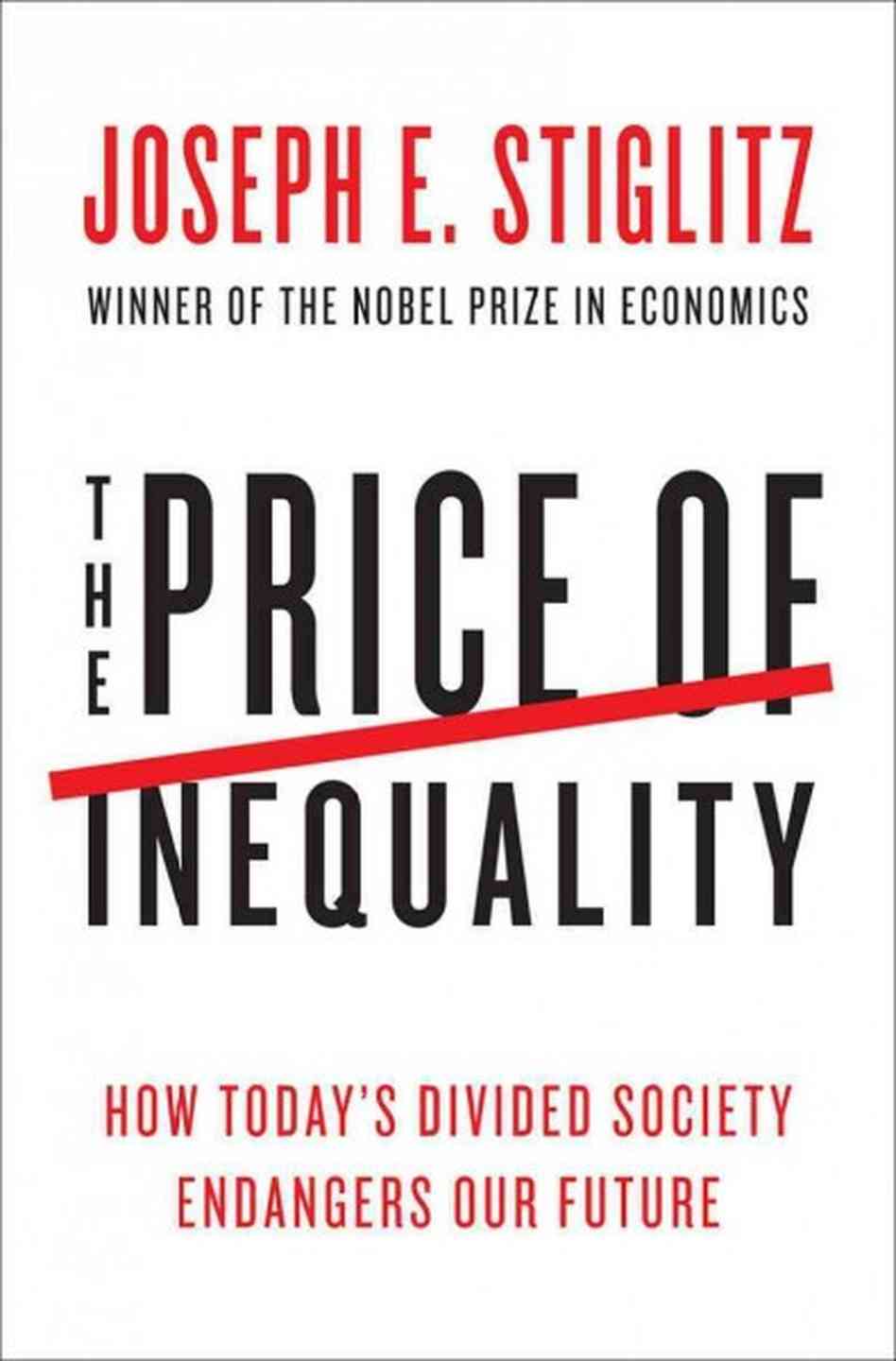
The Price of Inequality: How Today’s Divided Society Endangers Our Future, by Joseph E. Stiglitz

COTRD_Perfect
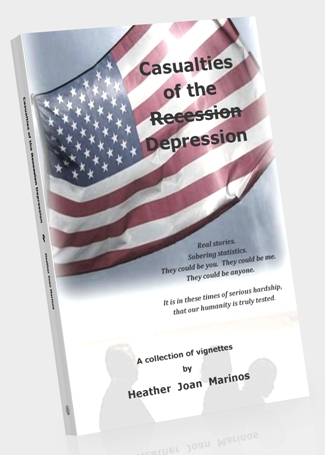
Casualties of the (Recession) Depression, by Heather Joan Marinos

Category – Mainstream Economic Commentary  > International

BreakoutNations

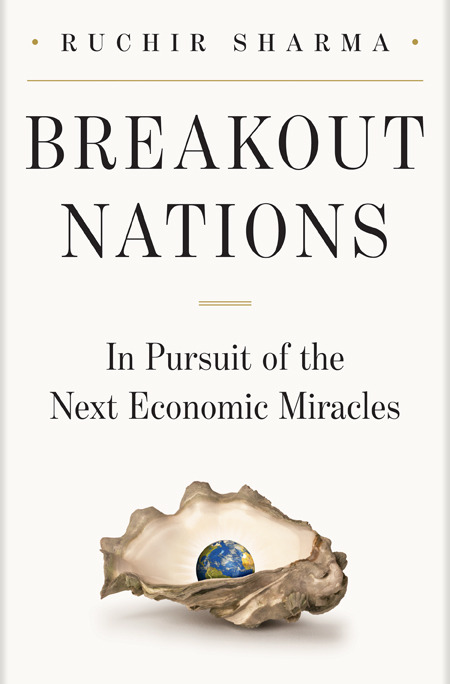
BreakoutNations: In Pursuit of the Next Economic Miracles, by Ruchir Sharma

Image (at the very top) via meetup.com.

Think first, write later

5385287084_2702462500

 “Poirot,” I said. “I have been thinking.”
“An admirable exercise my friend. Continue it.”
 
― Agatha ChristiePeril at End House

Have you ever responded to an offensive or distressing email without thinking first?  “WHAT?!” you say to yourself, as your fingers agitatedly skim over the keys and, without a second thought…Send. Moments later, you could kick yourself for having been so impulsive.

This has surely happened to all of us, at one time or another.

Or perhaps, as a student, you were seated for your mid-term essay exam and you skimmed the questions quickly, then proceeded to write feverishly because the clock was ticking and you wanted to make sure that you had enough time to answer all the questions. It was only after you handed in the test, that you realized you missed the second part of the question because you didn’t take the time read carefully and organize your thoughts.

Mea culpa, mea culpa.

In the writing world, however, the process varies from writer to writer.  Not everyone likes to adhere to the “think first, write later” principle. Many writers just sit down at the computer (or, if they’re traditionalists, with pen and paper), and write. Then they edit. Stream of consciousness writing works for many and these are the writers who, when at home, probably don’t write shopping lists or who prefer not to structure their time rigidly. They are the free thinkers.  Write first, think while writing, and then edit later.

However, there are just as many writers (myself included) who prefer to organize their thoughts, prior to writing them down.  They do this by notes, index cards, outlines and also by just thinking (or daydreaming) it out in their minds. 

I am a great proponent of outlines.  My book writing process always commences with quiet contemplation… to think carefully about what I want to say and why, who will my readership be and how will I engage their attention. From there, I craft an initial Table of Contents which serves as my starting point and basic outline.  I then begin the initial research process (when research is required for the book) and the results of my initial research prompts me to write a more detailed outline which helps dictate the overall flow of the book. At that point. I move to a more advanced stage of research, finetune the outline further and then I am ready to sit down and write. I prefer to think first, write later. I carry a small  Moleskine reporter’s notebook with me wherever I go, to jot down thoughts. The challenge is being able to read my own messy handwriting later!

There really is no right or wrong process. Ultimately, the objective is to write.  How you get to that point is subject to whatever works for you.

So, think on the fly or  think in advance, but just make sure to carefully review your writing first before pressing that “Send” button!


Image via everydaygyaan.com.