heatherfromthegrove’s New Year’s Revelation No 5 of 7: Beyond the olive branch

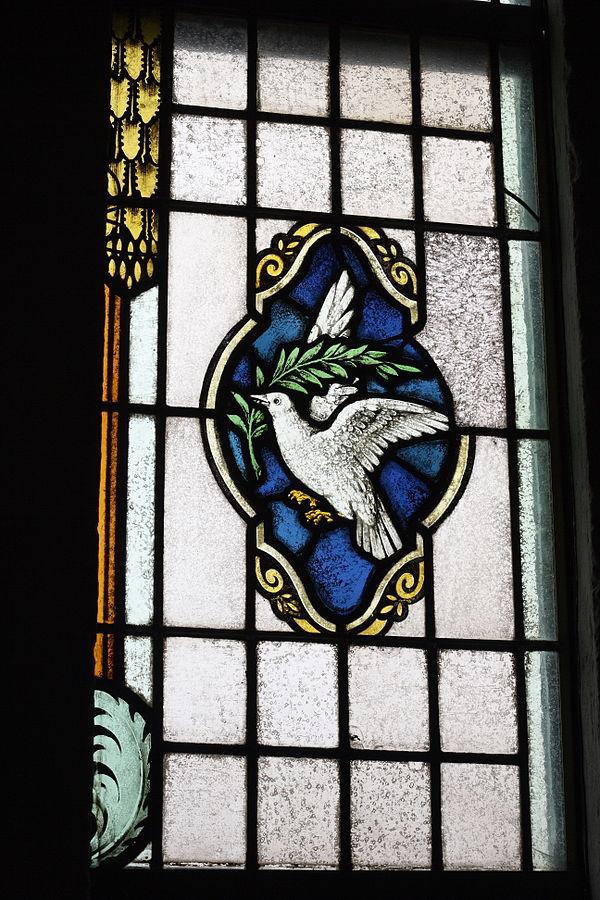
Kruft_St._Dionysius_und_Sebastian_2212

“Family quarrels are bitter things. They don’t go according to any rules. They’re not like aches or wounds, they’re more like splits in the skin that won’t heal because there’s not enough material.”    

F. Scott Fitzgerald

Why can’t we all just get along?

People have been warring since the beginning of time. Tribes. Religious sects. Nations.

And, yes, families.

As I said a few days back, “It all begins and ends with Family.” How can we expect nations to coexist in peace and harmony when many of us can’t even manage to keep our families intact?

There are so many stressors that lead to family conflict: financial problems, joblessness, addiction, illness, death, inheritance and even something as basic as incompatible and/or strong personalities. It is healthy and normal to argue, debate and occasionally fight.  It is unhealthy and hateful to harm others – physically, emotionally, in their business and their reputation within society.

Problems rarely, if ever, solve themselves. Resolution (to problems) usually requires compromise, which inevitably results in loss (i.e. giving something up, to keep the peace).  If  there is love, respect and a willingness to work through the conflict – because of a deep-seated desire to keep the family together – then there is hope.  Sometimes an outside mediator, such as a therapist, counsellor or spiritual guide (i.e. priest/minister/rabbi/imam) may be needed to assist with the process of resolution and reconciliation.  Hopefully, the conflict gets resolved… without too much collateral damage.

“Problems are like washing machines. They twist us, spin us and knock us around but in the end we come out cleaner, brighter and better than before.”    

– Unknown

But what if we can’t all just get along? Not now. Not ever. It happens all the time.  Parents divorce. Children leave home for good, pledging never to return. Siblings each go their own way, losing all communication with each other. Family members become estranged. It’s sad, even tragic, when that happens.

I don’t have any answers. What I do know for sure is that family is fundamental to our well-being.  That said, for family to coexist as a united and loving unit… each and every family member must want it to be so.  Some people need time, space and distance to gain perspective and eventually reunite.

Alas, there are some families so fractured that they are beyond the olive branch.

And everyone moves on – each going his/her separate way.

Sometimes it’s for the better.

“Sometimes problems don’t require a solution to solve them; instead they require maturity to outgrow them.”    

Steve Maraboli

Some Book Recommendations:

Peace Catalysts: Resolving Conflict in Our Families, Organizations and Communitiesby Rick Love

41h-ESc1zoL._SX331_BO1,204,203,200_

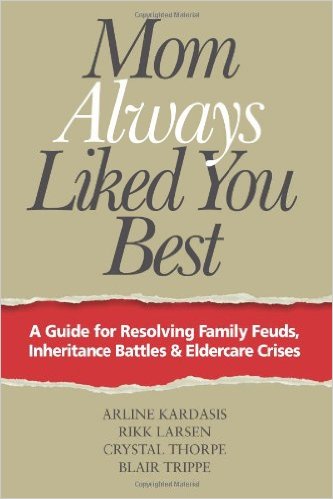
Mom Always Liked You Best: A Guide for Resolving Family Feuds, Inheritance Battles & Eldercare Crises Arline Kardasis and Rikk Larsen

41bPiIkRtQL._SX331_BO1,204,203,200_


*Note: The title of today’s Blog – “Beyond the olive branch” – is the title of Volume 4 in my Baby Boomer Series™ of books (in progress

Photo via Wikimedia Commons


heatherfromthegrove’s New Year’s Revelation No 4 of 7: Surviving that undertow called Grief

4534960280_3f29d54641_o

“The deep pain that is felt at the death of every friendly soul arises from the feeling that there is in every individual something which is inexpressible, peculiar to him alone, and is, therefore, absolutely and irretrievably lost.”

Arthur Schopenhauer

Grief. It is an intense emotion and a very personal experience. We all grieve differently. Russian writer Leo Tolstoy, one of the greatest authors of all time (remember War and Peace?), once wrote that “Only people who are capable of loving strongly can also suffer great sorrow.”  I know a very few people – family and friends alike – who manage to wade through their grief quickly and in a matter of fact manner.  Many others, like myself, grieve deeply and over a long period of time.  There is no right or wrong way to grieve… although some people do experience a level of grief that spirals them into a deep depression that lasts years, decades and, in some extreme cases, a lifetime.

“There is a sacredness in tears. They are not the mark of weakness, but of power. They speak more eloquently than ten thousand tongues. They are the messengers of overwhelming grief, of deep contrition, and of unspeakable love.”

Washington Irving

In my life, Grief has been a frequent visitor. We have a familiar routine, Grief and I. Grief sweeps into my spirit, like a Category 4 Hurricane.  I allow myself to remain in the eye of the storm – daring it to make me collapse.  Somehow, I always manage to survive – still standing, although somewhat bruised and battered.  As American author Anne Lamott writes: “It’s like having a broken leg that never heals perfectly—that still hurts when the weather gets cold, but you learn to dance with the limp.”

It never goes away. It is always with me, to some degree.  A memory, a smell, a song…  can evoke joy and sorrow and then joy again – in one full sweep.  This is why I refer to Grief as an “undertow” –  a flow or current of water beneath the ocean waves near the shore that is powerful enough to suddenly lift you and immerse you in the next incoming wave.

“Grief, when it comes, is nothing like we expect it to be. … Grief has no distance. Grief comes in waves, paroxysms, sudden apprehensions that weaken the knees and blind the eyes and obliterate the dailiness of life.”

Joan Didion, The Year of Magical Thinking

I prefer to deal with grief privately – hugs from well-meaning people are not encouraged as I don’t like to be touched when I’m in the throes of grief.  For me, it’s a solitary experience.

According to psychologists and grief counselors, there are five stages of Grief: Denial/numbness/shock, Bargaining, Depression/sorrow, Anger and Acceptance.  However, as much as we want to give everything a label and a chronological order… the fact  of the matter is that one goes back and forth (a number of times) between these stages.  I’ve spent a lot of time visiting and revisiting the stages of bargaining (i.e. what could have been done to prevent the loss), sorrow and anger. And  as for the final stage, Acceptance, well … it is sometimes a bitter pill to swallow, but once you do, it does bring some sense of peace. Not closure. Just peace. And that’s what you need to survive the undertow.

Some Book Recommendations:

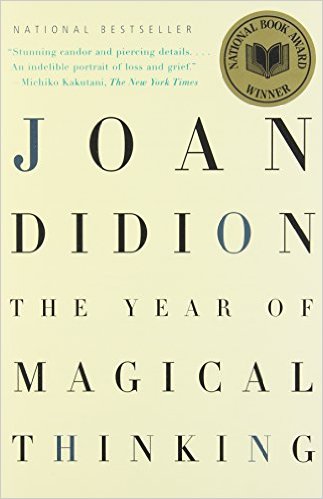
The Year of Magical Thinking by Joan Didion

41fAdMQS9eL._SX321_BO1,204,203,200_

Tear Soup: A Recipe for Healing After Lossby Pat Schwiebert

51TOTmQ+diL._SX388_BO1,204,203,200_


*Note:  The title of this Blog, “Surviving that undertow called Grief” is the title of Volume 3 in my Baby Boomer Series™ of books (in progress)

Photo via flickr.com


heatherfromthegrove’s New Year’s Revelation No 3 of 7: Animals are Divine creatures… be kind to them

3517945550_5999d793fc_o

“For the animal shall not be measured by man. In a world older and more complete than ours, they move finished and complete, gifted with extensions of the senses we have lost or never attained, living by voices we shall never hear. They are not brethren; they are not underlings; they are other nations, caught with ourselves in the net of life and time, fellow prisoners of the splendour and travail of the Earth”

Henry Beston

I have often said that if I had to choose to be in the company of humans or in the company of animals, I’d choose the latter.

Animals are pure, beautiful and Divine creatures. Wild animals fill me with awe. Domestic animals, like (for example) dogs and cats, are trusting, loyal and love unconditionally. When humans betray their trust… by mistreating or ignoring them, this – in my view – is a heinous crime.

I condemn the act of hunting and killing animals for sport. It is, quite simply, repugnant.

In my most bleak and darkest moments, my dog and cats have raised my spirits and given me solace. It is an honour and a privilege to be their caretaker.

Over the years, my husband and I have saved and provided a haven for frogs, lizards, birds, quails, squirrels, possums, cats and dogs. We have eight indoor cats (four were born in our home and we hand-raised one that was abandoned by her mother at only five hours old). We also feed all the stray and feral cats in our immediate neighborhood – seven of them (at last count). Our beloved 14½-year-old Black Lab (“Bacchus“) died four months ago and we are still grieving. Even our cats are mourning his loss.

Animals… ALL animals… need our protection and respect.

If you are an animal lover/activist, then I am preaching to the converted.

However, if you are unaccustomed to or uncomfortable with animals, then I urge you to befriend a dog or cat. I am certain that you will be smitten after the first encounter.  But, if you’re not, simply remember to extend kindness to any animal that may cross your path.

They are the innocents. They have no voices but their eyes speak volumes.

They cannot advocate for themselves. So, it is up to us to do that for them.

After all, the very best of humanity is the practice of human kindness and compassion. It should, it MUST be extended to our animal brethren.

“Not to hurt our humble brethren (the animals) is our first duty to them, but to stop there is not enough. We have a higher mission–to be of service to them whenever they require it… If you have men who will exclude any of God’s creatures from the shelter of compassion and pity, you will have men who will deal likewise with their fellow men.”

Saint Francis of Assisi

Movie Recommendation:

Cry of the Innocent: The Voices That Can’t Speak” (written, directed and produced by Katherine Lowson)

Some Book Recommendations:

For the Prevention of Cruelty: The History and Legacy of Animal Rights Activism in the United States – by Diane L. Beers

51hFtuJ8UvL._SX331_BO1,204,203,200_

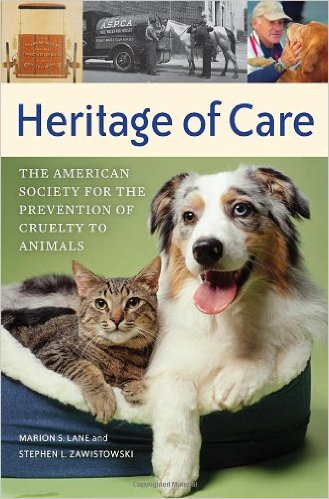
Heritage of Care: The American Society for the Prevention of Cruelty to Animals – by Marion S Lane and Stephen L. Zawistowski Ph.D

512goZwcyUL._SX327_BO1,204,203,200_


Photo via flickr.com

heatherfromthegrove’s New Year’s Revelation No 2 of 7: Keep it simple

1345190119_5596087366_o

“As you simplify your life, the laws of the universe will be simpler; solitude will not be solitude, poverty will not be poverty, nor weakness weakness.”

Henry David Thoreau

swirly2This year, the inspiration for my New Year’s “Revelations” stem from some of the experiences, life events and lessons learned in the past year.

For me, it was – as Charles Dickens wrote (in Tale of Two Cities) – “the best of times, it was the worst of times…. it was the season of Light, it was the season of Darkness, it was the spring of hope, it was the winter of despair…”

And with each year comes more wisdom.

I hope that some or all of these revelations resonate with you.

swirly2

We live in a complex world and we , more often than not, tend to overcomplicate our lives.

Over the years, I’ve learned – both by choice and by necessity – to shed the layers of excess…. from the superficial to the significant.

By superficial, I mean (for example)… how many pairs of shoes does a woman really need?

By significant, I mean (for example)… do you need to surround yourself with a large group of so-called family, friends and acquaintances who may or may not be well-meaning and authentic versus maintaining ties with the people who have a shared history and/or heritage and who like/love you… no matter what?

Maybe it’s a function of age and acquired wisdom, but I can say that I have significantly simplified my life and I feel lighter (in the spiritual sense) as a result.

We reach a point in our lives when we have to face some harsh truths – about ourselves, about what motivates us and why, and about how we want to live/conduct the rest of our lives.

When we shed the unnecessary “onion layers” of our lives, we’re left with the essentials.

It makes life cleaner, neater, and more focused.

Personally, I feel much more at peace and happy with myself now than at any other point in my life. Simplicity, in my view, equals Freedom.

So, as this New Year commences, I urge you to try to simplify every aspect of your life… as much as you can. Think of it as a spiritual diet.  Just make sure you stick with it.  You’ll be happy you did.

“Beauty of style and harmony and grace and good rhythm depend on simplicity.”

Plato

Some Book Recommendations:

Freedom of Simplicity: Finding Harmony in a Complex Worldby Richard J. Foster

41oCGSUbtwL._SX329_BO1,204,203,200_

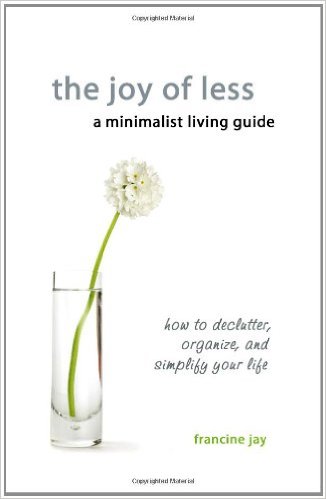
The Joy of Less, A Minimalist Living Guide: How to Declutter, Organize, and Simplify Your Life by Francine Jay

41dSMjvTbUL._SX324_BO1,204,203,200_


Photo via flickr.com


heatherfromthegrove’s New Year’s Revelation No 1 of 7: It all begins and ends with Family

6962-friends-family-sea-front

“The family is the nucleus of civilization.”

Will Durant

swirly2

Happy New Year everyone!

This year, the inspiration for my New Year’s “Revelations” stem from some of the experiences, life events and lessons learned in the past year.

For me, it was – as Charles Dickens wrote (in A Tale of Two Cities) – “the best of times, it was the worst of times…. it was the season of Light, it was the season of Darkness, it was the spring of hope, it was the winter of despair…”

And with each year comes more wisdom.

I hope that some or all of these revelations resonate with you.

swirly2

It all begins and ends with Family. It forms the core of our belief system and is the springboard from which we go on to conduct the rest of our lives.  Family supersedes nationalistic ideals, political aspirations and even religious dogma.  Family. Is. Everything. Well, at least it should be.

In a Utopian world, the family should be a “safe harbor” where we are loved, cherished, encouraged, and understood. It is an entity that should be devoid of judgment, jealousy, gossip, or hatred and replete with loyalty, familiarity – a strong sense of shared history and kinship. It is a clanship which fosters collaboration over divisiveness. In a Utopian world.

There are some who are blessed with an idyllic family.

There are others whose families do not withstand the passage of time and who crack or even fall apart when tested by hardship or tragedy.

Sadly, there are still more who are born into dysfunctional, damaged, and abusive families.

And then there are those who are left adrift – with no family at all.

“There is no such thing as a “broken family.” Family is family, and is not determined by marriage certificates, divorce papers, and adoption documents. Families are made in the heart. The only time family becomes null is when those ties in the heart are cut. If you cut those ties, those people are not your family. If you make those ties, those people are your family. And if you hate those ties, those people will still be your family because whatever you hate will always be with you.”

– C. JoyBell C.

My husband and I have built, for over three decades, that safe harbor we call our intimate family. It’s just the two of us… and all the beloved four-legged creatures who inhabit our house. This “safe harbor” has withstood the passage of time, despite many storms and even some typhoons. We are weather-beaten but happy sailors in this journey that is our life. Unfortunately, we have witnessed a few wreckages along the way.

“There is no greater blessing than a family hand that lifts you from a fall; but there is not lower curse than a family hand that strikes you when you’re down.”    

– Wes Fessler

And, as we all know, blood does not necessarily form a family bond. Families can be born from the heart… by choice. However the connection is formed, the important thing is to understand and maintain the true notion of Family.

We may not live in a Utopian world… but we can (and should) certainly strive to get there.

“In every conceivable manner, the family is link to our past, bridge to our future.”

Alex Haley

Some Book Recommendations:

Family Values: The Ethics of Parent-Child Relationshipsby Harry Brighouse & Adam Swift

51qgm9mPpJL._SX329_BO1,204,203,200_
Why Can’t We Get Along: Healing Adult Sibling Relationshipsby Peter Goldenthal

41prHeMHHYL._SX331_BO1,204,203,200_

Photo via pdpics.com


Books That Make You Think

read-369040_1280

If you are in the mood to read a book (or two) that will make you think, give you some new perspective, and maybe even answer some of those existential questions that have been lurking in the corners of your mind…. then you may want to get yourself a copy of any one (or all) of these seven books, listed below.

Caveat:
If you are looking for a light summer read, these will not fit the bill.
They are not fiction. They are not self-help books.
They are, however, very interesting, thought-provoking works of non-fiction.
The Road to Character
by David Brooks

Brooks

heatherfromthegrove’s Rating:

5

About the Book:
“In The Road to Character, David Brooks focuses on the deeper values that should inform our lives. Responding to what he calls the culture of the Big Me, which emphasizes external success, Brooks challenges us, and himself, to rebalance the scales between our “résumé virtues” — achieving wealth, fame, and status — and our “eulogy virtues,” those that exist at the core of our being: kindness, bravery, honesty, or faithfulness, focusing on what kind of relationships we have formed.”
About the Author:
David Brooks is a bestselling author and an op-ed columnist for The New York Times.  He appears regularly on “PBS NewsHour,” NPR’s “All Things Considered” and NBC’s “Meet the Press.” He teaches at Yale University and is a member of the American Academy of Arts and Sciences.

The Theft of Memory
Losing My Father. One Day at a Time.
by Jonathan Kozol

Kozol

heatherfromthegrove’s Rating: 

5

About the Book:
“Jonathan Kozol tells the story of his father’s life and work as a nationally noted specialist in disorders of the brain and his astonishing ability, at the onset of Alzheimer’s disease, to explain the causes of his sickness and then to narrate, step-by-step, his slow descent into dementia.”
About the Author:
Jonathan Kozol is an American writer, educator and activist – best known for his books on public education and his fifty years of work among our nation’s poorest and most vulnerable children.

Them
 Adventures with Extremists
by Jon Ronson

Ronson

heatherfromthegrove’s Rating:

4 stars

About the Book:
“As a journalist and a Jew, Ronson was often considered one of “Them” but he had no idea if their meetings actually took place. Was he just not invited?  Them takes us across three continents and into the secret room…  Ronson’s investigations, by turns creepy and comical, reveal some alarming things about the looking-glass world of “us” and “them.”  Them is a deep and fascinating look at the lives and minds of extremists.”
About the Author:
Welsh journalist, documentary filmmaker and bestselling author of  The Psychopath Test: A Journey Through the Madness Industry and So You’ve Been Publicly Shamed.

Why Does the World Exist?
An Existential Detective Story
by Jim Holt

Holt

heatherfromthegrove’s Rating:

5

About the Book:
“This runaway bestseller, which has captured the imagination of critics and the public alike, traces our latest efforts to grasp the origins of the universe. Holt adopts the role of cosmological detective, traveling the globe to interview a host of celebrated scientists, philosophers, and writers, “testing the contentions of one against the theories of the other” (Jeremy Bernstein, Wall Street Journal).”
About the Author:
Jim Holt is an American philosopher, author and essayist. He has contributed to The New York Times, The New York Times Magazine, The New York Review of Books, The New Yorker, The American Scholar, and Slate.

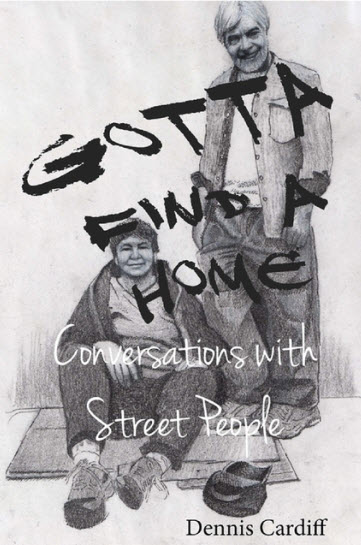
Gotta Find a Home
Conversations with Street People
Book 1 of 4
by Dennis Cardiff

Cardiff

heatherfromthegrove’s Rating:

5

About the Book:
“Dennis Cardiff has been involved with street people since 2010, when he began to reach out, on his own, to some of the people without homes who he encountered in his daily life. In his new book, he documents conversations he’s had with them over the past 4 years and, in the process, gives those who are often robbed of their humanity a human face. Written in diary form by month, and including some of Cardiff’s own poetry, the author chronicles the lives of people who are often ignored, feared or reviled.”
About the Author:
Dennis Cardiff is a Canadian writer, author, poet and artist. 
Nickel and Dimed 
On (Not) Getting By in America
by Barbara Ehrenreich

Ehrenreich

heatherfromthegrove’s Rating:

4.5 stars

About the Book:
“Millions of Americans work full time, year round, for poverty-level wages. In 1998, Barbara Ehrenreich decided to join them. She was inspired in part by the rhetoric surrounding welfare reform, which promised that a job — any job — can be the ticket to a better life. But how does anyone survive, let alone prosper, on $6 an hour? To find out, Ehrenreich left her home, took the cheapest lodgings she could find, and accepted whatever jobs she was offered. Moving from Florida to Maine to Minnesota, she worked as a waitress, a hotel maid, a cleaning woman, a nursing-home aide, and a Wal-Mart sales clerk. She lived in trailer parks and crumbling residential motels. Very quickly, she discovered that no job is truly “unskilled,” that even the lowliest occupations require exhausting mental and muscular effort. She also learned that one job is not enough; you need at least two if you want to live indoors.”
About the Author:
Barbara Ehrenreich is an American author and political activist.
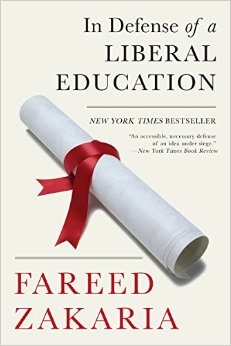
In Defense of a Liberal Education
by Fareed Zakaria

Zakaria

heatherfromthegrove’s Rating:

4.5 stars

About the Book:
” Fareed Zakaria argues for a renewed commitment to the world’s most valuable educational tradition. Zakaria eloquently expounds on the virtues of a liberal arts education – how to write clearly, how to express yourself convincingly, and how to think analytically. He turns our leaders’ vocational argument on its head. American routine manufacturing jobs continue to get automated or outsourced, and specific vocational knowledge is often outdated within a few years. Engineering is a great profession, but key value-added skills you will also need are creativity, lateral thinking, design, communication, storytelling, and, more than anything, the ability to continually learn and enjoy learning –precisely the gifts of a liberal education.”
About the Author:
Fareed Zakaria is the Emmy-nominated host of CNN’s Fareed Zakaria GPS, contributing editor for The Atlantic, a columnist for the Washington Post, and best-selling author of The Post-American World and The Future of Freedom.

heatherfromthegrove’s New Year’s Revelation No 2 of 7: “Learn about the world around you”

blueborder

This year, my New Year’s “Revelations” are based on some of the witticisms and words of wisdom that my mother and father imparted to me.

When I was young, I used to roll my eyes and shake my head at them – not really heeding their words.

Or so I thought.

They’ve since passed, and not a day goes by that I don’t miss them.

Most importantly, their words – often colourful and humorous, but always spot-on – resonate deeply with me today.

I now share them with you.

blueborder


My father used to say:

“If you don’t want to read or learn about what’s going on around the world – in other countries, in other cultures – then, you’re an idiot!”

Those were his exact, emphatic words and they were directed at me. The year was 1974. He was reprimanding me for not showing an interest in an international news story that he was reading out loud to us.  Amazingly, I remember that the article was about Russian novelist/historian and Nobel Prize winner Aleksandr Solzhenitsyn being deported from the Soviet Union to Frankfurt (Germany) and stripped of his Soviet Citizenship. Solzhenitsyn had spent 11 years in exile, at a Soviet labor camp for criticizing Stalin. In 1973, he wrote The Gulalg Archipelago (Arkhipelag Gulag) – about the Soviet prison/labor camp system under Stalin. The manuscript, which started to appear in installments in Paris, was seized by the KGB in the Soviet Union.

These were some of the stories that my father tried to engage us with at the breakfast table and in the evenings, after dinner. He would get so frustrated with me when I did not show interest.

But, as the saying goes, the apple doesn’t fall far from the tree.

Ironically, I went on to earn undergraduate and graduate degrees in political science and history.  I write books that focus on socio-economic issues affecting everyday people, and I tell their stories by placing them in their political, historical and cultural context.

I feel privileged to have had such an intense, intelligent and well-read father. How I wish that he were alive today. Oh, what wonderful, spirited discussions and debates we would have!

I can’t emphasize enough (as he did before me) how important it is for us to learn about (and appreciate) the wonderful diversity and nuances of our world community. We are all inter-connected, to some degree.

With knowledge, we gain understanding.

With understanding, we become enlightened, compassionate human beings.

With compassion, we can help each other and we can effect change – positive change.

“The world is a book and those who do not travel read only one page.” 
― Augustine of Hippo

Image via Pixabay.com.

The Year of the Cat

Ollie

“And how do you know that you’re mad? “To begin with,” said the Cat, “a dog’s not mad. You grant that?” I suppose so, said Alice. “Well then,” the Cat went on, “you see a dog growls when it’s angry, and wags it’s tail when it’s pleased. Now I growl when I’m pleased, and wag my tail when I’m angry. Therefore I’m mad.”
― Lewis CarrollAlice’s Adventures in Wonderland & Through the Looking-Glass

Madness. Writers. Cats. They are not necessarily mutually exclusive. In many instances, they are intertwined in an enigmatic association of sorts.

I am fascinated by my cats – all eight of them.

I also have a beautiful dog, who happens to be equally bemused by all these feline creatures.

He has no choice really, since he is outnumbered.

As I juggle between multiple book projects and a few intermittent life challenges that test my crisis management skills, these cats are my constant. My muses. Their serenity and poise help me to keep things in perspective. They bring me joy. And I do not take joy for granted. Not for one moment.

“I love cats because I enjoy my home; and little by little, they become its visible soul.”
― Jean Cocteau

It is not uncommon for writers to have an affinity for cats. Ernest Hemingway, Neil Gaiman, Jean Cocteau, Jean Paul Sartre, Stephen King… just to mention a few.

This marvelous photo of writer/philosopher/political activist Jean Paul Sartre and his existential cat epitomizes this writer’s obsession.

 z32

I’ll leave you with a song that I used to listen to ad nauseam…. back in the mid 1970’s. I just listened to it the other day and, man, did it bring back a flood of memories!

The Year of the Cat

(released in 1976 by singer-songwriter Al Stewart)

This is the long, live version performed in 1979


Top image: photo credit by Heather Joan Marinos (Copyright © 2014 by Heather Joan Marinos. All rights reserved).

Bottom image: photo via buzzfeed.com.

Writer’s Motto: Press On

“Nothing in this world can take the place of persistence.

Talent will not; nothing is more common than unsuccessful people with talent.

Genius will not; unrewarded genius is almost a proverb.

Education will not; the world is full of educated derelicts.

Persistence and determination alone are omnipotent. The slogan ‘press on’ has solved and always will solve the problems of the human race.”

Calvin Coolidge

And so, it’s time for me to press on…

… the manuscript awaits.