New Year’s Revelation #4 of 7: Take the Scenic Route Always

Ever stop and wonder whether it’s really, really necessary to rush about (almost manically, sometimes) each day – from point A to point B, zig-zagging through traffic to make that green light (which will inevitably turn red, just as you reach it, no matter how fast you drive), or chauffeuring the teenage kids (some of whom feel that they are entitled to parental limo service) to all their activities and social events?  

Do we often impose imaginary deadlines or unreasonable time limitations on ourselves?  Are we biting off more than we can chew? Or, more to the point, are  we over-scheduling ourselves and perhaps need a refresher course on how to manage our time more reasonably?

Most importantly, are we cheating ourselves of the simple, serene moments (so very necessary for the nourishment of mind, soul and body) — like stopping to marvel at someone’s beautiful front garden, slowing down the car to gaze at a breathtaking sunset, stepping out to frolic in the snow (we’re never too old for that!), or taking a nice evening stroll just after dinner. Let the teenagers carpool with one of their friend’s parents or – here’s a novel idea – tell them to take the bus! We did . Back in the day. And, incidentally,  we didn’t have cell phones back then, to call anyone in case of emergency. 

Again, I digress.

Here’s another heatherfromthegrove anecdote.  My husband rides a Harley (Fat Boy  — the motorcycle, that is, not my husband!).  I happily ride on the back of the Harley.  We both love it.  Riding, with the wind in our faces, well … the word that comes to mind is Freedom.  When we ride, we feel free.  It is the most exhilarating experience.  Yet, so many times, we’ve had to go places and he would ask me (every single time):  “Do you want to take the scenic route, or go the fast way?”  Often – too often – I answered  “The fast way.”  Why?  I felt some irrational need to hurry.  I was cheating myself.  My husband – a very, very sage man – knew that I was choosing the wrong path.  He would always ask the question twice – the second time, he’d say “Are you sure you don’t want to take the scenic route?” The implication of the second question went right over my head.  I was blinded by my own imaginary timing. 

It should be noted that whenever we took the scenic route, we would ride with grins from ear-to-ear.  Ahhhhhh …. the sights, smells, sounds…. simply delightful!  Then we’d stop for a bite to eat and enjoy each other’s company.  We took our time.  And,  the amazing thing was that we somehow managed to do all the things we had set out to do that day.  Imagine that! 

Fyi … now, we take the scenic route – every time.  Life is too short for compromises.

So, if you ever have to choose between taking the fastest route or the scenic route….. always, ALWAYS take the scenic route. 

You won’t be disappointed.

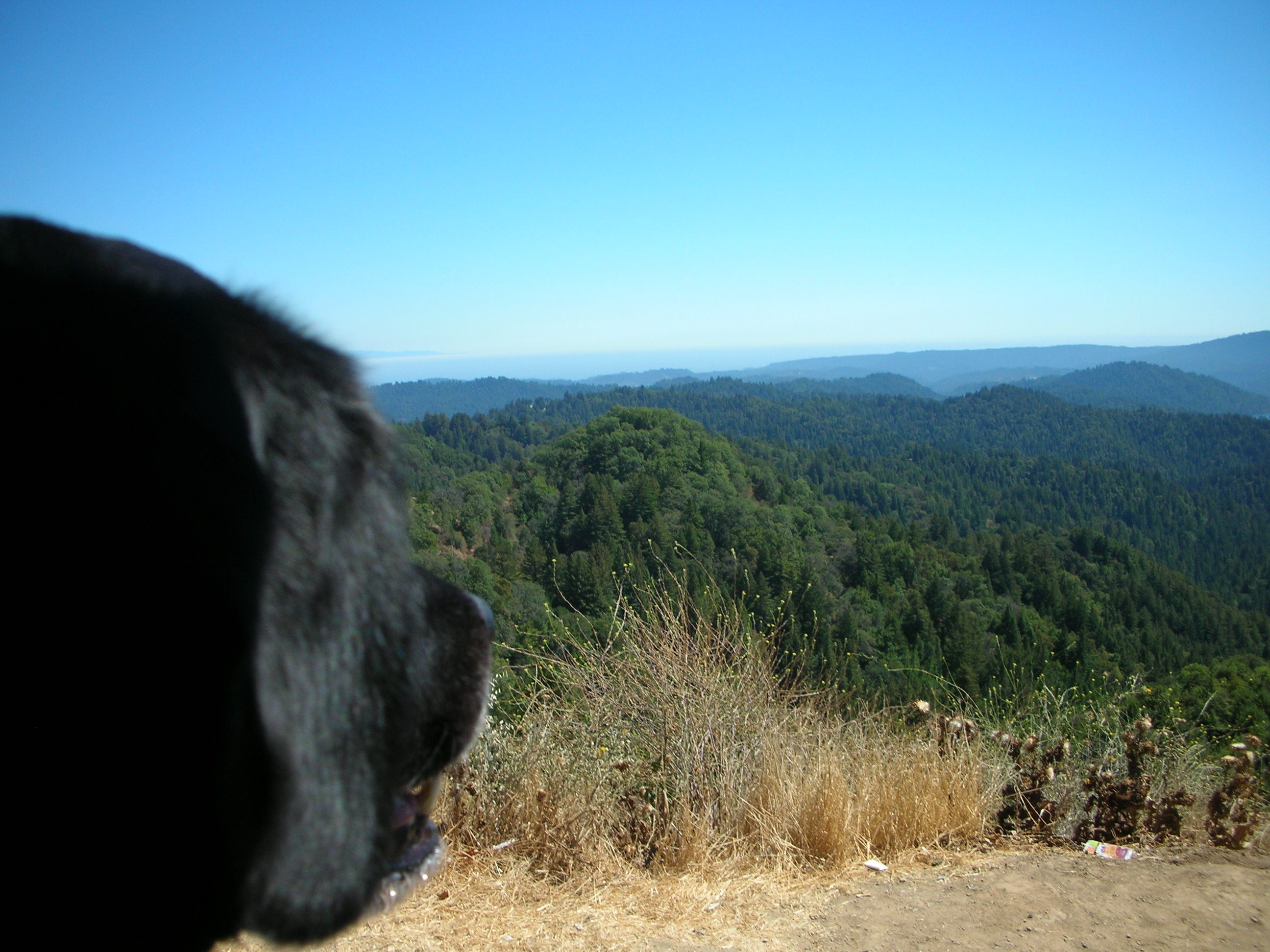
It appears that animals are often times more spiritually enlightened than we humans.  Below, Bacchus (my “son”) takes a moment to gaze at the scenery (Bear Creek Canyon in the Santa Cruz Mountains – Northern California).
Santa, a Greek? The Feast Day of St. Nikolaos – a Day of Celebration … of Freedom!

Today, December 6th, is the Feast Day of St. Nikolaos  − or Nicholas, Nick, Ἅγιος Νικόλαος (Greek for Saint Nikolaos), and also known as Sinterklaas (Dutch for Santa Claus).

Yes, Santa Claus was (Oops! I meant, is!) Greek.

After all, didn’t everything and everyone originate from the Greeks?  At least that’s what my family (the Greek side, by marriage) keep telling me … didn’t the father in the movie, My Big Fat Greek Wedding, say that the Greeks invented Windex?  But, not all of it is said tongue-in-cheek.  Such as:

Medical terminology …  derived from Greek.

Catholicism …  Greek roots (I’ve had some heated discussions on that one – being the Roman Catholic that I am!).

Geometry …  Greek.

Yes, this ancient, brilliant and culturally rich civilization is the birthplace  of many great things and people, not the least of which is our beloved Santa Claus.

Born (≈ 270 A.D.) in  the Greco-Roman town of Myra (in Lycia <of Asia Minor> – now part of modern-day Turkey), Nikolaos was a very pious man.  He was also extremely practical, generous and kind. The youngest man ever to become a priest (and later, a bishop), Nikolaos performed many kind deeds, such as throwing bags of gold coins down chimneys to aid the poor and providing dowries for women to save them from lives of lechery. He is often depicted (in art) as wearing dramatic red robes and holding three gold coins. His “Name Day” is the anniversary of his death (December 6) and this day is still a gift-giving date in many countries, although December 25th has become the de facto date for gift exchange within the Christian faith.

St. Nikolaos had a reputation for secret gift-giving and is considered the patron saint of sailors and children, butchers, bakers, and judges. He is also the patron saint of Greece.

What really made him so special? He was a generous soul whose generosity was born of an understanding and empathy for those in pain (physically, emotionally and spiritually). He was persecuted and imprisoned for his faith, which made him all the more compassionate and an ardent supporter for people who were battling a loss of freedom.

Freedom.  We live for it. We fight for it. And, we die for it.

Anthony Quinn, as Alexis Zorba, in the film (Zorba the Greek), directed by  Michael Cacoyannis.

When that brilliant writer from Crete, Nikos Kazantzakis, wrote his novel, Zorba the Greek, he depicted “freedom”  (Greek-style)  as:

Alexis Zorba: Damn it boss, I like you too much not to say it. You’ve got everything except one thing: madness! A man needs a little madness, or else…
Basil: Or else?
Alexis Zorba: …he never dares cut the rope and be free.

Which brings me to modern-day Greece.  And these are my own personal, editorial comments….

On October 28th, since World War II, the Greeks celebrate Ohi Day (Επέτειος του «’Οχι» Epeteios tou “‘Ohi”, Anniversary of the “No”) when the then Greek Prime Minister, Ioannis Metaxas rejected the ultimatum made by Italian dictator Benito Mussolini on October 28, 1940, which “demanded that Greece allow Axis forces to enter Greek territory and occupy certain unspecified ‘strategic locations’ or otherwise face war.”

Today, Greece is embroiled in an economic crisis that is threatening the freedom of their country.  The choice:  become deeply indebted to the European Union, but maintain solvency OR go into insolvency, but maintain a degree of independence.

In my lifetime, I’ve experienced economic prosperity and not-so-prosperous situations, like: being indebted, and therefore enslaved AND being cash-poor, yet − amazingly  − free.

Greece is a proud, gloriously unruly (Zorba-esque), and resilient nation. My personal belief, is that they stand true to who they are and say:

όχι (No!)

And then, slowly and steadily, pick themselves up, dust themselves off, and start fresh.

Back to St. Nikoloas – his name means “victory for the people” − very apropos. I will leave it at that.

One more word, to my own, special and beloved Nick ….. as well as all the other Nicks in the world who celebrate their Name Day today ….  χρόνια πολλά (hronia polla / Happy Name Day) ! 

Freedom and Individualism, as expressed by three creative geniuses: Thelonious Monk, Khalil Gibran, and Ayn Rand

In the mid-1970’s, three uniquely brilliant people came into my life. 

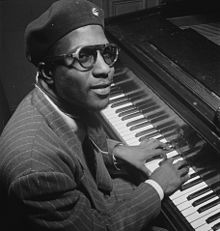
The first was American jazz pianist and composer, Thelonious Monk (b.1917 – d.1982).  His improvisational style set him apart from the traditional jazz musicians of the time.  In the 1940’s, the music genre known as jazz was experiencing a cultural revolution of sorts, with Thelonious Monk as its revolutionary leader. A new style of jazz – be-bop – was born. Considered jazz for intellectuals, the be-bop sound was all about intricate melodies, complex harmonies – and fast tempos. Thelonious Monk once said: “If you really understand the meaning of be-bop, you understand the meaning of freedom.”   

Freedom –  in my opinion  – is the most beautiful  word in the dictionary.  The meaning and experience of freedom is unique to each and every one of us.  What tastes like freedom to me may be radically different than anyone else. Some savour it as a private, spiritual experience, while others view freedom on a global scale. There is no right or wrong answer.  It is in the eye of the beholder.

I love to listen to the discordant sounds of Thelonius Monk. I never met the man. Nevertheless, I owe him a debt of gratitude because when I listen to improvisational jazz, I feel  free –  and vibrantly alive.

The second visionary genius was the Lebanese-American poet, philosopher, and artist  – Khalil Gibran (b.1883 – d.1931).  His works (The Prophet became an iconic favorite) were notably influential in American popular culture during the tumultuous 1960’s. On the subject of Freedom, Khalil Gibran’s eloquent poetry always strikes a chord with me –regardless of the number of times I read and reread his words:

“…Verily all things move within your being in constant half embrace, the desired and the dreaded, the repugnant and the cherished, the pursued and that which you would escape.

These things move within you as lights and shadows in pairs that cling. And when the shadow fades and is no more, the light that lingers becomes a shadow to another light. And thus your freedom when it loses its fetters becomes itself the fetter of a greater freedom.”

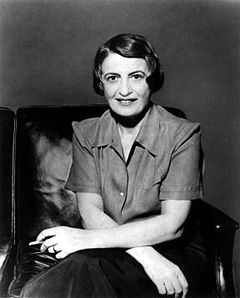
Finally, there is my muse.  Her name, Ayn Rand.  Ayn is pronounced “Ein” (which means “one” in German).  In my study, there are at least three long bookshelves devoted to Ayn Rand  (her novels, essays, philosophical treatises, biographies, and virtually everything I could find that has been written about her).  If I ever choose to go back to do my PhD in Philosophy, the subject of my dissertation would most definitely be Ayn Rand.

Born in St. Petersburg, Russia in 1905, Ayn witnessed the Bolshevik Revolution firsthand and despised the collectivism that was so entrenched in Russian culture at the time.  Her family lost everything in Communist Russia and this intelligent student of philosophy and history  decided that the American model of freedom was the path she wanted to pursue. In 1926, she went to visit relatives in Chicago, then traveled to Hollywood … and never looked back.  Her first novel, We the Living (1936), was inspired by her earlier exposure to Russian tyranny.  In her novels, Ayn understood that in order to create the wonderfully heroic fictional characters, she would have to articulate the philosophical principles which- in her view – made these characters truly heroic.  As such, her novels were interwoven with politics, philosophy, economics, metaphysics, ethics and epistemology. And sex.  In 1957, her last work of fiction – Atlas Shrugged – was considered her greatest achievement. 

However, my personal favorite of hers is The Fountainhead (1943). It was the masterpiece that solidified Ayn Rand as the champion of Individualism.  And this is why I am so inspired by this brilliant intellectual who, incidentally, died in 1982.

For me, individualism is freedom. It’s at the core of everything I believe in.  Individual thought, choice, and actions.  Our journey into this world is a singular experience. As is our journey out of this world.  And our lives are made up of a series of individual choices, reactions and experiences that we (and no one else) are accountable for. For every action, there is a reaction.  For every choice we make, there is a consequence. Good and bad.  (preferably more good , than bad!).

I know, these are pretty heavy thoughts on a Friday evening.  So, I’ll leave you with some words that resonate deeply with me.  In The Fountainhead, the hero – architect Howard Roark – passionately explains the essence of individualism:

“… Man cannot survive except through his mind. He comes on earth unarmed. His brain is his only weapon. Animals obtain food by force. Man has no claws, no fangs, no horns, no great strength of muscle. He must plant his food or hunt it. To plant, he needs a process of thought. To hunt, he needs weapons, and to make weapons—a process of thought. From this simplest necessity to the highest religious abstraction, from the wheel to the skyscraper, everything we are and everything we have comes from a single attribute of man—the function of his reasoning mind.

But the mind is an attribute of the individual.
There is no such thing as a collective brain. There is no such thing as a collective thought. An agreement reached by a group of men is only a compromise or an average drawn upon many individual thoughts. It is a secondary consequence. The primary act—the process of reason—must be performed by each man alone. We can divide a meal among many men. We cannot digest it in a collective stomach. No man can use his lungs to breathe for another man. No man can use his brain to think for another. All the functions of body and spirit are private. They cannot be shared or transferred…” 

I’ve just given you just a snippet of this courtroom speech. It is riveting and worth reading in its entirety.

Here’s to Freedom!

Cheers,

h.f.t.g.

Images via karabess.wordpress.com, wikipedia.org, and civilclothing.com.