Happy St. Patrick’s Day!

gbs

In the spirit of St. Patrick’s Day and all things Irish, I wanted to share some sage words from Irish Playwright/critic/political activist, George Bernard Shaw (b. 1856 in Dublin, Ireland; d. 1950 in Ayot St. Lawrence, England).

Incidentally, George Bernard Shaw was a co-founder of the London School of Economics and a charter member of the Fabian Society.  Founded in 1884, the Fabian Society is a middle-class organization in England, whose mission is to promote socialism through peaceful, non-revolutionary means.

In 1925, Mr. Shaw was awarded the Nobel Prize for Literature.  Although he accepted the award, he rejected the monetary prize and requested that it instead be allocated towards the translation of the works (from Swedish to English) of fellow playwright August Strindberg.

If you want to have an online read of some of George Bernard Shaw’s works (novels, short stories or plays), visit:  Readbooksonline.net.

Happy St. Patrick’s Day!

It’s a New Day in Vatican City

PopeFrancis

It’s a new day in Vatican City.

He doesn’t wear elaborate attire or red leather loafers, but prefers the simplicity of a black cassock.

He forgoes the luxury and safety of the bullet-proof Mercedes-Benz for the normalcy of the public transit system.

He favors frugality and simplicity over lavishness and ostentation.

He is inclusive, not exclusive.

He is warm and embracing, not reserved or standoff-ish.


Already, he has changed history.

He is the first Jesuit to become Pope.

He is the first Pope to hail from the Southern Hemisphere (Buenos Aires, Argentina).

He is the first Pope to choose the name “Francis.”


Yes, he is conservative.   However, unlike some of his conservative predecessors, he is humble and approachable.

If anyone can bring the Papacy back to the people (where it really needs to be), Pope Francis I  will be the one to do it.

As a Roman Catholic myself, I am proud to call him my Pope.


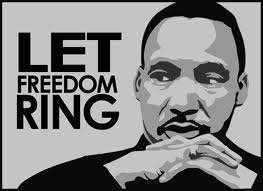
Honoring Dr. Martin Luther King, Jr.

download (2)

Dr. Martin Luther King, Jr.

(January 15, 1929 – April 4, 1968)

Today, our nation honors the memory of a man who inspired generations of men and women ― young and old, black and white, and across every creed.  Dr. Martin Luther King, Jr.  ― clergyman, activist and leader in the American civil rights movement  ― received the Nobel Peace Prize in 1964, at the age of 35 (the youngest man to ever have received a Nobel Peace Prize).  When notified that he was selected for this honor, he stated that he would donate the prize money ($54,123) to further the cause of the civil rights movement.

He was assassinated by a sniper’s  bullet on April 4, 1968, in Memphis (Tennessee), as he addressed crowds of people from  his hotel balcony.

He was not only a man of  wise and thought-provoking words, but a man of action.  He acted on his beliefs and the words he spoke came from his soul. His name is on my own personal roster of people who have truly inspired me. Aside from his famous I Have A Dream speech (quoted in its entirety, at the end of this post), I wanted to share some of his thoughts on what, in my view, are four of the most powerful words to live by: Compassion. Forgiveness. Freedom. Hope.  

On Compassion:

“Life’s most persistent and urgent question is, What are you doing for others?”

On Forgiveness:

“We must develop and maintain the capacity to forgive. He who is devoid of the power to forgive is devoid of the power to love. There is some good in the worst of us and some evil in the best of us. When we discover this, we are less prone to hate our enemies.”

On Freedom:

“Freedom is never voluntarily given by the oppressor; it must be demanded by the oppressed.

“Letter from Birmingham Jail,” April 16, 1963

On Hope:

“The hope of a secure and livable world lies with disciplined nonconformists who are dedicated to justice, peace and brotherhood.š


“If you lose hope, somehow you lose the vitality that keeps life moving, you lose that courage to be, that quality that helps you go on in spite of it all. And so today I still have a dream.

I Have A Dream:

(August 28, 1963)

“I am happy to join with you today in what will go down in history as the greatest demonstration for freedom in the history of our nation.

Five score years ago, a great American, in whose symbolic shadow we stand today, signed the Emancipation Proclamation. This momentous decree came as a great beacon light of hope to millions of Negro slaves who had been seared in the flames of withering injustice. It came as a joyous daybreak to end the long night of their captivity.

But one hundred years later, the Negro still is not free. One hundred years later, the life of the Negro is still sadly crippled by the manacles of segregation and the chains of discrimination. One hundred years later, the Negro lives on a lonely island of poverty in the midst of a vast ocean of material prosperity. One hundred years later, the Negro is still languishing in the corners of American society and finds himself an exile in his own land. So we have come here today to dramatize a shameful condition.

In a sense we have come to our nation’s capital to cash a check. When the architects of our republic wrote the magnificent words of the Constitution and the Declaration of Independence, they were signing a promissory note to which every American was to fall heir. This note was a promise that all men, yes, black men as well as white men, would be guaranteed the unalienable rights of life, liberty, and the pursuit of happiness.

It is obvious today that America has defaulted on this promissory note insofar as her citizens of color are concerned. Instead of honoring this sacred obligation, America has given the Negro people a bad check, a check which has come back marked “insufficient funds.” But we refuse to believe that the bank of justice is bankrupt. We refuse to believe that there are insufficient funds in the great vaults of opportunity of this nation. So we have come to cash this check — a check that will give us upon demand the riches of freedom and the security of justice. We have also come to this hallowed spot to remind America of the fierce urgency of now. This is no time to engage in the luxury of cooling off or to take the tranquilizing drug of gradualism. Now is the time to make real the promises of democracy. Now is the time to rise from the dark and desolate valley of segregation to the sunlit path of racial justice. Now is the time to lift our nation from the quick sands of racial injustice to the solid rock of brotherhood. Now is the time to make justice a reality for all of God’s children.

It would be fatal for the nation to overlook the urgency of the moment. This sweltering summer of the Negro’s legitimate discontent will not pass until there is an invigorating autumn of freedom and equality. Nineteen sixty-three is not an end, but a beginning. Those who hope that the Negro needed to blow off steam and will now be content will have a rude awakening if the nation returns to business as usual. There will be neither rest nor tranquility in America until the Negro is granted his citizenship rights. The whirlwinds of revolt will continue to shake the foundations of our nation until the bright day of justice emerges.

But there is something that I must say to my people who stand on the warm threshold which leads into the palace of justice. In the process of gaining our rightful place we must not be guilty of wrongful deeds. Let us not seek to satisfy our thirst for freedom by drinking from the cup of bitterness and hatred.

We must forever conduct our struggle on the high plane of dignity and discipline. We must not allow our creative protest to degenerate into physical violence. Again and again we must rise to the majestic heights of meeting physical force with soul force. The marvelous new militancy which has engulfed the Negro community must not lead us to a distrust of all white people, for many of our white brothers, as evidenced by their presence here today, have come to realize that their destiny is tied up with our destiny. They have come to realize that their freedom is inextricably bound to our freedom. We cannot walk alone.

As we walk, we must make the pledge that we shall always march ahead. We cannot turn back. There are those who are asking the devotees of civil rights, “When will you be satisfied?” We can never be satisfied as long as the Negro is the victim of the unspeakable horrors of police brutality. We can never be satisfied, as long as our bodies, heavy with the fatigue of travel, cannot gain lodging in the motels of the highways and the hotels of the cities. We cannot be satisfied as long as the Negro’s basic mobility is from a smaller ghetto to a larger one. We can never be satisfied as long as our children are stripped of their selfhood and robbed of their dignity by signs stating “For Whites Only”. We cannot be satisfied as long as a Negro in Mississippi cannot vote and a Negro in New York believes he has nothing for which to vote. No, no, we are not satisfied, and we will not be satisfied until justice rolls down like waters and righteousness like a mighty stream.

I am not unmindful that some of you have come here out of great trials and tribulations. Some of you have come fresh from narrow jail cells. Some of you have come from areas where your quest for freedom left you battered by the storms of persecution and staggered by the winds of police brutality. You have been the veterans of creative suffering. Continue to work with the faith that unearned suffering is redemptive.

Go back to Mississippi, go back to Alabama, go back to South Carolina, go back to Georgia, go back to Louisiana, go back to the slums and ghettos of our northern cities, knowing that somehow this situation can and will be changed. Let us not wallow in the valley of despair.

I say to you today, my friends, so even though we face the difficulties of today and tomorrow, I still have a dream. It is a dream deeply rooted in the American dream.

I have a dream that one day this nation will rise up and live out the true meaning of its creed: “We hold these truths to be self-evident: that all men are created equal.”

I have a dream that one day on the red hills of Georgia the sons of former slaves and the sons of former slave owners will be able to sit down together at the table of brotherhood.

I have a dream that one day even the state of Mississippi, a state sweltering with the heat of injustice, sweltering with the heat of oppression, will be transformed into an oasis of freedom and justice.

I have a dream that my four little children will one day live in a nation where they will not be judged by the color of their skin but by the content of their character.

I have a dream today.

I have a dream that one day, down in Alabama, with its vicious racists, with its governor having his lips dripping with the words of interposition and nullification; one day right there in Alabama, little black boys and black girls will be able to join hands with little white boys and white girls as sisters and brothers.

I have a dream today.

I have a dream that one day every valley shall be exalted, every hill and mountain shall be made low, the rough places will be made plain, and the crooked places will be made straight, and the glory of the Lord shall be revealed, and all flesh shall see it together.

This is our hope. This is the faith that I go back to the South with. With this faith we will be able to hew out of the mountain of despair a stone of hope. With this faith we will be able to transform the jangling discords of our nation into a beautiful symphony of brotherhood. With this faith we will be able to work together, to pray together, to struggle together, to go to jail together, to stand up for freedom together, knowing that we will be free one day.

This will be the day when all of God’s children will be able to sing with a new meaning, “My country, ’tis of thee, sweet land of liberty, of thee I sing. Land where my fathers died, land of the pilgrim’s pride, from every mountainside, let freedom ring.”

And if America is to be a great nation this must become true. So let freedom ring from the prodigious hilltops of New Hampshire. Let freedom ring from the mighty mountains of New York. Let freedom ring from the heightening Alleghenies of Pennsylvania!

Let freedom ring from the snow-capped Rockies of Colorado!

Let freedom ring from the curvaceous slopes of California!

But not only that; let freedom ring from Stone Mountain of Georgia!

Let freedom ring from Lookout Mountain of Tennessee!

Let freedom ring from every hill and molehill of Mississippi. From every mountainside, let freedom ring.

And when this happens, when we allow freedom to ring, when we let it ring from every village and every hamlet, from every state and every city, we will be able to speed up that day when all of God’s children, black men and white men, Jews and Gentiles, Protestants and Catholics, will be able to join hands and sing in the words of the old Negro spiritual, ‘Free at last! free at last! thank God Almighty, we are free at last!'”


Freedom and Individualism, as expressed by three creative geniuses: Thelonious Monk, Khalil Gibran, and Ayn Rand

In the mid-1970’s, three uniquely brilliant people came into my life. 

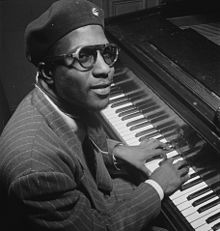
The first was American jazz pianist and composer, Thelonious Monk (b.1917 – d.1982).  His improvisational style set him apart from the traditional jazz musicians of the time.  In the 1940’s, the music genre known as jazz was experiencing a cultural revolution of sorts, with Thelonious Monk as its revolutionary leader. A new style of jazz – be-bop – was born. Considered jazz for intellectuals, the be-bop sound was all about intricate melodies, complex harmonies – and fast tempos. Thelonious Monk once said: “If you really understand the meaning of be-bop, you understand the meaning of freedom.”   

Freedom –  in my opinion  – is the most beautiful  word in the dictionary.  The meaning and experience of freedom is unique to each and every one of us.  What tastes like freedom to me may be radically different than anyone else. Some savour it as a private, spiritual experience, while others view freedom on a global scale. There is no right or wrong answer.  It is in the eye of the beholder.

I love to listen to the discordant sounds of Thelonius Monk. I never met the man. Nevertheless, I owe him a debt of gratitude because when I listen to improvisational jazz, I feel  free –  and vibrantly alive.

The second visionary genius was the Lebanese-American poet, philosopher, and artist  – Khalil Gibran (b.1883 – d.1931).  His works (The Prophet became an iconic favorite) were notably influential in American popular culture during the tumultuous 1960’s. On the subject of Freedom, Khalil Gibran’s eloquent poetry always strikes a chord with me –regardless of the number of times I read and reread his words:

“…Verily all things move within your being in constant half embrace, the desired and the dreaded, the repugnant and the cherished, the pursued and that which you would escape.

These things move within you as lights and shadows in pairs that cling. And when the shadow fades and is no more, the light that lingers becomes a shadow to another light. And thus your freedom when it loses its fetters becomes itself the fetter of a greater freedom.”

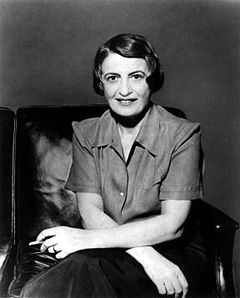
Finally, there is my muse.  Her name, Ayn Rand.  Ayn is pronounced “Ein” (which means “one” in German).  In my study, there are at least three long bookshelves devoted to Ayn Rand  (her novels, essays, philosophical treatises, biographies, and virtually everything I could find that has been written about her).  If I ever choose to go back to do my PhD in Philosophy, the subject of my dissertation would most definitely be Ayn Rand.

Born in St. Petersburg, Russia in 1905, Ayn witnessed the Bolshevik Revolution firsthand and despised the collectivism that was so entrenched in Russian culture at the time.  Her family lost everything in Communist Russia and this intelligent student of philosophy and history  decided that the American model of freedom was the path she wanted to pursue. In 1926, she went to visit relatives in Chicago, then traveled to Hollywood … and never looked back.  Her first novel, We the Living (1936), was inspired by her earlier exposure to Russian tyranny.  In her novels, Ayn understood that in order to create the wonderfully heroic fictional characters, she would have to articulate the philosophical principles which- in her view – made these characters truly heroic.  As such, her novels were interwoven with politics, philosophy, economics, metaphysics, ethics and epistemology. And sex.  In 1957, her last work of fiction – Atlas Shrugged – was considered her greatest achievement. 

However, my personal favorite of hers is The Fountainhead (1943). It was the masterpiece that solidified Ayn Rand as the champion of Individualism.  And this is why I am so inspired by this brilliant intellectual who, incidentally, died in 1982.

For me, individualism is freedom. It’s at the core of everything I believe in.  Individual thought, choice, and actions.  Our journey into this world is a singular experience. As is our journey out of this world.  And our lives are made up of a series of individual choices, reactions and experiences that we (and no one else) are accountable for. For every action, there is a reaction.  For every choice we make, there is a consequence. Good and bad.  (preferably more good , than bad!).

I know, these are pretty heavy thoughts on a Friday evening.  So, I’ll leave you with some words that resonate deeply with me.  In The Fountainhead, the hero – architect Howard Roark – passionately explains the essence of individualism:

“… Man cannot survive except through his mind. He comes on earth unarmed. His brain is his only weapon. Animals obtain food by force. Man has no claws, no fangs, no horns, no great strength of muscle. He must plant his food or hunt it. To plant, he needs a process of thought. To hunt, he needs weapons, and to make weapons—a process of thought. From this simplest necessity to the highest religious abstraction, from the wheel to the skyscraper, everything we are and everything we have comes from a single attribute of man—the function of his reasoning mind.

But the mind is an attribute of the individual.
There is no such thing as a collective brain. There is no such thing as a collective thought. An agreement reached by a group of men is only a compromise or an average drawn upon many individual thoughts. It is a secondary consequence. The primary act—the process of reason—must be performed by each man alone. We can divide a meal among many men. We cannot digest it in a collective stomach. No man can use his lungs to breathe for another man. No man can use his brain to think for another. All the functions of body and spirit are private. They cannot be shared or transferred…” 

I’ve just given you just a snippet of this courtroom speech. It is riveting and worth reading in its entirety.

Here’s to Freedom!

Cheers,

h.f.t.g.

Images via karabess.wordpress.com, wikipedia.org, and civilclothing.com.

Passion – the key ingredient to success

Many of us are mourning the recent loss of visionary, entrepreneur and philanthropist – Steve Jobs.  I’ve been thinking about him a lot lately and something he once said  struck a very familiar chord with me:   “People with passion can change the world for the better.”   Passion. It seems to be a common element in the DNA of every great innovator.

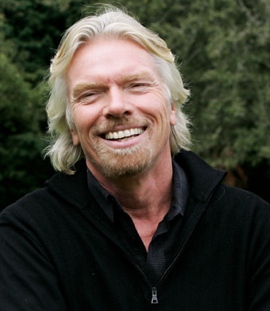
Take Sir Richard Branson, for example.  As Founder and Chairman of the Virgin Group of Companies (a multi-billion dollar, global publishing, retailing, aviation and entertainment conglomerate) based in London, England, Richard Branson has plenty of passion. And chutzpah.

What distinguishes him from so many other brilliant entrepreneurs is that he always has fun.  If asked “Who do you want to be when you grow up?” I would say — without hesitation —  “Richard Branson.”  I admire him. I respect him.  And, he makes me smile.

Here’s what he says about the importance of passion:

“Ideally, since 80 percent of your life is spent working,  you should
start your business around something that is a passion of yours.
If you’re into kite-surfing and you want to become an entrepreneur, do it with kite-surfing. 

Look, if you can indulge in your passion, life will be far more interesting than if you’re
just working. 
You’ll work harder at it, and you’ll know more about it.  But first you
must go out and educate yourself on whatever it is that you’ve decided to do –
know more about kite-surfing than anyone else. That’s where the work comes in.  But if you’re
doing things you’re passionate about, that will come naturally.”

As writers, we should always be passionate about what we write.  Otherwise, why write?  (clearly, it’s not for the money!).

So, follow your passion.  And, as Sir Richard has stated (most likely  with that wonderfully wide, infectious smile of his), “Life is a helluva lot more fun if you say yes rather than no.”Yes, sir – it is!

Images via Stopstressingnow.com  and  Power-of-giving.com.

Steve Jobs – gone too soon….and in his own words “how to live before you die”

Steven Paul “Steve” Jobs  – February 24, 1955 – October 5, 2011

I am a Baby Boomer. I grew up in a time when I had to use an old Brother typewriter to type up my highschool essays.Then came a few tentative innovations in the evolution of wordprocessing: the Timex Sinclair and the Commodore 64 computer (yikes, we still have them stored somewhere, after all these years!).

Clearly, we all knew  that our generation was going to bear witness to a technological revolution that would change the way we worked, created, and communicated.   And we were not disappointed.  In the mid-1970’s,  young  technology visionairies-turned inventors-turned entrepreneurs led us all into a new era of computers  –  with the introduction of the Mac and the PC.  The names of some of these creative geniuses may sound familiar:  Steve Jobs, Steve Wozniak, and (of course) Bill Gates! These very (very) young men proceeded to take Silicon Valley by a storm!  And their impact was global.

So, yes, I am proud to say that I am part of that idealistic generation of young men and women who participated in a technological renaissance that we will likely not  ever see again … with the exception of  the Millennium’s new breed of tech geniuses who created Google and Facebook.

When I learned that Steve Jobs died two days ago at the very young age of 56,  after a long and brave battle with pancreatic cancer, I was very, very sad.  Gone too soon.

I would have loved to be sitting amongst the Stanford University graduates of 2005 at their Commencement Ceremony, as Steve Jobs imparted some passionate words of wisdom to a whole new breed of young idealists.

Here are some of  the highlights from his Commencement Speech:

On the subject of love and loss:

“Sometimes life hits you in the head with a brick. Don’t lose faith. I’m convinced that the only thing that kept me going was that I loved what I did. You’ve got to find what you love. And that is as true for your work as it is for your lovers. Your work is going to fill a large part of your life, and the only way to be truly satisfied is to do what you believe is great work. And the only way to do great work is to love what you do. If you haven’t found it yet, keep looking. Don’t settle.”

On the subject of death:

” Remembering that I’ll be dead soon is the most important tool I’ve ever encountered to help me make the big choices in life. Because almost everything — all external  expectations, all pride, all fear of embarrassment or failure – these things just fall away in the face of death, leaving only what is truly important. Remembering that you are going to die is the best way I know to avoid the trap of thinking you have something to lose. You are already naked. There is no reason not to follow your heart……”

“… No one wants to die. Even people who want to go to heaven don’t want to die to get there. And yet death is the destination we all share. No one has ever escaped it. And that is as it should be, because Death is very likely the single best invention of Life. It is Life’s change agent. It clears out the old to make way for the new. Right now the new is you, but someday not too long from now, you will gradually become the old and be cleared away. Sorry to be so dramatic, but it is quite true.

Your time is limited, so don’t waste it living someone else’s life. Don’t be trapped by dogma — which is living with the results of other people’s thinking. Don’t let the noise of others’ opinions drown out your own inner voice. And most important, have the courage to follow your heart and intuition. They somehow already know what you truly want to become. Everything else is secondary.”

And, Steve Jobs wrapped up his speech with four simple send-off words to the 2005 Stanford graduates  –  words to live by:

“Stay Hungry. Stay Foolish.”

Rest in peace, Steve.  And, thank you for having shared your dreams with the rest of us.

Photos via Thepoliticalcarnival.net, Wired.com, and Thedroidguy.com.