Think first, write later

5385287084_2702462500

 “Poirot,” I said. “I have been thinking.”
“An admirable exercise my friend. Continue it.”
 
― Agatha ChristiePeril at End House

Have you ever responded to an offensive or distressing email without thinking first?  “WHAT?!” you say to yourself, as your fingers agitatedly skim over the keys and, without a second thought…Send. Moments later, you could kick yourself for having been so impulsive.

This has surely happened to all of us, at one time or another.

Or perhaps, as a student, you were seated for your mid-term essay exam and you skimmed the questions quickly, then proceeded to write feverishly because the clock was ticking and you wanted to make sure that you had enough time to answer all the questions. It was only after you handed in the test, that you realized you missed the second part of the question because you didn’t take the time read carefully and organize your thoughts.

Mea culpa, mea culpa.

In the writing world, however, the process varies from writer to writer.  Not everyone likes to adhere to the “think first, write later” principle. Many writers just sit down at the computer (or, if they’re traditionalists, with pen and paper), and write. Then they edit. Stream of consciousness writing works for many and these are the writers who, when at home, probably don’t write shopping lists or who prefer not to structure their time rigidly. They are the free thinkers.  Write first, think while writing, and then edit later.

However, there are just as many writers (myself included) who prefer to organize their thoughts, prior to writing them down.  They do this by notes, index cards, outlines and also by just thinking (or daydreaming) it out in their minds. 

I am a great proponent of outlines.  My book writing process always commences with quiet contemplation… to think carefully about what I want to say and why, who will my readership be and how will I engage their attention. From there, I craft an initial Table of Contents which serves as my starting point and basic outline.  I then begin the initial research process (when research is required for the book) and the results of my initial research prompts me to write a more detailed outline which helps dictate the overall flow of the book. At that point. I move to a more advanced stage of research, finetune the outline further and then I am ready to sit down and write. I prefer to think first, write later. I carry a small  Moleskine reporter’s notebook with me wherever I go, to jot down thoughts. The challenge is being able to read my own messy handwriting later!

There really is no right or wrong process. Ultimately, the objective is to write.  How you get to that point is subject to whatever works for you.

So, think on the fly or  think in advance, but just make sure to carefully review your writing first before pressing that “Send” button!


Image via everydaygyaan.com.

The Psychology of Blogging

hammer

Like many of you, I enjoy reading blogs that pique my interest.  I also read them to gain insight, whether expected or unexpected, and to gather information on a specific topic. It is always a delight to discover a really good blog site and an articulate writer with a unique perspective.

So, we know why we read blogs. The question is, why do we write blogs?

Why do we blog?

Do we do it…

… as a form of cathartic self-expression (cyber-catharsis)?

… because we are narcissists (varying from mild to extreme)?

… just simply to write down our musings, because we believe we have something interesting to say, to share, or to teach?

… as an outlet for self-promotion?

… as a writing exercise, to tone and hone our writing skills?

Perhaps it is a combination of some or all of the above.  To understand the reasons, we’ll need to delve into the psyche of a blogger.  

Cathartic Self-expression (Cyber-catharsis)

Psychologists and psychiatrists often recommend journal writing as a tool to help release stress, work through issues, and as a means of self discovery.  Blogging takes journal writing to a completely new dimension. Not only does it provide cathartic therapy for those who need it, it also opens the door to a worldwide web of  support – a cyber support group whereby people can connect, share and commiserate with others who are experiencing (or who have experienced) similar challenges. Advice is given and received.  Stories are shared. And, in many cases, friendships are made. 

Narcissism

If we’re being truly honest with ourselves, we are all narcissistic to some degree. For most of us…. just a wee bit.  It only really becomes a problem, however, when we get so self-absorbed that our sense of what is real and rational becomes clouded. That is when it’s time to seek help. It’s one thing to write about “me, myself, and I” if there’s a valid purpose, an opinion to express, or a valuable lesson to impart.  But it is quite another to blog for no other reason than to feed the ego.

Musings

We all have something to learn and something to teach. Writing about our thoughts and experiences – on such a vast platform – gives us a forum to exchange ideas, to offer and receive a different perspective. 

An Outlet for Self-promotion

There is absolutely nothing wrong with self-promotion. We all need to keep a roof over our heads and food on the table. But, again, it’s all a matter of degree.  If it’s done properly and gracefully, it will not repel people. If it’s crass, full of redundant sales pitches and slogans (like an “As Seen on TV” commercial)… people will find it offensive and be turned off.  

A Writing Exercise, to Tone and Hone Writing Skills

Blogging is an excellent way to finetune that writing muscle. The more often we write, the better we get.  When we blog, we get an opportunity to connect instantaneously  with our readership which, in turn, helps us to understand what engages the reader. And, finally, blogging regularly helps us to avoid and/or battle that soul-destroying disorder that we all dread:  writer’s block.

What I personally find most gratifying about blogging (and this one was not the list) is the access I now have to people from across the globe. The thrill of being able to interact with men and women from all walks of  life, from different cultures, young and old and everyone in-between ― in real time. What an amazing opportunity!  To travel seamlessly through cyberspace, via the written word, has effectively bridged all physical distance. And, with just the click of a button, this gargantuan world we live in… has suddenly become a whole lot smaller.


Image via contestmob.com.

How to Resist the Lure of Summer Distractions

17XgPyfrdGU

Summer is a temptress. She dazzles us with bright colors and hot sun. Every year, we impatiently await her arrival.  For many, she is a welcome respite after a long, cold winter.  She exudes a sense of lightness and freedom and her flamboyance and playfulness is infectious.  School is out and children suddenly find themselves with loads of time… to play!  And they don’t waste a minute.  With the rigor of school schedules and extracurricular activities set  aside, parents reconnect with their children.  Men and women start to loosen up a bit and their busy lives begin to take a back seat to weekend barbecues, picnics and summertime activities.  That glorious smell of barbecue grilling wafts from house to house.

Yes, summer is a temptress.  But, as a writer who is working on multiple book projects while trying to promote her newly published book, it is difficult to resist the lure of summertime distractions.   Am I up for the challenge?  Can I muster enough will and discipline? 

I’ll let you know at the end of the summer.

In the meantime, I am going to try out some of these tips.  Maybe they can help you, as well.

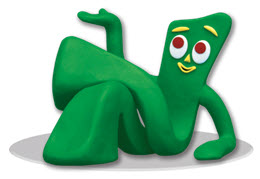
1. Channel your inner Gumby

gumbyThe key is flexibility.  Summer schedules need to be flexible, not rigid.  Otherwise, you’re setting yourself up to fail.  “Fail” is perhaps too strong a word, but I’m sure you understand my meaning.

2. Move like an inchworm

inchworm

Take it one steady, small step at a time. Break up your day into increments of time – time to research, time to write, time to relax and time for eating and sleeping. Set smaller, more frequent goals and milestones for yourself and this will encourage you to keep moving forward and ultimately fill you with a sense of accomplishment. On the other hand, if you flit like a butterfly – from task to task – nothing will ever get completed.

3. Set your boundaries

writing-contest-scams

Let your family and friends know when you’re in the writing zone, so that they can respect your space and privacy for the time that you’ve allocated. Afterwards, they can have your full attention.

4. Don’t bite off more than you can chew

gerbil

It’s summertime. Focus on the most important  and enjoyable projects, then make a plan to tackle the rest in the Autumn months.

5. Bring it outside

woman_writer_outside_laptop

You don’t have write behind closed doors on a beautiful summer’s day.  Take your laptop or notepad, a pot of tea or coffee, and do your writing (and thinking) outside.  If you live in an apartment and don’t have a yard, pack yourself some refreshments and go to your nearest park.  If you live near water, sit on the beach or by the lake. Maybe the sights and sounds all around you will bring you some interesting perspective or inspiration.

Enjoy your summer and happy writing!

Images via anordinarywomn.net, gumbyworld.com, piedmontwildlifecenter.org, writingforward.com,  dorrys.com and cloudsandchecks.com.

Writing in an Authentic Voice

exam6

“Believe in yourself and in your own voice,

because there will be times in this business when you will be the only one who does.

Take heart from the knowledge that an author with a strong voice

will often have trouble at the start of his or her career –

because strong, distinctive voices sometimes make editors nervous.

 But in the end, only the strong survive.”

―  Jayne Ann Krentz

Most writers are blessed (although some would say, cursed) with the uncanny ability to see through another person’s outward façade, body language and emotional barriers.  Good writers are keen observers.  We watch. We don’t just listen, we hear.  And we notice – everything. Then, we write.

Similarly, a voracious reader opens up a book, in anticipation of a good read – expecting to be transported into someone else’s words, someone else’s thoughts. The reader has high expectations. He or she  wants to soak up all that the writer has to say. But when the words seem forced, when the thoughts do not ring true – the reader is left deflated and unsatisfied.

It all boils down to one word:  Authenticity.  When a writer is ready to commit his or her observations, experiences, life lessons and creativity to paper, it must be done clearly and in an authentic voice.  If the writing is not authentic, the reader will detect it in a flash. If a story appears forced to the reader, it is forced.

Say what you mean.  Mean what you say.

A writer should never worry about being popular.  We can’t please everybody.  There will always be those who take umbrage at what we say.  Conversely, there will be just as many who will champion us. One has to be philosophical about the whole writing experience.  When we are true to ourselves, when we write in an authentic voice – we should be happy with the end result.

However…

… this should not preclude us from exercising the art of self-restraint.  When a writer is passionate (and believe me, I know whereof  I speak), it becomes an interesting balancing act of saying what needs to be said, yet reigning the words in a tad – to avoid rabid repetition. 

A word to the wise:  gather together an unbiased focus group of people and have them read and critique the manuscript. Heed their feedback well, without taking it personally.  Then, apply it.  We are all classmates in a lifelong Continuing Education program. The objective must always be to learn and to keep on learning, until we are dead and buried.

On that lively note, I shall bid you all Godspeed as you continue your writing journey.

Be true to yourself and to your craft.  The best is yet to come.

Image via destinationsdreamsanddogs.com

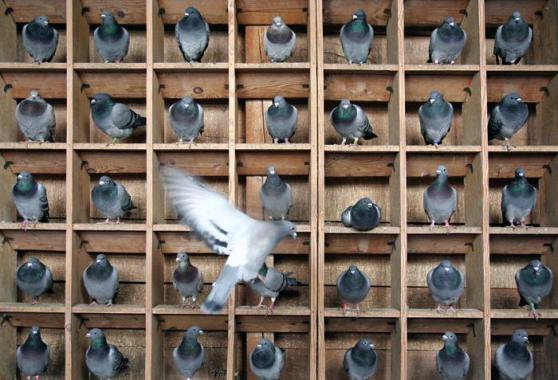
Typecasting a writer: folly or not?

pigeonholed.expertise

“Don’t classify me, read me. I’m a writer, not a genre.” 
― Carlos Fuentes

In one of my earlier blogs (New Year’s Revelation No. 5, “Never, Never Assume!”), I wrote about the unfortunate common practice of making assumptions ― about people or situations.  So many of us, whether intentionally or unintentionally, fall into that trap – to our detriment.  In so doing, we run the risk of making erroneous assumptions (because we are not aware of all the mitigating factors) and rush to judgment, perhaps too quickly.  The same applies to pigeon holing or typecasting someone.

In the acting world, for example, actors are often typecast as comedic, dramatic, character, leading role, action hero, and so on.  Yet many actors have proven – time and time again – that they can seamlessly apply their acting talent and skills to any genre. And when they do this, we are always surprised (yet delighted).  Why are we surprised? The answer, of course, is that we made an erroneous assumption. Yes, Robert De Niro has played some seriously intense and dramatic roles.  However, as “Vitti” in Analyze This and Analyze That (opposite Billy Crystal), De Niro had me rolling on the floor, laughing.

The same applies to writing.  Just because a writer publishes a book in one genre, this does not mean he or she is incapable of writing in a different voice, for a variety of target audiences, or in multiple genres.

As for myself, I have multiple book projects in the works.  Many are non-fiction.  Casualties of the (Recession) Depression is a political and economic commentary and collection of real-life vignettes.   This does not mean that the only genre I write is non-fiction editorial.  I write fiction, as well as industry-specific pieces and scripts for documentaries. 

Whether one is a writer or a photographer, an actor or an artist ― the fact is, we are complex and multi-faceted.  Labels are very limiting and should not be assigned so readily.

If we only focus our eyes on the moon, we may miss the beauty of the rest of the galaxy.

Image via trivworks.com.

Distribution Channels for Book, Casualties of the (Recession) Depression

becoming-a-travel-writer

Update on Book Distribution Channels:

Dear fellow book lovers,

I’ve still been getting a lot of queries about where to get a copy of my book, Casualties of the (Recession) Depression.  At the moment, the book can be purchased through:

–  http://www.heatherjoanmarinos.com

–  Amazon.com

–  Amazon.co.uk (it is also available in Amazon.de, Amazon.fr, Amazon.it, and Amazon.es)

It is not yet available in Amazon.ca.

Happy Reading!

Slicing and Dicing (or what writers grudgingly call “Book Editing”)

Devour a Book

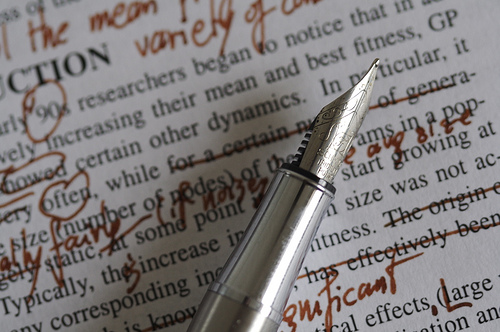
While contemplating and writing about my 7 New Year Revelations,  I’ve been trying not to think about the redlining, scratchy margin comments, strikethroughs and all the nasty little markings that a few no-nonsense editors are doing to my manuscript. 

As any writer will attest, it’s important to give your completed manuscript a thorough and objective (that’s the hard part) edit yourself first, but then you must hand it over to an editor who will have no qualms about ripping it to shreds,  if need be.   As a person who uses the numbers 3 and 7 all the time (it’s a spiritual thing, perhaps even a bit O.C.D.),  I always like to choose 3 editors (a professional editor, a person who has personal  experience with the subject, and a scholar/professional who is a specialist on the subject).  This gives me a nice cross-section of expertise from people whose commentary I respect and will take to heart, when producing the final copy for publication.  

I give them a timeframe and my own set of  guidelines (for them to keep in mind, while editing)  …  with the expectation that, on the end date, I will receive all their edits and comments. Some prefer to edit on a hard copy manuscript, others edit on my PDF  text. I usually give them three weeks , although it may extend further – depending upon the length of the manuscript.

My manuscript-specific  “guidelines”  vary from book to book. These include a list of questions or points that relate to specific characters or story lines that I want to receive objective feedback on.

However,  the general guidelines simply follow the standard editing process which, in turn, involves multiple read-throughs or “passes.”

1. First Pass:       A READ-THROUGH  (no editing)

It’s important for the editor to get a feel for the book first, before grabbing that red pencil!

2. Second Pass —  SUBSTANTIVE  EDITING

This is the heavy, line editing phase. Sentence structure, grammar, spelling and punctuation are all addressed here.  At this stage, the editor will also look at whether the book  reads  well and whether  or not a story, character, or setting may need readjustment.

3. Third Pass —  CONTENT  EDITING

This may include substantive editing (above) but focuses on the quality of the writing, the use of words, and the strength/continuity of the author’s voice.  The content editing process points its high beam on clarity and conciseness.  This is where a lot of the dreaded snippity-snip-snip comes into play. Conciseness …  the bane of my existence.

4. Fourth Pass —  COPY  EDITING

Once more, punctuation and grammar are reviewed, as well as whether or not the use of words and tense is consistent throughout the manuscript. The copy editing process serves to catch any minor or major mistakes and whether or not the perceived errors were intentional (i.e. stylistic) or not.

5. Fifth Pass —  PROOFREADING*

A final review of  grammar, punctuation and spelling. This is the polishing stage.

*CAVEAT:  Once the writer incorporates all the edits into the final manuscript, the writer must (himself/herself) do another round of proofreading — it is very important to do this carefully. Hasty proofreading will result in unwanted errors.  In the world of home renovation, the do-it-yourself folks are told, time and time again, “measure twice, cut once.”  Well, the same applies in the writing world.  Proofread, proofread, and proofread again!

Furthermore, if the writer is self-publishing, it is important to do yet another round of proofreading upon receiving the printer’s proofs (always request  to have a sign-off on the printer’s proof, prior to printing).  This is not only important for catching any errors within the text, but also to ensure that the formatting and graphics are perfect. Similarly, if using a company like CreateSpace or lulu.com to publish the book, follow the same proofing/sign-off procedure as with the printer. 

By the 21st, I should be receiving all of my edits back, for my manuscript (Casualties of the Recession Depression) — redlines, scratchy margin comments, strikethroughs and nasty little markings.

I can hardly wait.


Image from howtoshuckanoyster.com.

Book launching soon … but not before the editors have their merry way with it

editingredpen

Book Update:  The manuscript for  “Casualties of the Recession Depression”  is now in the editing stage!  The anticipated book launch date is February 26, 2013!  I’ll keep you posted …

If I could physically do cartwheels, I would ….  Cartwheels

You’ve seen it before, but here it is (again) … the book cover:


Image (editing, top of page) by Nic’s events, (cartwheel sketch) by justquitthing.com.

Madness and Manuscripts

Limecat


“I am a great believer in luck, and I find the  harder I work, the more I have of it.”

—  Stephen Leacock

Despite my hacking cough, scratchy throat and broken voice …. the manuscript for  “Casualties of the Recession Depression”  is (amazingly) still on schedule for completion on December 21st!!!

ISBN numbers, bar codes, and copyright registration are all in the works.  Sales/marketing/distribution channels are waiting the “go ahead” signal.  Book launch date will be in February 2013 (exact date TBD).

I am very tired, but beyond thrilled.

And, as always, I am one loop away from being totally loopy.

Stay tuned …

Never underestimate a turtle

“Writing is the only thing that, when I do it, I don’t feel I should be doing something else.”
Gloria Steinem 

Except maybe home reno projects.

One would think that working on a number of book projects in tandem would accomplish less than simply focusing on one piece at a time. Not so.  Although, I speak only for myself.  Allocating time for each book actually helps me to be more productive. By alternating between manuscripts, I am able to resume work on each one — with fresh (and critical) eyes.  Nothing gets stale. And the manuscripts continually get refined, which streamlines the final editing stage.

That is my usual writing process. However, for the past few weeks, I’ve veered away from the regular routine, since becoming completely immersed in my book of short stories — Casualties of the Recession Depression.  I am so passionate and excited about this piece, that I can’t seem to switch gears.  The result of all this writing enthusiasm is that I will have a completely finished manuscript imminently.  By year’s end (think Mayan).

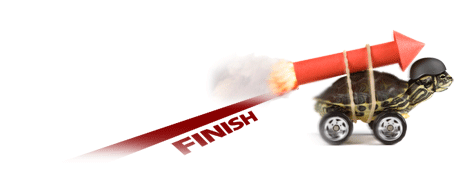
Yes, the turtle is reaching the finish line!  (If my chronic bronchitis doesn’t kill me first).  My desk is a sea of kleenex tissues and cough drops. My husband is worried that I may be coughing up my own vocal cords, but I reminded him that there are benefits losing my voice:  Silence.  See, the cup is always half full, never half empty!

Although —between you, me and the lamp post — he’ll probably miss the constant yapping.

Stay tuned …