Keep That Lens Focused

Following from my May 16th blog, Maximize Your Five Senses, I will be writing (all week) about each of the five senses (and the sixth sense) and sharing with you some of the wisdom that my mother imparted to me.

This series of blogs is dedicated to her.

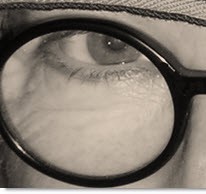
Hlens (3)

“The greatest thing a human soul ever does in this world is to see something, and tell what it saw in a plain way.  Hundreds of people can talk for one who can think, but thousands can think for one who can see.  To see clearly is poetry, prophecy, and religion – all in one.”
―  John Ruskin,  Modern Painters

My mother always spoke to me with her eyes.  She was most definitely not mute, but she nevertheless  preferred to communicate via her eyes.  Oh, the conversations we used to have!  Just a glance ― grey-green eyes meeting grey-green eyes ― message sent and received.  I knew exactly what she was thinking.

She taught me how to be quiet, stay still and watch.  Observe.  Focus. Notice every detail.  See beyond the obvious. 

She taught me that a person’s eyes tell a story.  In a flash, she could tell when someone was lying or when someone was trying to hide some emotional scar.  She was able to see beneath the surface. Her eyes missed nothing. 

She taught me well.

What I know now, that I didn’t know then, is that my mother was training me to be a writer. 

With this heightened sense of sight  (a great feat for me, since I’ve been wearing  very thick eyeglasses,  since the age of two!), I observe everything keenly and then, I write.

Our sense of sight is one of the most  – if not the most – precious of the five senses.  It is so important to take care of it.  I nearly caused some serious damage to my eyes when I went through a phase where I would sleep with my contact lenses in, for days on end.   Foolish vanity.  I now wear  my eyeglasses 99% of the time.  And my lenses are perfectly focused.

When my mother was in hospice care, she – along with many of the other patients – would be wheeled into  a lounging area.  She was often confused as to where she was (and why).  Her confusion, however, did not extend to me.  She knew exactly who I was. One of my last memories of her was when I was walking down the corridor towards the lounge and, from about a hundred feet away, she spotted me instantly. Her eyes danced, as she clapped her hands with joy.  Her eyes followed me as I came closer – grey-green eyes locked onto  grey-green eyes.   We embraced and I held her small, frail body as tightly as I could, without hurting her.

That was eight years ago this week.  Not a day goes by without me remembering her expressive, mischievous eyes.  And when I look into the mirror, there they are.

Her Eyes

by VALARIE M. SHEA

Gone are the eyes that watched me grow
The eyes that were able to see into my soul
Together we climbed mountains and made it through the pain
Only to find out that someday it would be forever changed

As you’ve gotten weaker, I’ve gotten stronger
Able to take care of myself even though I didn’t want to

You’d be proud of my wit, my confidence and my charm
People say I’m just like you and I know all about your charms
The eyes are in my heart, the eyes that saw my soul
But gone are the beautiful eyes, the eyes that watched me grow

Preparing for the Dog Days of Summer

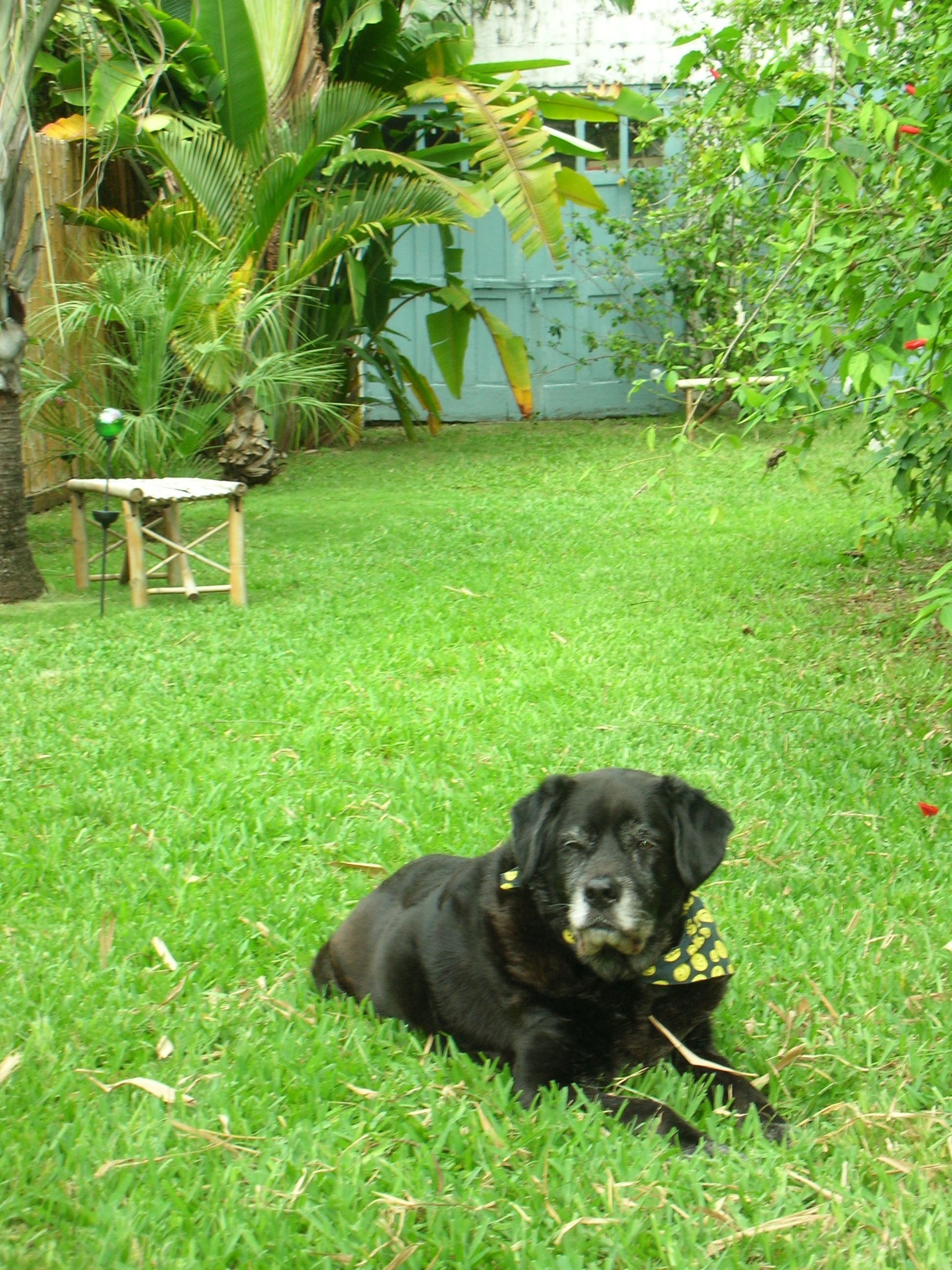
My "son" - 12 year old Bacchus, relaxing on the grass (Photo Credit: Heather Joan Marinos © 2013 – All Rights Reserved)

My “son” – 12 year old Bacchus, relaxing on the grass
(Photo Credit: Heather Joan Marinos © 2013 – All Rights Reserved)

“The dog’s agenda is simple, fathomable, overt:  I want.  “I want to go out, come in, eat something, lie here, play with that, kiss you.”  There are no ulterior motives with a dog, no mind games, no second-guessing, no complicated negotiations or bargains, and no guilt trips or grudges if a request is denied.”

Caroline Knapp

Sporting a distinguished grey beard and moustache (and a festive scarf), Bacchus loves to do what we affectionately refer to as “the San Tropez thing.”  This is when he requests that he be let out so that he can lie down (either on the deck or grass) while the hot, South Florida sun beats down on him. He does this for ten minutes each day, presumably to let the sun heat up his old bones.  Then he knocks (paws insistently) on the front door, to let us know that his sun tanning session is over.

He’s a smart dog.  He knows that after ten minutes in the hot midday sun, he will start panting.  He is one of the lucky ones because he is an indoor dog, one who has the reign of the entire house.

Outdoor animals and strays don’t have the luxury of an air-conditioned home or a steady flow of fresh water and food.  Too often, they suffer from dehydration, heat stroke and some don’t even get to see another summer.

Since we are two weeks shy of the “dog days of summer,” I thought I’d write a list of some “do’s and don’ts” to keep in mind.  One would think that the list is all common sense, and it is – actually.  Yet somehow, people  still manage to treat their pets carelessly.  Some really do mean well but are simply distracted with their hectic lives , others just don’t think or don’t know any better, but then there are some who are downright neglectful.

Do’s (indoors)

  1. Do keep the home at a comfortable temperature at all times, even when leaving the house.  Our house pets who, after all, are also guarding the homestead, deserve to enjoy the same comfort that we would — had we stayed home. Yes, it’s important to save energy, but the hot summer months is not the time to be overly frugal with temperature control.
  2. Do fill the pets’ water bowls regularly (3-4 times a day) with fresh, cold water.
  3. Do groom the dogs regularly, especially their ears.  Summer is flea season and this easily becomes a problem if it’s not nipped in the bud. Prevention is everything. 
  4. Do monitor the pets’ breathing and overall health. Certain dog and cat breeds (Pugs, Bulldogs, Persian and Himalayan cats) have flattened faces and are more susceptible to breathing problems, especially in the hot weather.

Do’s (outdoors)

  1. Do keep pets in the shade.  Trees make such a big difference in a yard. 
  2. Whether indoor or outdoor, Do fill the pets’ water bowls regularly (3-4 times a day) with fresh, cold water.  For outdoor water bowls, add some ice cubes. It’s a nice thing to do this for the strays, as well.
  3. Do carry a portable water bowl (and a supply of water) when embarking on a long dog walk or car trip.
  4. Do keep dogs away from the fire pit or barbecue grill.
  5. Do keep an eye out for heatstroke. If a pet is staggering, panting excessively, vomiting, has dark/bright red tongue/gums, having seizures  – these are signs of heatstroke.  Contact the family vet immediately and, meanwhile, use cool water (not cold water) to bring body temperature down.  Offer  ice cubes to lick, while waiting for the vet.
  6. Do invest in a raised pet bed for outdoor lounging.  It keeps the mites and pests at bay.  There are some great cooling cushions on the market — perfect for the summer months!

Don’ts

  1. Don’t do any dog walking during the hot summer day (between 11 am and 6 pm.).  Hot pavement burns paw pads.  Walk in the evening or early morning, when the weather is more bearable.
  2. Don’t have Fido run alongside while jogging, in the hot summer months (even in the evening).  Why put added stress on his heart?
  3. Don’t leave pets in a parked car – ever.  Even with the windows partially rolled down, the car heats up quickly.
  4. Don’t set off fireworks near your pet.  Bring him indoors beforehand.

Incidentally, some of these do’s and don’ts also apply to humans:

  1. Stay hydrated. 
  2. Don’t worship the sun excessively.
  3. Wear a hat.
  4. If the urge to jog during the hot summer months is so great, try to do so in the evenings or early morning.
  5. Above all, enjoy the company of your pets and be kind to all the neighborhood strays.
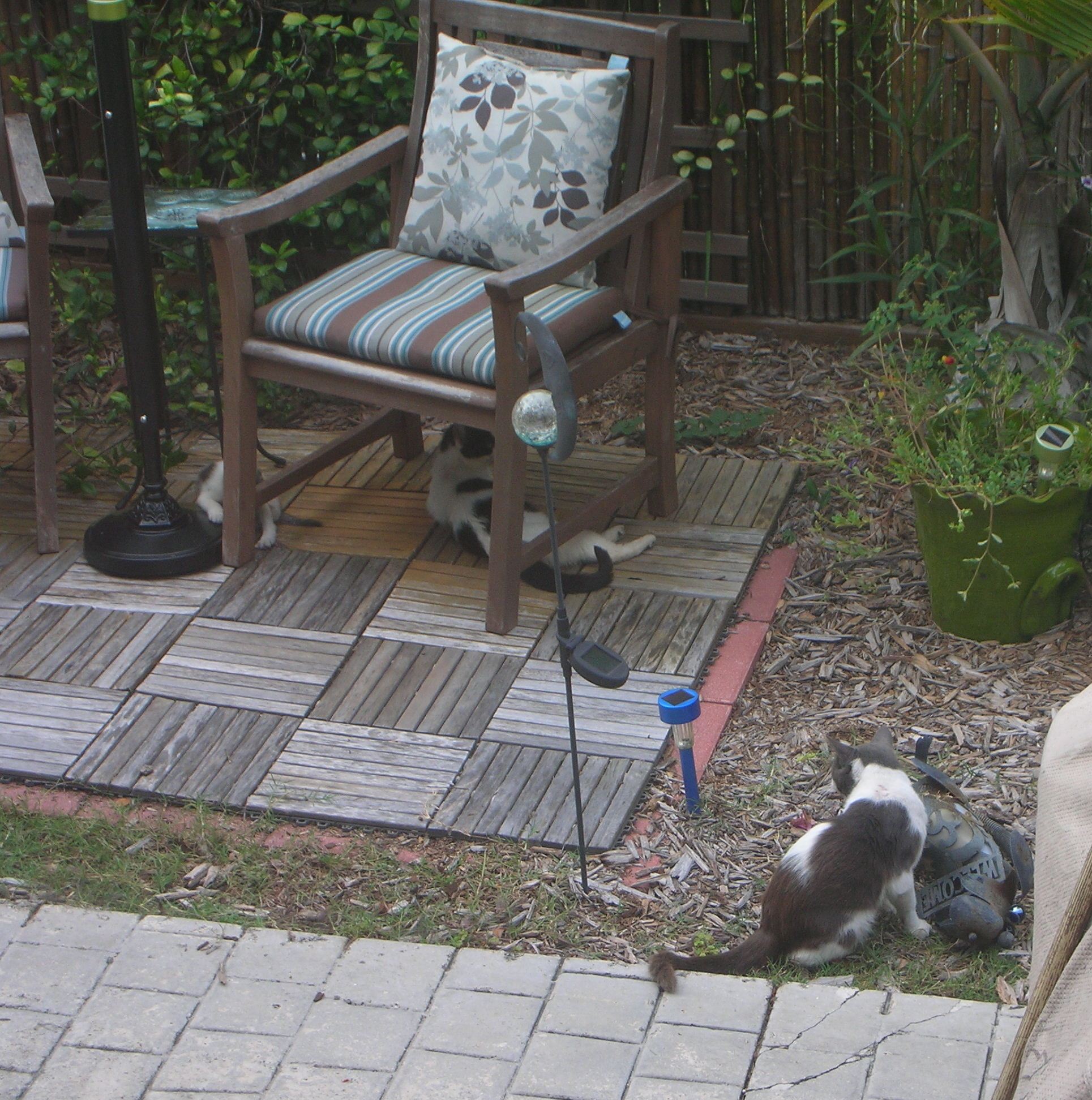
Stray cat Foo (center) and kittens Fric (left) and Frac (right) (Photo Credit: Heather Joan Marinos © 2013 – All Rights Reserved)

Stray cat Foo (center) and kittens Fric (left) and Frac (right)
(Photo Credit: Heather Joan Marinos © 2013 – All Rights Reserved)

Let No Child Go Hungry This Summer

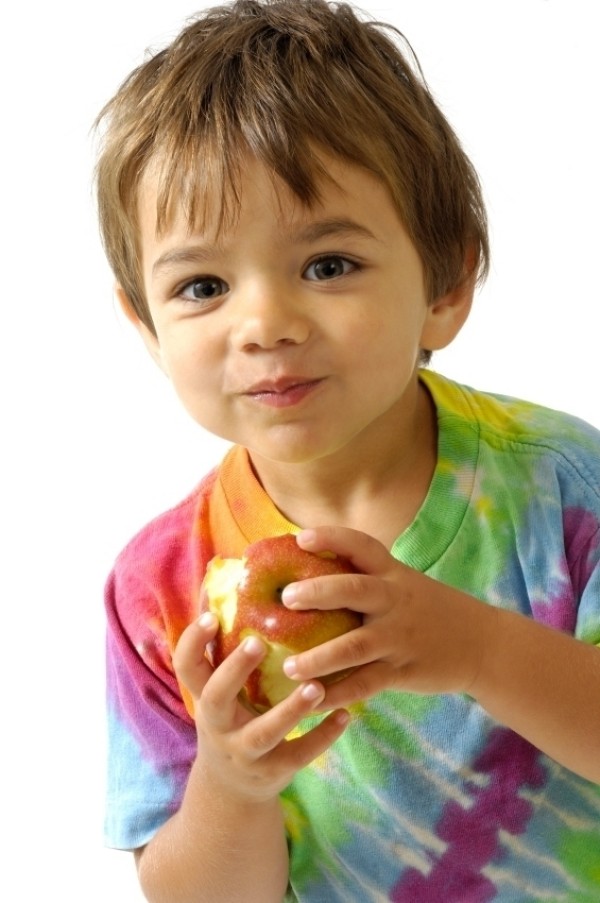
child_eating_apple

When that last school bell rings in June, droves of children come blasting out of the doors, eager to begin their summer. No more multiplication tables to memorize or spelling bees to prepare for – just fun in the sun, with no worries.

However, for the children who live in “food insecure”  households (the politically correct term coined by the USDA, which essentially means “hungry” or “without food.”), summertime means losing the luxury of daily breakfasts and lunches, provided by the schools.

For these children, food is a luxury.

This doesn’t just affect a few children here and there.  

Millions

Millions of children across the United States live in homes where food is scarce. Imagine, for a moment, what it must feel like, not knowing where your next meal is coming from – or when you will be able to have a next meal. 

Thankfully, national and community-wide summer food programs have been established, to provide free meals for these children  (aged 18 and under).

Non-profit organizations like Feeding America  and Feed The Children make it their mission to ensure that no child goes hungry.

Federal initiatives, such as the USDA’s (United States Department of Agriculture) Summer Food Service Program (SFSP), have approved sites located in areas (nationwide) where there is a higher concentration of children from low-income households.  These SFSP sites  provide free meals (which meet federal nutrition guidelines) to these children.

In communities across the country, local volunteers and organizations are banding together to provide food for children who are in need of assistance.  In New Haven, Connecticut, for example, the New Haven Public School Board – in collaboration with United Way, have rolled out a new Summer Food Truck.  This mobile “meals on wheels” drives around town, offering free, nutritious meals to kids and teens.

foodtruck

A lot of good things happen when communities rally together.

These organizations all need volunteers, and of course, they welcome donations.  If you  wish to volunteer your time (and/or money) to the summertime food programs in your neighborhood, check out the list of sites below. I am also listing a site that provides a  Food Bank Locator, in the event that you may want to volunteer at a food bank in your town.

If you are a business owner, you may want to consider sponsoring an SFSP food site in your area.

One last word.   If your children have friends or classmates who may be hungry, why not invite them over for lunch or dinner?  Not only will you be doing a kind deed, you will be teaching your own children the value of community and compassion.

And that is a good thing.

♥ ♥ ♥

Images via cacbelmont.org (boy with apple), npr.org (truck photo credit by Timothy Cipriano/New Haven Public Schools), and   fns.usda.gov (SFSP flyer).

♥ ♥ ♥

Feeding America:  http://feedingamerica.org/how-we-fight-hunger/programs-and-services/child-hunger/summer-food-program.aspx

Feed The Children: http://www.feedthechildren.org/site/PageServer?pagename=dotorg_homepage

USDA’s Summer Food Service Program: http://www.fns.usda.gov/summer-food-service-program-sfsp

SFSP Sponsorship:  http://www.fns.usda.gov/cnd/Summer/Sponsor.htm

Food Bank Locator: http://feedingamerica.org/foodbank-results.aspx

National Hunger Hotline: 1-866-3-HUNGRY or 1-877-8-HAMBRE for Spanish

6-14-2013 4-59-43 PM

Catmania

Limecat

“I believe cats to be spirits come to earth. A cat, I am sure, could walk on a cloud without coming through.”

Jules Verne

Many, many years ago in Montréal (Québec, Canada), I went to get my ears pierced for the first time.  The ear piercing specialist, recommended to me by a dear college friend, had an office in the west end of downtown Montréal.  My husband (he was my fiancé at the time) accompanied me to her office, for moral support.  When we walked in, we were taken aback by all the cat figurines, cat artwork and cat photos that filled the office.  Ruth was clearly a seriously eccentric cat aficionado. 

A cat lady. 

Evidently, her eccentricities had an impact on us because, decades later, we still remember her (and her office) vividly.

Which brings me to my own story of how I seem to have morphed into …. yes, a cat lady.

I’ve only ever had two cats:  Crabby Abby (a stunningly beautiful white Persian cat who died of cancer in 2008) and Miranda (a mischievous black Maine Coon cat who thinks she is a black Labrador retriever like our dog, Bacchus).  Miranda (a.k.a. “Puss”) is an indoor cat.  She does not step a dainty foot outside the house.

However, about a month ago (early May), something inside me snapped. 

And this is how it happened:

Once upon a time, there was a South Florida garden that became a haven for cats and kittens that have no homes. Yes, strays. They are beautiful, yet also sad creatures. They fight for their lives every day and every so often a Human gives them some solace and kindness. These creatures have a code of honor that they live by. I would like to introduce you to Fric and Frac — and their mother, Foo (these are my nick names for them). As it turns out, “Foo” gave birth to “Fric” and “Frac” in my garden. Nocturnal creatures, they frolic after dusk on my patio chairs and throughout my garden. At 7:30 pm (every day), I feed them fresh slices of turkey breast (sodium-free) or canned tuna – along with premium Orijen (Canadian, preservative-free/organic hard cat food/kibble). I fill up bowls of fresh, cold water – twice a day, so that they have some reprieve from the hot Florida climate. They will not come near me because -– although they know that I feed them – they nevertheless have a mortal fear of Humans. Humans can be mean to stray creatures. It is best that they continue to be wary, because if not – they may perish. The other stray cats (and there are many) are very respectful of this new family of kittens. They pass by the garden and do not eat their food. They understand. This is the code of honor that I refer to. It is instinctive. The picture (see below) is of “Foo” lying on our patio chair, with “Fric” reposing above her and “Frac” resting on top of the back cushion. It is late at night and you can see their eyes.

Friic, Frac and Foo (Photo Credit: Heather Joan Marinos © 2013 - All Rights Reserved)

Fric, Frac and Foo
(Photo Credit: Heather Joan Marinos © 2013 – All Rights Reserved)

One night ago, drama ensued.  Frac was nowhere to be seen. Foo was frantic, looking throughout the neighborhood for her lost kitten.  Her two male companions (don’t ask!) – tomcats I  nick-named “Smokey” and “Crazy Cat” – suddenly no longer guarded the yard.  They disappeared, in search of the missing kitten (we couldn’t figure out which one of the two gentlemen cats is the father). 

For one and a half days, the yard was empty.   And I, the crazy cat lady, was distraught.  Fric was hiding under the car, without a sibling to tousle with.

This evening, at 7:30pm per usual, I placed the food and water outside.  Foo and Fric came to eat.  But the two tomcats and the lost kitten (Frac) were still nowhere to be seen.  A little after midnight, I peered out through the window and what I saw made grin.  Foo was lying down serenely, while Fric and …yes, Frac! … were suckling milk from her.  Nearby, Smokey watched and kept guard.  He was, after all , the tomcat who brought Frac home.  Perhaps the mystery of the father’s identity has finally been solved.

Smokey  (Photo Credit: Heather Joan Marinos © 2013 - All Rights Reserved)

Smokey
(Photo Credit: Heather Joan Marinos © 2013 – All Rights Reserved)

As a special treat, I went out (an hour later) with some more food.  Foo hissed at me, to warn me not to step too close to her babies.  Looking through the window, I can see the entire cat family enjoying a celebratory feast of fresh tuna.

Friic and Frac  (Photo Credit: Heather Joan Marinos © 2013 - All Rights Reserved)

Fric and Frac
(Photo Credit: Heather Joan Marinos © 2013 – All Rights Reserved)

Foo (on bench) while Fric and Frac frolic (Photo Credit: Heather Joan Marinos © 2013 - All Rights Reserved)

Foo (on bench) while Fric and Frac frolic
(Photo Credit: Heather Joan Marinos © 2013 – All Rights Reserved)

I am honored to be their caretaker … if only for a brief moment in time.

In Search of Utopia

4-1024x640

Imagine there’s no heaven
It’s easy if you try
No hell below us
Above us only sky
Imagine all the people living for today

Imagine there’s no countries
It isn’t hard to do
Nothing to kill or die for
And no religion too
Imagine all the people living life in peace

You, you may say 
I’m a dreamer, but I’m not the only one
I hope some day you’ll join us
And the world will be as one

Imagine no possessions
I wonder if you can
No need for greed or hunger
A brotherhood of man
Imagine all the people sharing all the world

You, you may say 
I’m a dreamer, but I’m not the only one
I hope some day you’ll join us
And the world will live as one

 — John Lennon, Imagine

Unfortunately, we do not live in a utopian world. That being said, one has to presume that the majority of people throughout the  world would prefer to live in peace, rather than in a state of war.  Vision of Humanity, a global peace initiative (of the Institute for Economics and Peace – IEP), has recently published its 2013 GPI (Global Peace Index) Report, identifying Iceland, Denmark and New Zealand as the top three most peaceful countries in the world.  At the bottom of the list are the conflict-rife countries of Afghanistan, Somalia and Syria.

Canada made the top ten peaceful countries list, ranking number 8 (of  the 162 countries studied) and, disturbingly, the United States ranked on the less peaceful side of the scale – at number 100.

Here are the top and bottom ten lists:

Ten Most Peaceful Countries (from 162):

No. 1  – Iceland

No. 2  – Denmark

No. 3  – New Zealand

No. 4  – Austria

No. 5  – Switzerland

No. 6  – Japan

No. 7  – Finland

No. 8  – Canada

No. 9  – Sweden

No.10 – Belgium

Ten Least Peaceful Countries (from 162):

No. 153  – Central African Republic

No. 154  – North Korea

No. 155  – Russia

No. 156  – Democratic Republic of the Congo

No. 157  – Pakistan

No. 158  – Sudan

No. 159  – Iraq

No. 160  – Syria

No. 161  – Somalia

No. 162 – Afghanistan

For further information, please visit  www.visionofhumanity.org.  I urge you to check out this site ― it is an excellent source of information and kudos go to this organization for the work that they do, in the ongoing effort to raise awareness and advocate for peace.

I’ll leave you with the sage words of Mahatma Gandhi:

“An eye for an eye will only make the whole world blind.” 

Image via ipeacemeal.com.

Freedom and Individualism Revisted

download (2)

I am reposting this blog because it seems to have struck a chord with people from across the globe − with thousands of views.

In the first sentence (below), I mentioned that three uniquely brilliant people came into my life in the mid-1970s.  What I did not say then was how they came into my life.  Many of us have someone in our lives who we look up to and who holds an extra special place in our hearts.  A mentor,  a teacher, or  a family member. In my case, it was all three rolled into one — my brother.  Six years my senior, he took me under his wing many, many times.  He introduced me to jazz music, specifically Thelonious Monk and I still have the tapes he gave me (back in the day when we listened to tape cassettes!) well over three decades ago.  Then he gave me two book recommendations for my “must read” list:  The Prophet, by Khalil Gibran and Atlas Shrugged, by Ayn Rand.  I read them and I was not disappointed.

So, that’s how these visionaries were introduced to me. 

And now, here’s the blog once again:

Freedom and Individualism, as expressed by three creative geniuses:

Thelonious Monk, Khalil Gibran and Ayn Rand.

(originally posted by heatherfromthegrove on October 21st, 2011)

In the mid-1970’s, three uniquely brilliant people came into my life. 

The first was American jazz pianist and composer, Thelonious Monk (b.1917 – d.1982).  His improvisational style set him apart from the traditional jazz musicians of the time.  In the 1940’s, the music genre known as jazz was experiencing a cultural revolution of sorts, with Thelonious Monk as its revolutionary leader. A new style of jazz  — be-bop —  was born. Considered jazz for intellectuals, the be-bop sound was all about intricate melodies, complex harmonies – and fast tempos. Thelonious Monk once said: “If you really understand the meaning of be-bop, you understand the meaning of freedom.” 

220px-Thelonious_Monk,_Minton's_Playhouse,_New_York,_N.Y.,_ca._Sept._1947_(William_P._Gottlieb_06191)Freedom – in my opinion – is the most beautiful word in the dictionary.  The meaning and experience of freedom is unique to each and every one of us.  What tastes like freedom to me may be radically different than anyone else. Some savour it as a private, spiritual experience, while others view freedom on a global scale. There is no right or wrong answer.  It is in the eye of the beholder.

I love to listen to the discordant sounds of Thelonious Monk. I never met the man. Nevertheless, I owe him a debt of gratitude because when I listen to improvisational jazz, I feel  free – and vibrantly alive.
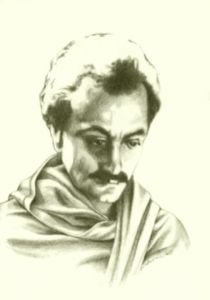
gibran2The second visionary genius was the Lebanese-American poet, philosopher, and artist  – Khalil Gibran (b.1883 – d.1931).  His works (The Prophet became an iconic favorite) were notably influential in American popular culture during the tumultuous 1960’s. On the subject of Freedom, Khalil Gibran’s eloquent poetry always strikes a chord with me –regardless of the number of times I read and reread his words:

“…Verily all things move within your being in constant half embrace, the desired and the dreaded, the repugnant and the cherished, the pursued and that which you would escape.

These things move within you as lights and shadows in pairs that cling. And when the shadow fades and is no more, the light that lingers becomes a shadow to another light. And thus your freedom when it loses its fetters becomes itself the fetter of a greater freedom.”

Finally, there is my muse.  Her name, Ayn Rand.  Ayn is pronounced “Ein” (which means “one” in German).  In my study, there are at least three long bookshelves devoted to Ayn Rand  (her novels, essays, philosophical treatises, biographies, and virtually everything I could find that has been written about her).  If I ever choose to go back to do my PhD in Philosophy, the subject of my dissertation would most definitely be Ayn Rand.
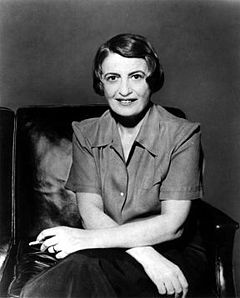
240px-Ayn_Rand1Born in St. Petersburg, Russia in 1905, Ayn witnessed the Bolshevik Revolution firsthand and despised the collectivism that was so entrenched in Russian culture at the time.  Her family lost everything in Communist Russia and this intelligent student of philosophy and history decided that the American model of freedom was the path she wanted to pursue. In 1926, she went to visit relatives in Chicago, then traveled to Hollywood … and never looked back.  Her first novel, We the Living (1936), was inspired by her earlier exposure to Russian tyranny.  In her novels, Ayn understood that in order to create the wonderfully heroic fictional characters, she would have to articulate the philosophical principles which – in her view – made these characters truly heroic.  As such, her novels were interwoven with politics, philosophy, economics, metaphysics, ethics and epistemology. And sex.  In 1957, her last work of fiction – Atlas Shrugged – was considered her greatest achievement. 

However, my personal favorite of hers is The Fountainhead (1943). It was the masterpiece that solidified Ayn Rand as the champion of Individualism.  And this is why I am so inspired by this brilliant intellectual who, incidentally, died in 1982.

For me, individualism is freedom. It’s at the core of everything I believe in.  Individual thought, choice, and actions.  Our journey into this world is a singular experience. As is our journey out of this world.  And our lives are made up of a series of individual choices, reactions and experiences that we (and no one else) are accountable for. For every action, there is a reaction.  For every choice we make, there is a consequence. Good and bad.  (preferably more good , than bad!).

I know, these are pretty heavy thoughts on a Friday evening.  So, I’ll leave you with some words that resonate deeply with me.  In The Fountainhead, the hero – architect Howard Roark – passionately explains the essence of individualism:

“… Man cannot survive except through his mind. He comes on earth unarmed. His brain is his only weapon. Animals obtain food by force. Man has no claws, no fangs, no horns, no great strength of muscle. He must plant his food or hunt it. To plant, he needs a process of thought. To hunt, he needs weapons, and to make weapons—a process of thought. From this simplest necessity to the highest religious abstraction, from the wheel to the skyscraper, everything we are and everything we have comes from a single attribute of man—the function of his reasoning mind.

But the mind is an attribute of the individual. There is no such thing as a collective brain. There is no such thing as a collective thought. An agreement reached by a group of men is only a compromise or an average drawn upon many individual thoughts. It is a secondary consequence. The primary act—the process of reason—must be performed by each man alone. We can divide a meal among many men. We cannot digest it in a collective stomach. No man can use his lungs to breathe for another man. No man can use his brain to think for another. All the functions of body and spirit are private. They cannot be shared or transferred…” 

I’ve given you just a snippet of this courtroom speech. It is riveting and worth reading in its entirety.

Here’s to Freedom!

Cheers,

hftg

Images via care2.com, karabess.wordpress.com, wikipedia.org, and civilclothing.com.